
Is OffshoreGateways a Scam? A Transparent Look at Our Role, Responsibilities, and Services

Understanding Our Position in the Payment Ecosystem To understand what we do, you must first understand what we are not. Who Is OffshoreGateways? OffshoreGateways is an ISO (Independent Sales Organization) and a specialized consulting/referral partner. What We Are NOT: Entity Role OffshoreGateways Payment Processor / PSP Handles the transaction flow. ❌ We do not process payments. Bank / Acquirer Settles funds, holds reserves, makes approvals. ❌ We do not function as a bank. Custodian Holds or controls merchant money. ❌ We never handle, hold, or control your funds. Myth Busted: Do We Control Merchant Funds? ABSOLUTELY NOT. This is the single most important point to understand and is the source of almost every misconception. OffshoreGateways has zero operational control over your money. In summary: Our role ends with the successful placement of your application. The bank/PSP takes full control thereafter. So, What Exactly Does OffshoreGateways Do? (Our Value Proposition) Our responsibilities are strictly limited to providing expertise, network access, and compliance support—the critical components needed to secure an account in a high-risk industry. Step Our Service & Expertise Benefit to You 1. Comprehensive Risk Assessment We analyze your business model (high-risk, low-risk, volume, chargeback history) against global banking appetite. Saves time and avoids rejection by identifying the right partner immediately. 2. Strategic PSP/Acquirer Matching We leverage our proprietary global network to match your business with banks that support your specific industry and geographical needs. Secures a processing solution that is stable, scalable, and compliant. 3. Documentation & Compliance Preparation We guide you through complex KYC/KYB requirements, help structure your business model presentation, and ensure compliance with acceptable use policies. Significantly improves your approval odds by presenting a clean, professional application. 4. End-to-End Coordination We act as a dedicated liaison between you and the provider, streamlining the entire onboarding and underwriting process until approval. Ensures a seamless and efficient path to activation. Why OffshoreGateways Charges a Service Fee Every reputable ISO, agency, or consultancy in the payments space charges for its specialized work. Our fee is an investment in expertise and access, covering: Crucial Distinction: This service fee is for our consulting work and network access. It does NOT grant us any access to your merchant funds or operational control. Conclusion: Is OffshoreGateways a Scam? Absolutely Not. We are a legitimate, transparent, and expert ISO partner dedicated to helping merchants navigate the challenging world of global payment processing. We stand by the principle that Trust Comes from Transparency. By defining our precise role as a specialist consultant and referral partner, we eliminate confusion and empower you to secure the best processing solution possible. If your business values industry expertise, compliance support, and a transparent partnership, OffshoreGateways is here to help you grow. FAQs: Understanding Our Relationship Better
Best Payment Processing Provider for Peptide, UK in 2026
Best Payment Processing Provider for Peptide UK in 2026 Let me tell you something I’ve learned after two decades in the payment processing industry – finding a reliable Payment Processing Provider for Peptide in UK is like searching for a needle in a haystack. Most providers run for the hills the moment you mention peptides. But here’s the thing: it doesn’t have to be this difficult. I’ve watched countless peptide businesses struggle with payment processing nightmares. Account shutdowns without warning, sky-high fees that eat into profits, and processors who treat you like a pariah. Sound familiar? You’re not alone in this frustration. Why Peptide Businesses Get the Cold Shoulder Here’s what nobody tells you upfront: traditional banks and payment processors are terrified of the peptide industry. They’ve lumped all research chemical businesses into one big scary category labeled “high-risk.” I remember talking to a peptide supplier last year who’d been through seven different processors in eighteen months. Seven! Each time, the same story – everything looked great until they discovered what he was actually selling. Then came the dreaded account termination letter. The problem isn’t your business model. The problem is that 99% of processors don’t understand what you do. They see “peptides” and immediately think of some sketchy operation. Meanwhile, you’re running a legitimate research supply company serving universities and labs worldwide. This is exactly why you need a specialized Payment Processing Provider for Peptide in UK that actually gets your industry. Someone who won’t judge your business based on misconceptions and regulatory paranoia. What Actually Matters When Choosing Providers After helping hundreds of peptide businesses over the years, I’ve identified what really separates the good from the terrible. Forget the marketing fluff – here’s what actually matters: Industry Experience That Counts Don’t just ask if they work with “high-risk” businesses. Ask specifically about peptides. How many peptide accounts do they currently process? Can they provide references? Have they dealt with LegitScript certification requirements? A genuine Payment Processing Provider for Peptide in UK should be able to answer these questions without hesitation. If they start talking in generalities or seem uncomfortable with specific questions, keep looking. Transparent Pricing Without Gotchas I’ve seen too many businesses get burned by hidden fees and sudden rate increases. The best providers put everything in writing upfront. No surprises, no “oh by the way” fees that appear on your third statement. Reasonable processing rates for peptides typically run 3.5% to 4.8%. Anything significantly below 3% is probably too good to be true. Anything above 6% is highway robbery. Monthly fees should be clearly stated, usually ranging from £30 to £80 depending on your volume. Real Support When Things Go Wrong Picture this scenario: It’s 2 AM on a Sunday, and your payment system goes down during a major product launch. Your overseas customers are trying to place orders, but transactions keep failing. Who do you call? The best Payment Processing Provider for Peptide operations offers genuine 24/7 support with people who understand your business. Not some overseas call center reading from scripts, but actual humans who can troubleshoot peptide-specific issues. The Documentation Dance Let’s talk about something nobody enjoys but everyone has to deal with – paperwork. Getting approved for peptide processing involves more documentation than buying a house. But here’s a pro tip from someone who’s seen it all: Start gathering your documents before you even contact providers. You’ll need business licenses, product specifications, supplier certificates, and yes – LegitScript certification if you want to work with serious processors. One Payment Processing Provider for Peptide in UK. I work with has a checklist they send to new applicants. It saves everyone time and prevents those frustrating “we need just one more document” delays that can stretch approval times from days to weeks. International Complications Made Simple If you’re only selling domestically, you’re missing out on huge opportunities. European research institutions, American universities, Australian labs – they all need peptides. But international processing adds layers of complexity that can make your head spin. The smartest move? Find a Payment Processing Provider for Peptide that handles all the international compliance stuff for you. Currency conversions, cross-border regulations, tax reporting – let them deal with the headaches while you focus on growing your business. I know one peptide supplier who increased revenue by 340% in eighteen months just by expanding internationally. The key was partnering with a processor that made global sales as easy as domestic ones. Cryptocurrency: The Wild Card Here’s something interesting that’s been happening lately – more peptide businesses are offering crypto payments. Why? Because traditional banking restrictions don’t apply to Bitcoin transactions. Some Payment Processing Providers for Peptide specialists now offer integrated crypto processing alongside traditional card payments. It’s especially popular with international customers who prefer the privacy and speed of cryptocurrency transactions. Red Flags That Should Scare You After seeing so many horror stories, I’ve compiled a mental list of red flags that should send you running: Guaranteed Approval: Nobody can guarantee approval before reviewing your business. Anyone who promises this is lying. Upfront Fees Before Approval: Legitimate processors don’t charge setup fees until after you’re approved. Vague Answers About Peptide Experience: If they can’t give specific examples of peptide clients they serve, they probably don’t serve any. No Physical Address: Seriously, if you can’t find their actual business location, how do you expect to reach them when problems arise? The LegitScript Reality Nobody likes talking about LegitScript certification because it’s expensive and time-consuming. But here’s the brutal truth: most serious Payment Processing Provider for Peptide in UK operations require it. Think of LegitScript as your golden ticket. Yes, it costs money upfront. Yes, the application process is thorough. But it opens doors that would otherwise remain permanently locked. I’ve seen businesses spend months shopping for processors, only to discover that every decent provider requires LegitScript. Save yourself the time and get certified first. Technology Integration Without Tears Your website developer probably isn’t familiar with high-risk payment processing requirements. Most
India’s Gaming Revolution: Decoding the Online Gaming Bill, 2026 and Its Impact on Payments

India’s Gaming Revolution: Decoding the Online Gaming Bill, 2026 and Its Impact on Payments The Union Cabinet’s approval of the Promotion and Regulation of Online Gaming Bill, 2026 marks a watershed moment for India’s digital economy. This isn’t merely an update; it’s a fundamental rewrite of the rules governing one of the world’s fastest-growing digital markets. For payment service providers (PSPs), banks, fintechs, and the merchants they serve, understanding this seismic shift is not optional—it’s critical for survival and growth. This bold legislative move aims to clear the longstanding fog of state-by-state regulations, replacing it with a stringent national framework. Its core philosophy is clear: banish chance-based real-money gaming and champion skill-based digital entertainment. Here’s a comprehensive breakdown of what the bill entails and what it means for you. Key Highlights of the Online Gaming Bill, 2026: A Deep Dive 1. The End of Real-Money Gaming (RMG) as We Know It The bill draws a definitive, harsh line against what it classifies as “permissible” and “illegal” online games. The era of laissez-faire operation for real-money gaming is over. Explicit Ban: Fantasy sports, online rummy, poker, and all other forms of online wagering and betting apps are now proposed as punishable offenses. Complete Ecosystem Crackdown: The restrictions extend far beyond the platforms themselves. The bill explicitly targets the lifeblood of these operations: financial transactions, advertising, and endorsements. This holistic approach is designed to suffocate the industry by cutting off its access to capital and customers. 2. The Rise of E-Sports and Legitimate Skill-Based Gaming In a classic case of “out with the old, in with the new,” the government is aggressively pivoting to position India as a global hub for e-sports and casual gaming. Government Backing: Skill-based games (without monetary stakes) and competitive e-sports tournaments are not just permitted; they are to be actively promoted. This includes initiatives for job creation, infrastructure development, and pursuing global sporting recognition. A New Digital Arena: This creates a massive, legitimized market for game developers, tournament organizers, streaming platforms, and ancillary services. 3. Severe Penalties: A Strong Deterrent The government is signaling zero tolerance for violations. The proposed penalties are designed to be severe enough to deter even the largest players. For Operators: imprisonment of up to 3 years and financial penalties of up to ₹1 crore. For Influencers & Promoters: A landmark provision that makes celebrities, brand ambassadors, and social media influencers liable for promoting banned gaming platforms. This will instantly freeze a major user acquisition channel for existing RMG companies. For Ad Networks: Platforms publishing ads for illegal games will also face legal consequences. 4. Industry Backlash: The Economic Counterargument Unsurprisingly, the reaction from the established online gaming industry has been one of alarm. Key industry bodies argue that the bill, while well-intentioned, could have severe unintended consequences: Massive Revenue Loss: Projected loss of over ₹20,000 crore annually in GST and other tax revenues for the exchequer. Job Losses: Potential layoffs across thousands of direct and indirect jobs in tech, marketing, customer support, and content creation. The Offshore Boomerang: The most significant risk is driving millions of existing users towards unregulated, offshore, and often predatory gambling websites, exposing them to greater financial and security risks with no consumer protection. 5. Central Regulatory Authority: The New Referee To oversee this complex transition, the bill proposes the creation of a central regulatory body, expected to be housed under the Ministry of Electronics and Information Technology (MeitY). National Licensing: This body will be responsible for issuing licenses to permissible gaming platforms. Game Certification: It will classify games based on their core mechanics (skill vs. chance) to determine their legality. Grievance Redressal: Establishing frameworks for consumer protection and dispute resolution. Why This Is a Defining Moment for Payment Providers For PSPs, fintechs, and their banking partners, this legislation fundamentally reshapes the risk and opportunity landscape. The message is clear: align with the new legitimacy or face existential risk. 1. Immediate Red Alert on RMG Transactions Legal Scrutiny: Processing payments for any platform falling under the “banned” category is no longer just a breach of bank terms; it is facilitating a proposed illegal activity. The legal and reputational risk is immense. Banking Partner Pressure: Banks will become increasingly nervous and are likely to proactively audit and terminate relationships with PSPs whose portfolio exposure to RMG is high. Treading cautiously is an understatement; a complete strategic pivot is required. 2. Green Light for E-Sports & Skill Gaming A New Growth Vertical: This sector is poised for explosive, government-backed growth. PSPs have a golden opportunity to become the payment partners of choice for this new, compliant, and high-potential vertical. Payment Innovation: This opens avenues for tailored solutions: seamless in-app purchases, tournament entry fee processing, prize pool distribution, cross-border payments for international events, and integration with gaming wallets. 3. The Compliance Mandate Licensing is King: PSPs must now integrate license verification into their merchant onboarding process. Partnering only with government-certified platforms will be non-negotiable. Enhanced Risk Profiling: Underwriting models need a complete overhaul. Traditional “high-risk” categories are being split into “illegal” (RMG) and “legitimate high-growth” (e-sports). KYC and AML protocols will need to be sharper than ever. How OffshoreGateways Supports High-Risk Merchants in Changing Times At OffshoreGateways, we see regulation not as a barrier, but as a foundation for sustainable, long-term growth. Our commitment is to ensure our partners don’t just survive this transition but thrive through it. Here’s how we are built for this change: Proactive Compliance & Legal Navigation: Our dedicated legal and compliance team doesn’t just react to changes; we anticipate them. We provide our partners with clear guidance on navigating the new licensing regime and maintaining full legal alignment. Portfolio Resilience & Diversification: We help our merchants in affected verticals pivot and diversify their offerings towards compliant models, such as ad-supported casual gaming or e-sports infrastructure. Future-Proof Payment Infrastructure: Our tech is built for agility. We are already developing and deploying specialized payment solutions—from seamless NFT and in-game asset marketplaces to sophisticated payout systems for e-sports
Breaking Down the Brick Wall: A Guide to Payment Processing for Casino & Forex Merchants
Breaking Down the Brick Wall: A Guide to Payment Processing for Casino & Forex Merchants For casino and forex merchants, securing reliable payment processing isn’t just a business hurdle-it’s a formidable brick wall. Traditional banks and mainstream Payment Service Providers (PSPs) often greet these industries with immediate skepticism, imposing a maze of roadblocks that lead to endless delays or outright denials. But here’s the critical truth: the problem is rarely your business’s legitimacy or potential. The problem is a risk-averse system that fails to differentiate between true fraudsters and legitimate, high-volume enterprises operating in regulated yet complex sectors. At OffshoreGateways, we specialize in dismantling this brick wall. We provide robust, sophisticated payment gateway solutions explicitly designed for forex and casino merchants, ensuring that a “high-risk” label becomes a gateway to opportunity, not a barrier to growth. Why Are Casino & Forex Merchants Systematically Rejected? Understanding the “why” is the first step to overcoming it. The automatic “high-risk” tagging by financial institutions stems from a confluence of factors that traditional processors are ill-equipped to handle. 1. The Weight of Strict Regulatory Frameworks Many merchants underestimate the paramount importance of compliance. In key regions like the UK (FCA), EU (MiFID II, MGA), and across Asia, regulators enforce rigorous Licensing Requirements: Operating without the proper, region-specific license is an instant disqualifier. Enhanced Due Diligence (EDD): Banks require deep-level scrutiny of business models, ownership structures, and financial histories. Anti-Money Laundering (AML) & Counter-Terrorist Financing (CTF) Checks: These industries are seen as potential conduits for illicit funds, demanding impeccable transaction monitoring and reporting systems. Without a watertight compliance framework, approval is impossible. 2. Transaction Models That Trigger Red Flags The very nature of your transactions is atypical for standard processors: High Ticket Sizes: Large deposits and withdrawals common in both forex and casino trading deviate from typical retail patterns. Multi-Currency Processing: Serving a global audience necessitates handling numerous currencies, adding layers of complexity and foreign exchange risk. Recurring & Rapid Transactions: From subscription-based forex signals to rapid, in-play betting deposits, these patterns are often misidentified as fraudulent activity by basic screening tools. 3. Heightened Exposure to Fraud and Chargebacks This is the primary concern for acquirers: The “Luck Factor”: In gaming, customer disputes often arise after losses, manifesting as “friendly fraud” chargebacks. Market Volatility: In forex, traders may attempt to dispute losses resulting from market swings. Criminal Fraud: These industries are targets for stolen card usage and identity theft. A high chargeback ratio (>1%) can swiftly lead to account termination and hefty fines from card networks. The Five Critical Challenges Every High-Risk Merchant Faces Navigating the payment landscape involves overcoming a consistent set of formidable obstacles: Perpetually High Decline Rates: The initial application process is often a dead end. Many acquirers have blanket policies against entire industry verticals, regardless of the merchant’s individual track record or compliance standards. The Constant Shadow of Chargebacks: Beyond the financial loss, excessive chargebacks can lead to placement on the MATCH list (Member Alert to Control High-Risk Merchants), effectively blacklisting the business from acquiring banking services for five years. Crippling Cash Flow Constraints: It’s common for providers to enforce lengthy settlement periods (14-30 days) and hold significant rolling reserves (5-10% of processing volume for 6+ months). This ties up vital working capital, stifling growth and operational agility. A Labyrinth of Compliance Demands: The burden of ongoing KYC (Know Your Customer), KYB (Know Your Business), transaction reporting, and AML monitoring is immense. For businesses without dedicated legal teams, managing this complexity is overwhelming and can lead to catastrophic oversights. Inherent Instability and Account Termination: The greatest fear is sudden termination. Acquirers can and will shut down accounts with little notice due to a sudden spike in chargebacks, a change in corporate policy, or renewed regulatory scrutiny, bringing operations to an immediate halt. How OffshoreGateways Builds Bridges Over These Hurdles We don’t just offer a payment gateway; we provide a strategic partnership built on expertise, deep industry relationships, and tailored technology. Here’s how we engineer solutions for each challenge: 1. A Tailored, Strategic Approval Framework We don’t spam applications. Our underwriting team strategically positions your profile with our global network of high-risk specialist acquirers. We prepare a comprehensive package that highlights your strengths, demonstrates your robust compliance infrastructure, and proactively addresses acquirer concerns, dramatically increasing approval odds. 2. Advanced Security & Processing Flexibility We offer a suite of tools to balance security with conversion: 3D Secure (3DS2): Implements strong customer authentication (SCA) to reduce fraud liability and comply with PSD2 regulations in Europe. 2D Secure (2DS) Options: For regions where SCA is not mandatory, we provide streamlined pathways to optimize checkout conversion rates without sacrificing security. 3. Accelerated Cash Flow Solutions We negotiate favorable terms on your behalf. Our solutions include shortened settlement cycles (T+3 or T+5) and transparent, reasonable reserve structures designed to protect all parties without strangling your cash flow. We believe your capital should fuel your growth, not sit in a reserve account. 4. Proactive Chargeback Mitigation & Management Our integrated arsenal includes: Advanced Fraud Scrubbing: AI-powered tools that analyze transactions in real-time for patterns indicative of fraud. Alert Systems: Early warnings of potential disputes, allowing you to resolve issues before they become chargebacks. Representment Support: Guidance and tools to effectively fight illegitimate chargebacks and recover revenue. 5. End-to-End Compliance Partnership We act as your extension. Our experts guide you through the entire lifecycle—from initial licensing advice and onboarding documentation to ongoing transaction monitoring and reporting—ensuring you remain in unwavering compliance with both acquirer and regulatory body demands. 6. A Resilient Global Acquirer Network This is our core advantage. Our diversified portfolio of banking partners across multiple jurisdictions is your ultimate business continuity plan. If one acquirer changes its policy, we seamlessly migrate your processing to another, ensuring zero downtime and uninterrupted revenue flow. Why Offshore Gateways? Beyond Processing, We Deliver Partnership We understand that every transaction is more than just a data point; it’s the lifeblood of your business. When you partner with us, you gain more
Complete Guide to Casino Merchant Accounts and Payment Processing for 2026
Casino Merchant Accounts & Payment Processing Guide for 2026 Welcome to the exciting world of online casinos! The online gam(bl)ing industry has witnessed remarkable growth in recent years, with more than 1.6 billion gamblers worldwide and the industry reaching over $500 billion in value. For decades, the market popularity of online gam(bl)ing has been increasing rapidly, and according to research, in the coming five years, the total earnings of online casinos will grow by 80%. Most people are drawn to gam(bl)ing for the excitement and striking emotions it provides. Furthermore, there’s a possibility to win substantial amounts of money by enjoying online games, making this sort of business very tempting for merchants. However, when beginning a new venture, most operators face a deficiency of knowledge when it comes to implementing payment solutions. In today’s digital era, as a casino owner or operator, it’s crucial to ensure seamless payment processing and airtight security for your online gam(bl)ing business. This is where specialized casino merchant accounts become essential. What is a Casino Merchant Account? A casino merchant account is a type of payment processing account specifically designed for businesses in the gam(bl)ing industry. It allows casinos to accept payments from players, including credit cards, debit cards, and e-wallets. Since online casinos are considered high-risk businesses by financial institutions, they often require specialized merchant accounts that offer higher transaction limits and more robust fraud protection. Casino merchant accounts are different from standard merchant accounts because they are built to handle the specific needs of gam(bl)ing transactions. These accounts provide features like chargeback management, multi-currency support, and compliance with regulatory standards, all of which are essential for the smooth operation of online gam(bl)ing platforms. The Growing Need for High-Risk Merchant Accounts in 2026 In 2026, the demand for high-risk merchant accounts in the casino industry continues to rise. Online casinos are often labeled as high-risk businesses due to the nature of their operations, which may involve large transactions, unexpected chargebacks, age restrictions, and varying regulatory environments. High-risk merchant accounts are designed to handle these challenges, providing robust features like fraud prevention, secure payment gateways, and the ability to manage chargebacks effectively. High-risk accounts also offer higher transaction volumes, ensuring that casinos can handle large payments without issues. As the gam(bl)ing market grows, especially in emerging regions, the need for these specialized accounts becomes more important. Without the right account, casinos could face delays in payments, loss of funds, or even account suspension. Common Pitfalls When Selecting an Online Casino Payment Gateway 1. Choosing a Payment Gateway Provider Based Solely on Lowest Fees Every merchant attempts to get an adequate payment service at a competitive pricing. If you are searching for an online casino payment gateway with the lowest possible costs, you should know that not all of them are trustworthy. A substantial portion of businesses will not protect all your requirements. Let’s describe how payment organizations specify credit card fees and what components are included: Transaction Fees: The most common and well-known kind of charges are charged per transaction. This happens when a PSP assesses a percentage of every transaction. It comprises a modification ratio, a markup of the payment service provider, and an assessment (a unique fee that depends on the type of customer’s credit card). The assessment fee for Visa cards is around 0.11%. Occasional Fees: This fee is not standard and is only assessed in various circumstances such as chargebacks, fraudulent actions, failed payments, and others. To avoid these unwanted barriers, you may opt for a payment gateway provider that delivers fraud and chargeback prevention technology. Flat Fees: For using the payment services of a PSP or payment gateway, you may have to pay extra funds. Don’t pursue cheap payment services. They can ruin your gam(bl)ing business. 2. Neglecting Transaction Data Protection When it comes to transaction data protection, every business merchant should choose a PSP that is PCI DSS compliant. The Payment Card Industry Security Standards Council certificate delivers not only an option to fulfill the recent transaction data security requirements but also improves the function of the complete infrastructure. On one side, the platform becomes safer, and on the other side, it enhances customers’ perspective on the services delivered. The business also decreases its losses from hacker attacks. 3. Offering Limited Payment Methods Every business owner wants to expand their gam(bl)ing business and deliver a large variety of payment solutions to customers. Some customers do not like to pay using their credit cards for safety concerns. If you cannot offer alternative payment methods, you will lose a significant number of potential customers. By delivering alternative payment methods for gam(bl)ing businesses, you acquire the capability to reach larger audiences and widen your market reach. If you’re not offering payment methods such as mobile QR payments, contactless payments, eWallets, and many others, some potential customers would prefer to trust your competitors’ online businesses. 4. Complicating the Integration Process The simpler the PSP can integrate the payment platform into the gaming interface, the more satisfying it is to use. That’s why choosing a payment gateway provider that can understand the specialty of every payment system for gam(bl)ing and select the best integration method is crucial. PSPs deliver various kinds of online casino payment gateway integration options: API (Application Programming Interface): A set of various features and functions executed as an interface for building new applications, through which one program will link with another. The main goal of building the API was to allow programmers to simplify tasks when creating various applications with ready-made coding. Virtual Terminal: A software application that enables you to take online payments by credit card through a safe link via the Internet. There is no requirement for further software installation. Using the Virtual Terminal, you can conduct functions with credit cards without the physical presence of a customer. CMS Plugins: Software parts whose objective is to extend the necessary abilities of another program. These features are mini-programs that cannot work independently but can be integrated into specific
2026 Forex Regulations: What Brokers in EU, UAE, and Africa Should Know

2026 Forex Regulations: What Brokers in EU, UAE, and Africa Should Know The foreign exchange market is the world’s largest, with trillions traded daily. But with opportunity comes risk—and regulation. In 2025, Forex regulations are tightening across major jurisdictions, aiming to protect investors, boost transparency, and clamp down on illicit activities. Why is 2026 such a turning point? Regulatory convergence: Authorities are aligning local rules with global best practices. Tech disruption: AI, automation, and remote operations demand new compliance strategies. Rising enforcement: Penalties for non-compliance are steeper, and regulators are more proactive. Are you confident your brokerage is ready for the 2026 Forex regulations? Forex Brokers EU Regulations 2026: MiFID III, ESMA, and CySEC MiFID III and ESMA: Raising the Bar The EU remains a global leader in Forex regulation. The latest iteration, MiFID III, and the ongoing oversight by the European Securities and Markets Authority (ESMA), set the tone for all Forex brokers EU regulations 2026. Key highlights: Leverage caps: Retail clients face strict leverage limits (1:30 for majors, 1:20 for minors). Negative balance protection: Traders cannot lose more than their deposit. Ban on PFOF: Payment for order flow (PFOF) is prohibited, reducing conflicts of interest. Enhanced KYC/AML: Brokers must verify client identities and monitor transactions for suspicious activity. Transparency: Full disclosure of fees, spreads, and trading conditions is required. CySEC Licensing 2026: Cyprus remains a popular base for brokers due to its efficient licensing process and EU passporting rights. However, CySEC is enforcing stricter audits, higher capital requirements, and ongoing compliance checks. Example: A mid-sized broker in Cyprus recently faced a temporary suspension for failing to update its KYC procedures in line with the latest ESMA guidelines. By investing in automated compliance software and remote IT support, the broker not only resolved the issue but also improved onboarding efficiency. Are you sure your systems can handle the new Forex brokers EU regulations 2026? UAE Forex Trading Laws 2026: SCA, DFSA, and Free Zone Nuances Who Regulates What? The UAE is a magnet for Forex traders and brokers, but the regulatory environment is anything but lax. In 2026, the Securities and Commodities Authority (SCA), Dubai Financial Services Authority (DFSA), and the Central Bank of the UAE are stepping up their game. Mainland vs. Free Zone: Mainland: Regulated by the Central Bank and SCA. Requires substantial capital and strict AML/KYC adherence. DIFC (Free Zone): Overseen by the DFSA, which aligns closely with international standards and has introduced new rules effective March 2026. UAE Forex Trading Laws 2026 – Key Points: Mandatory licensing: All brokers must be licensed by the SCA or DFSA. Segregation of funds: Client money must be kept separate from broker funds to protect investors. AML/KYC: Enhanced due diligence and reporting obligations. Dispute resolution: SCA offers a transparent process for handling complaints. Transparency: Brokers must clearly disclose trading terms and fees. DFSA Forex Rules 2026:The DFSA’s 2026 amendments focus on prudential requirements, risk management, and digital onboarding. Brokers are expected to implement robust IT systems to meet these standards. Example:A Dubai-based broker leveraged remote IT support to automate its KYC checks, reducing onboarding time by 30% and ensuring full compliance with DFSA’s new digital verification mandates. Are your onboarding and compliance processes ready for UAE Forex trading laws 2026? Africa Forex Broker Compliance 2026: FSCA, CMA, and SEC Updates Africa’s Regulatory Patchwork: Stricter, Smarter, Safer Africa’s Forex market is booming, but so is regulatory scrutiny. The Financial Sector Conduct Authority (FSCA) in South Africa, Capital Markets Authority (CMA) in Kenya, and Securities and Exchange Commission (SEC) in Nigeria are all rolling out new rules for 2026. FSCA South Africa Forex Regulations: Stricter licensing: Higher capital requirements and more detailed reporting48. Transparency: Brokers must provide clear risk disclosures and segregate client funds. AML/KYC: Enhanced procedures to combat financial crime. Ongoing audits: Regular compliance checks and penalties for violations. Kenya and Nigeria: Ban on unregulated brokers: Only licensed firms can operate. Public education: Authorities are raising awareness to steer traders toward compliant brokers. Africa Forex Broker Compliance 2026 – Practical Impact: A Nigerian broker recently avoided a costly penalty by upgrading its IT infrastructure to meet new SEC reporting standards. By outsourcing IT management, the firm ensured 24/7 compliance monitoring and rapid response to regulatory changes. Are you confident your brokerage meets Africa Forex broker compliance 2026 requirements? Comparative Table: EU vs. UAE vs. Africa – Key Regulatory Differences Feature EU (MiFID III, ESMA) UAE (SCA, DFSA) Africa (FSCA, CMA, SEC) Leverage Cap 1:30 (majors), 1:20 (minors) Varies, often lower Varies, FSCA tightening Negative Balance Protection Mandatory Required by DFSA/SCA Increasingly common KYC/AML Strict, tech-driven Enhanced, digital onboarding Enhanced, ongoing audits Licensing CySEC, BaFin, AMF, etc. SCA (mainland), DFSA (DIFC) FSCA, CMA, SEC Fund Segregation Mandatory Mandatory Mandatory PFOF Ban Yes Not explicit Varies Public Education Yes Yes Strong focus in Kenya/Nigeria Case Study: Leveraging Remote IT Support for Regulatory Compliance Background:A pan-African Forex broker faced mounting challenges with new Africa Forex broker compliance 2026 mandates. Manual processes led to delays, errors, and compliance gaps. Solution:By partnering with a remote IT support provider (such as [Offshore Gateways]), the broker: Automated KYC and AML checks using secure cloud platforms. Implemented real-time compliance dashboards. Reduced onboarding time by 40%. Passed FSCA’s 2025 audit with zero findings. Takeaway:Remote IT support isn’t just about fixing computers. It’s about building a compliance-ready infrastructure that adapts as 2026 Forex regulations evolve. Actionable Tips for Brokers: Staying Ahead in 2026 Invest in Compliance Tech: Automation and AI-driven monitoring are essential for meeting new KYC/AML standards. Train Your Team: Regular workshops on MiFID III updates, DFSA Forex rules 2026, and FSCA requirements keep your staff sharp. Monitor Regulatory News: Subscribe to updates from ESMA, SCA, DFSA, FSCA, and local authorities. Outsource IT Support: Consider remote IT partners who specialize in financial compliance, reducing your risk and overhead. Engage Legal Experts: Consult with lawyers familiar with Forex brokers EU regulations 2026, UAE Forex trading laws 2026, and Africa Forex broker compliance 2026. Test Your Systems: Run regular audits
5 Reasons Why a Business Bank Account for Merchants is Essential
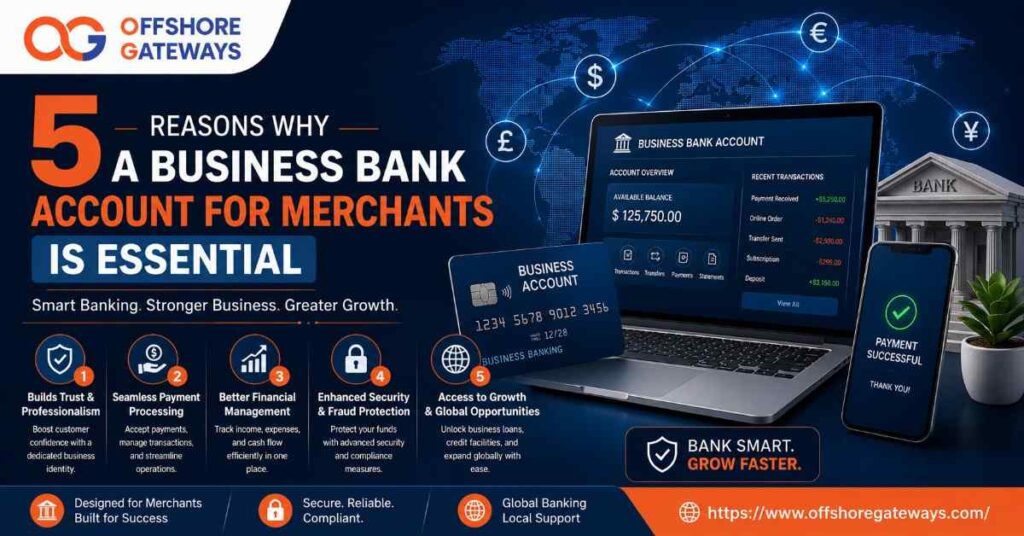
5 Reasons Why a Business Bank Account for Merchants is Essential In the high-stakes game of business, merchants must make thousands of decisions that can make or break their businesses. Perhaps the most significant but underappreciated decision is choosing the right financial tools to run your business. A Business Bank Account for Merchants is not just a nicety – it’s a necessity. Whether you’re a small business owner or a seasoned entrepreneur, separating your personal and business finances is a fundamental step toward long-term success. In this blog, we are going to tell you five solid reasons why a Business Bank Account for Merchants is a must. We will also tell you about the benefits of Merchant Bank Account Services, providing you with real-world insights so that you can make smart business choices. 1. Simplified Financial Management Running a business entails dealing with a variety of financial obligations, from monitoring expenses to enabling cash flow. Without a specialist Business Bank Account for Merchants, this is bound to become something rather intimidating. Why Separation Matters Mixing personal and business funds is one of the most frequent mistakes that business owners make, especially when they are beginning. Mixing funds, however, can lead to confusion, errors, and even legal troubles. With a separate account, you can: Track business expenses accurately. Simplify tax preparation by maintaining clear records. Monitor cash flow and profitability with ease. The Role of Merchant Bank Account Services Most banks offer personalized Merchant Bank Account Services that cater to the business-specific requirements. Such services usually include features like expense categorization, automatic bookkeeping, and bookkeeping software compatibility. For example, websites like OffshoreGateways.com provide personalized solutions to enable merchants to manage money efficiently so they can focus on business development. Practical Tip: Start with a Clear System To make the most of a Business Bank Account for Merchants, establish a neat system of expense categorization and tracking of income. Make use of such tools as accounting software or apps that link to your bank account to make such tasks automatic. It will be less time-consuming and less prone to errors. 2. Enhanced Professionalism Your professional reputation is a crucial element in building trust among customers, suppliers, and partners. Having a Merchant Business Bank Account not only facilitates the management of your money but also enhances your professional reputation. Building Trust with Stakeholders By issuing invoices out of a business account, you are showing professionalism. Customers as well as suppliers will be more likely to believe in a responsible and open business. As an example, issuing invoices out of a business account as opposed to a personal account helps to legitimize you. Access to Business-Friendly Features Most Merchant Bank Account Services come with characteristics that make your business more professional. They can be: Customized checks and debit cards with your business name. Online payment processing capabilities. Dedicated customer support for business-related queries. By leveraging these tools, you can present your business as a well-established entity, even if you’re just starting out. Practical Tip: Use Your Business Name Consistently Use Your Business Name Consistently Ensure that all your financial transactions, including payments and invoices, are made in your business name. This consistency builds your brand and gains the trust of stakeholders. 3. Improved Access to Credit and Financing Having access to capital is vital to expanding a business, whether you are expanding operations, purchasing inventory, or advertising. A Business Bank Account for Merchants can assist your access to capital significantly. Establishing a Financial History Investors and lenders use financial statements to establish the creditworthiness of a company. With a separate account, you are able to establish an open financial history that reflects your company’s stability and potential for growth. Leveraging Merchant Bank Account Services Most financial institutions offer Merchant Bank Account Services that have credit-building functions. For instance, certain accounts enable you to access business credit cards or lines of credit, where you can build and strengthen your credit rating. OffshoreGateways.com, for instance, offers solutions tailored to your needs and you can readily avail the funding that you need. Practical Tip: Monitor Your Credit Score Regularly Keep an eye on your business credit score and strive for an improved rating. Pay bills promptly, lower debt, and maintain strong cash flow. These are the habits that will make your business attractive to lenders. 4. Fraud Protection and Security With the potential for cyber attacks increasing by the second, it’s more important than ever to protect your business’s finances. A Business Bank Account for Merchants offers enhanced security features that will safeguard your funds and personal data. Advanced Security Measures Business accounts are likely to have robust security features such as: Fraud detection systems that monitor for suspicious activity. Multi-factor authentication to prevent unauthorized access. Insurance coverage for deposits, providing peace of mind. The Role of Merchant Bank Account Services Sophisticated Merchant Bank Account Services go one step ahead by offering additional layers of security. For example, some services offer encryption of online transactions and real-time account activity notifications. These are particularly helpful for businesses that make a large number of transactions or do high-risk business. Practical Tip: Educate Your Team on Security Best Practices Make sure your staff is up to date on security best practices, including identifying phishing techniques and having strong passwords. Ongoing training can avoid expensive security breaches. 5. Scalability and Growth As your business grows, your financial requirements grow too. A Business Bank Account for Merchants can grow with your business, providing the flexibility and funds to drive growth. Adapting to Changing Needs No matter if you’re entering new markets, hiring more staff, or bringing new products to market, having a separate business account gives you the support behind you to get it done. Most accounts offer tiered service so you can upgrade as your business increases. Leveraging Merchant Bank Account Services for Growth Professional Merchant Bank Account Services can be the secret to your business’s success. For example, OffshoreGateways.com provides scalable solutions that expand with your business, from simple
How E-commerce Stores Can Accept Payments Securely and Boost Sales
How E-commerce Stores Can Accept Payments Securely and Boost Sales In today’s fast-moving online shopping culture, e-commerce sites have a twofold challenge: ensuring payments are secure and driving sales to the maximum. Customers expect straightforward, secure transactions, and even a minor glitch in the payment process can result in cart abandonment and lost business. For e-commerce sites, becoming capable of accepting payments securely is not simply a technology necessity-it is a vehicle for customer trust and business success. This blog will outline how e-commerce businesses can make payment systems secure, what payment gateway providers are, and some tips to boost sales. Whether you have a small business or an online big shop, these tips will assist you in establishing a secure, efficient, and profitable payment system. Why Secure Payment Processing is Non-Negotiable Before we get to the how, let’s talk about the why. Why do e-commerce web sites accept payments securely so desperately? In short, secure payment processing isn’t actually about avoiding risk-it’s about creating a platform for long-term success. Key Components of Secure Payment Processing In order to accept payments securely, online businesses must make a set of top priorities: 1. Encryption and Tokenization Encryption ensures that confidential data, such as credit card numbers, become jumbled as they are carried, and hackers cannot read them. Tokenization replaces such information with tokens, which makes them even less susceptible to exposure. 2. PCI DSS Compliance Compliance with the PCI DSS standards is required for any business that processes card payments. These include maintaining a secure network, protecting cardholder data, and monitoring and testing systems regularly. 3. Two-Factor Authentication (2FA) Offering an added layer of security, 2FA requests customers to verify themselves through a second means, for instance, through an email or text message code. 4. Fraud Detection Tools Sophisticated software can also scan transaction patterns in real-time to detect suspicious behavior. For instance, if a customer purchases something unusually big at a new store, the system can trigger further verification. 5. Secure Hosting and SSL Certificates Your web site will have to be hosted on a secure server with an SSL (Secure Sockets Layer) certificate. This will secure data exchanged between your web site and the customer’s browser. The Role of Payment Gateway Providers Payment gateway providers are the intermediaries to allow e-commerce websites to accept payments securely. They are intermediaries between your website, the customer, and the banks involved in the transaction. What to Look for in a Payment Gateway Provider Popular Payment Gateway Providers For businesses seeking tailored solutions, companies like Offshore Gateways are in the business of providing secure payment processing solutions best tailored to your needs. With their experience in integrating the latest security features, your online business website has the ability to accept payments securely while delivering an uninterrupted customer experience. How Secure Payments Boost Sales Although the final purpose of secure payment systems is to protect customer data, they also have a direct impact on sales. Here’s why: 1. Reducing Cart Abandonment A complex or insecure checkout process is one of the most prevalent cart abandonment causes. By providing a secure and seamless payment process, you can minimize this problem to a great extent. 2. Building Customer Loyalty If your customers feel safe shopping on your site, they’ll return. Positive online reviews on brand reputation will typically include safe payment experiences as one of the key areas of customer satisfaction. 3. Expanding Your Customer Base Secure payment gateways that support various payment modes (credit cards, digital wallets, etc.) appeal to more users. For instance, some people may prefer paying through PayPal for the added security, and some may prefer Apple Pay for convenience. 4. Minimizing Chargebacks and Fraud Chargebacks and fraudulent transactions don’t just translate into money lost but also cause reputational losses for your relations with payment processors. Secure systems are effective measures against these hazards, guaranteeing a seamless performance. Best Practices for Implementing Secure Payment Systems To enable your web store accept payments securely and make sales, use the following best practices: 1. Choose the Right E-commerce Platform Your platform selection is the basis of secure payments. Shopify, WooCommerce, and BigCommerce are a few of the platforms that have security features integrated and connections with top payment gateway providers. 2. Regularly Update Software Aging software is a typical weakness. Keep your e-commerce site, plugins, and payment gateway integrations updated at all times. 3. Educate Your Team Your staff must be trained to recognize a potential security threat, such as a phishing email or a strange transaction. 4. Monitor Transactions in Real-Time Utilize analytics tools to monitor transaction patterns and flag anomalies. Detection at an early stage can prevent fraud before it grows. 5. Display Security Badges Showing security badges (e.g., SSL certificates, PCI compliant) on your checkout page makes customers feel assured that their information is safe. 6. Offer Multiple Payment Options Accommodate different customer preferences by accommodating different kinds of payments, from credit cards to mobile payments such as Google Pay and Apple Pay. 7. Optimize the Checkout Process Slow checkout can discourage shoppers. Simplify the steps, provide guest checkout, and get the payment page to load speedily. Case Study: How OffshoreGateways Helped a Small Business Scale Consider the case of a small online merchant that contracted Offshore Gateways to redesign its payment gateway. The merchant had high cart abandonment and high chargebacks. Through the use of a secure payment gateway with advanced fraud detection software, the boutique observed cart abandonment decline by 30% over the course of three months. In addition, offering a variety of payment options made international sales rise by 20%. This case study illustrates the actual benefits of working with professionals familiar with accepting payments securely and enhancing the customer experience. Common Mistakes to Avoid Even with good intentions, online businesses can fall into traps that undermine payment security. These are some of them to look out for: The Future of Secure Payments in E-commerce As technology advances, so do the means of safeguarding online payments. Some
The Ethical Side of High-Risk Payment Processing: Balancing Profit and Responsibility
In the financial services industry, high-risk payment processing plays a critical role in enabling businesses to operate seamlessly. However, with great power comes great responsibility. Companies offering high-risk payment processing services must strike a delicate balance between profitability and ethical practices. This blog explores the ethical considerations surrounding high-risk payment gateways, the challenges they face, and how businesses can ensure they act responsibly while meeting their financial goals. What is High-Risk Payment Processing? High-risk payment processing refers to the handling of transactions for businesses that are deemed high-risk due to factors such as higher chargeback rates, regulatory scrutiny, or the nature of their industry. Examples include online gaming, adult entertainment, CBD products, and travel services. These businesses often struggle to secure traditional payment processing solutions, making high-risk payment gateways essential for their operations.A high-risk payment processing service provides these businesses with the tools to accept payments securely while managing the associated risks. However, the ethical implications of serving such industries cannot be ignored. The Ethical Challenges in High-Risk Payment Processing 1. Supporting Controversial Industries One of the primary ethical dilemmas in high-risk payment processing is the decision to support industries that may be considered controversial. For instance, businesses in the adult entertainment or gambling sectors often face moral scrutiny. While these industries are legal in many jurisdictions, payment processors must evaluate whether their services align with their corporate values.. Supporting such industries requires a nuanced approach. Payment processors must ensure they are not enabling illegal activities or contributing to societal harm. This involves conducting thorough due diligence on clients and setting clear boundaries for the types of businesses they will support. 2. Preventing Fraud and Financial Crime Fraud prevention is a significant concern in high-risk payment processing. High-risk businesses are often targeted by fraudsters, making it crucial for payment processors to implement robust security measures. However, this also raises ethical questions about data privacy and the potential for over-monitoring customers. Payment processors must strike a balance between protecting businesses and respecting consumer privacy. This involves using advanced fraud detection tools while ensuring that customer data is handled responsibly and in compliance with data protection laws. 3. Ensuring Fair Access to Services Some businesses labeled as high-risk may struggle to access payment processing services, limiting their ability to operate. Ethical high-risk payment gateways should aim to provide fair access while ensuring compliance with regulations. This requires a proactive approach to risk assessment. Instead of outright rejecting high-risk businesses, payment processors can work with them to implement risk mitigation strategies. This not only helps businesses thrive but also fosters a more inclusive financial ecosystem. 4. Transparency in Fees and Charges High-risk businesses often face higher processing fees due to the increased risk. Ethical payment processors must be transparent about these charges and avoid exploiting their clients. Transparency builds trust and ensures that businesses can make informed decisions. Payment processors should clearly communicate their fee structures and provide detailed explanations for any additional charges. Balancing Profit and Responsibility 1. Implementing Strong Compliance Measures To operate ethically, high-risk payment processing services must prioritize compliance with local and international regulations. This includes adhering to anti-money laundering (AML) laws, Know Your Customer (KYC) requirements, and industry-specific guidelines. By doing so, payment processors can mitigate risks while maintaining their ethical standards. Compliance is not just a legal obligation; it is a cornerstone of ethical business practices. Payment processors should invest in compliance teams and technologies to ensure they stay ahead of regulatory changes. 2. Promoting Responsible Business Practices Payment processors can encourage their clients to adopt responsible business practices. For example, online gambling platforms can promote responsible gaming, while CBD businesses can ensure their products meet quality and safety standards. By promoting responsibility, payment processors can help high-risk industries gain legitimacy and build trust with consumers. This, in turn, benefits the entire ecosystem. 3. Investing in Advanced Fraud Detection Ethical high-risk payment gateways should invest in advanced fraud detection technologies to protect both businesses and consumers. This not only reduces financial losses but also builds trust with clients. Fraud detection tools such as machine learning algorithms and real-time monitoring systems can identify suspicious activities and prevent fraudulent transactions. These technologies should be used responsibly, with a focus on minimizing false positives and ensuring customer convenience. 4. Educating Clients and Consumers Education is a powerful tool for promoting ethical practices. Payment processors can provide resources and training to help high-risk businesses understand their responsibilities and comply with regulations. For consumers, education can include information on safe online transactions and how to recognize potential fraud. By empowering both businesses and consumers, payment processors can create a safer and more transparent environment. The Role of Offshore Gateways in Ethical High-Risk Payment Processing At Offshore Gateways, we understand the complexities of high-risk payment processing. Our mission is to provide secure, reliable, and ethical payment solutions for high-risk businesses. Here’s how we balance profit and responsibility: By choosing Offshore Gateways, businesses can access a high-risk payment processing service that values ethics as much as profitability. The Future of Ethical High-Risk Payment Processing As the demand for high-risk payment gateways continues to grow, the industry must evolve to address emerging ethical challenges. This includes adopting new technologies, improving transparency, and fostering collaboration between payment processors, regulators, and businesses. 1. Embracing Blockchain Technology Blockchain technology has the potential to revolutionize high-risk payment processing by enhancing transparency and security. By using blockchain, payment processors can create immutable records of transactions, reducing the risk of fraud and ensuring accountability. 2. Strengthening Industry Collaboration Collaboration between payment processors, regulators, and industry stakeholders is essential for addressing ethical challenges. By working together, these groups can develop best practices and standards that promote responsible business practices. 3. Focusing on Consumer Protection Consumer protection should be a top priority for high-risk payment gateways. This includes implementing measures to prevent fraud, ensuring data privacy, and providing clear information about fees and charges. Ethical high-risk payment processing is not just a moral obligation; it’s a competitive advantage. Companies that prioritize responsibility
Future-Proof: Payment Gateway Integration Trends For Business
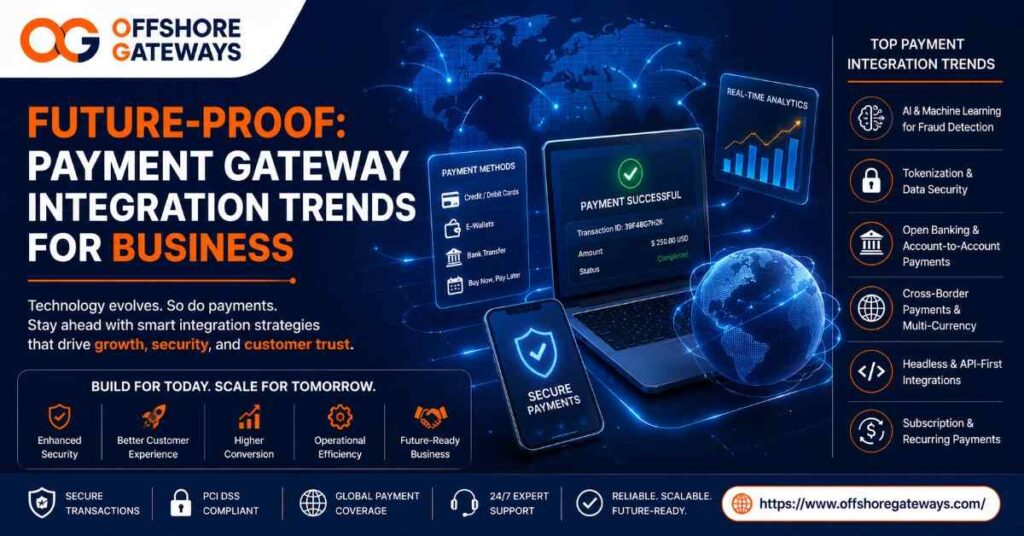
Future-Proof: Payment Gateway Integration Trends For Business In the fast-paced world of digital transactions, knowing trends about payment gateway integration is important for businesses in order to thrive. With high consumer demand for online payment processing, companies need to be ready to respond towards changing consumer needs. In the blog below, we detail a few of the key trends shaping the future of payment gateway integration and thus provide actionable insights to business enterprises that aim to outshine their competition. Understanding Payment Gateway Integration Payment gateway integration refers to when one’s website or mobile application can communicate with a payment processor, which can make an online transaction. This is the most critical form of integration for all e-commerce platforms, service providers, and businesses where electronic transactions take place. This is important for safe transactions, enhances customer experience, and makes it easy for them to pay. The Importance of Staying Updated Keeping an eye on the trends in this respect towards payment gateway integration as technology keeps advancing and consumer preferences keep on changing is of immense importance. It helps businesses embrace change so their efficiency in operations improves, increasing customer satisfaction, hence leading to growth. Key Trends in Payment Gateway Integration 1. Mobile-First Solutions Mobile commerce is emerging and businesses should embrace mobile-friendly payment gates. Mobile-first strategy is a strategy that will ensure a business will easily access a purchase from their smartphone with ease. It leads to sales and customer satisfaction. For example, when a retail business embraces a mobile-optimized payment gateway, it can boost its conversion rates exponentially by providing a seamless shopping experience. 2. Enhanced Security Measures Payment gateway integration will remain at the forefront of security. Advanced security features in the form of encryption, tokenization, and AI-driven fraud detection systems will be put in place to protect the customer’s data. Companies that focus on security can build trust with their customers, which is key to retaining them in the age of data breaches. 3. The Role of Artificial Intelligence AI is revolutionizing the way businesses approach payment gateway integration. In real-time, AI solutions can analyze patterns of transactions to allow spurious activities to be detected before they hit customers. In addition, AI provides personalization of the experience by suggesting payment modes according to user behavior, thus boosting customer satisfaction. 4. Diverse Payment Options Key is, it should have multicity offerings of payment options satisfying every customer’s need. BNPL services, and the digital wallets of the sort of Apple Pay, and Google Pay, etc on the payment gate of most businesses. This is how differentiated consumer needs are met thus raising the conversion rate of these businesses. 5. Cross-Border Transactions E-commerce, by its very nature, keeps growing. In today’s world, cross-border payments are a must for business efficiency. With an integrated multi-currency and local payment system, businesses can really gain the international market. However, this opens up an immensely bigger market for a business while at the same time making it a more competitive business. 6. Real-Time Payments As the customers continue to demand real-time satisfaction from the buying experience, real-time transactions are fast emerging as a necessity. In that, the businesses will need to find a payment gateway that offers real-time processing of payment capabilities. The same is particularly more relevant in sectors like travel and hospitality where instant confirmation becomes very important. Challenges in Payment Gateway Integration Although it is beneficial to append the payment gateway, it carries with it many challenges Technical Complexity: The installation of a new payment system is technically complex and time-consuming. Regulatory Compliance: Different regulations regarding data protection and financial transactions would be hard to comply with. Customer Experience: There’s no checkout more frictionless than an empty cart. Customer friction could be the reason for abandonment. Strategies for Successful Integration Overcoming these challenges, with successful payment gateway integration into the business, however, may require the following: Choose the Right Provider: The first step to success for your business is the right payment processor. Focus on User Experience: Reducing the time taken for checkout will significantly drop the rate of cart abandonment. Regularly Update Security Protocols: Keeping security measures up-to-date protects against emerging threats. The Future of Online Payment Processing It goes without saying that the current horizon of online payment processing shall transform dramatically as we look forward. Here are some expected trends: 1. Increased Use of Digital Wallets Consumers are attracted to digital wallets due to their convenience and speed. For this ever-growing demand, business houses need to incorporate the option of digital wallets in their payment gateways. 2. Subscription-Based Models The rise in subscription-based services, thus, has made recurring payment solutions high in demand today. Payment gateways now have to adapt to the changes by offering features that support subscription billing. 3. Blockchain Technology It is generating much hype in the payment sector because of its secure and transparent nature of transactions. This allows businesses to understand how the use of blockchain-based solutions in payment gateway integration could be better to trust customers. 4. Enhanced Data Analytics Data analytics will be highly important in deciding the payment strategies for the future. The analysis of transaction data would let businesses understand their customers’ behavior and preferences, thus making solutions customized for them. Practical Tips for Implementing Payment Gateway Integration Consider these practical tips for the successful implementation of payment gateway integration: Assess Your Business Needs: Analyze your specific needs before choosing a payment gateway provider. Test the Integration Thoroughly: proper tests before launch will ensure that everything is seamless. Educate Your Team: Train your employees on how to use the new system properly. Monitor Performance Regularly: Monitor transaction performance and user feedback regularly for areas of concern. Conclusion To stay ahead in the payment gateway integration domain, a person needs to be aware of the prevailing trends and challenges. Future-proofing against any kind of market demand emergence can be achieved by focusing on mobile-first solutions, enhancing security measures, using AI technologies, providing diverse payment options, ensuring cross-border transactions,