
Alternative Payment Methods
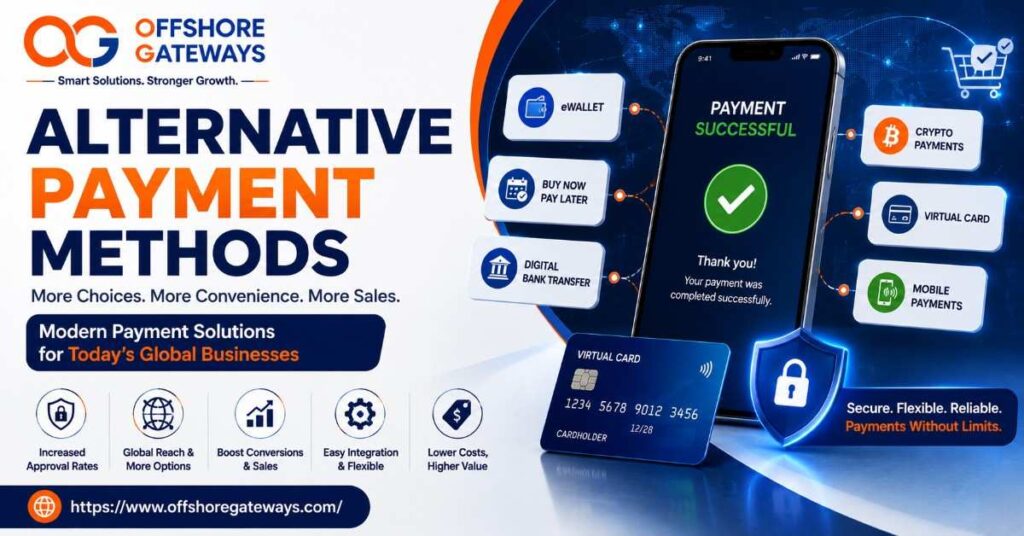
Offer local wallets, bank-pay options, and regional payment methods that customers already know and trust. Expanding your payment mix can improve payment acceptance, reduce checkout friction, and support international growth.
Alternative Payment Methods (APMs) help businesses accept payments through digital wallets, bank transfers, buy now pay later (BNPL) services, and local payment networks that are widely used in specific regions. From UPI in India and iDEAL in the Netherlands to Alipay in China and Klarna across Europe, these global payment methods give customers familiar ways to pay without relying solely on credit cards.
For international and high-risk merchants, online payment alternatives can help support local payment preferences, reach new markets, and reduce reliance on card-only payment options. Through a single integration, businesses can offer multiple international payment methods alongside Open Banking Solution and High Risk Payment Gateway services, creating a more flexible checkout experience for customers across different countries and regions.
What You Get
Our Alternative Payment Methods solution helps businesses offer popular local and global payment options through a single integration. Instead of relying solely on cards, merchants can expand payment acceptance with digital wallets, bank-pay solutions, BNPL services, and other region-specific payment methods while managing transactions from one platform.
- Digital Wallets: PayTM, PhonePe, Google Pay, Apple Pay, Alipay, WeChat Pay, and other supported wallets based on market availability.
- Bank-Pay & Redirect Payments: iDEAL, Sofort, Bancontact, POLi, BLIK, UPI, and other local bank payment methods.
- Flexible Checkout Experiences: Redirect, embedded, QR-based, and one-tap payment flows where supported.
- Unified Reporting & Reconciliation: Centralized transaction reporting, settlements, refunds, and payment tracking from a single dashboard.
- Buy Now, Pay Later (BNPL): Klarna, Afterpay, Tabby, Tamara, and additional providers where available.
Businesses can also combine Alternative Payment Methods with Open Banking Solution and ACH / eCheck Processing services to support broader payment coverage across different markets.
Who We Support
Alternative Payment Methods are most effective in markets where customers prefer local payment options over traditional card payments. By offering region-specific payment methods, businesses can improve payment acceptance and provide a checkout experience that matches local customer expectations.
SE Asia
UPI, PayTM, PhonePe, and Google Pay are widely used for everyday online and mobile payments across India and other parts of Southeast Asia. For businesses targeting the region, supporting these global payment methods can help reach customers who prefer account-based and wallet payments over traditional cards.
China
Alipay and WeChat Pay are among the most widely used digital payment platforms in China. These international payment methods support both online and QR-based payments, making them important options for merchants serving Chinese consumers and cross-border shoppers.
EU / UK
iDEAL, Bancontact, Sofort, and Open Banking Solution-powered account-to-account payments are commonly used across European markets. Adding local bank-pay methods alongside cards can help businesses support regional payment preferences while offering a broader range of checkout options.
How It Works
Getting started with Alternative Payment Methods is straightforward. Choose the payment methods that match your target markets, complete a single integration, and manage transactions through one platform. This helps businesses expand payment acceptance while offering customers familiar ways to pay.
- Select Payment Methods – Choose the local wallets, bank-pay options, BNPL providers, and other international payment methods that fit your target countries and customer preferences.
- Integrate Once – Connect through a single integration to access multiple payment options without managing separate provider connections.
- Customer Authorization – Customers complete payment using their preferred method, whether through a digital wallet, bank redirect, QR code, or account-to-account payment flow.
- Track & Reconcile – Monitor transactions, settlements, refunds, and reporting from a centralized dashboard for easier reconciliation and operational visibility.
Businesses can also combine Alternative Payment Methods with Open Banking Solution services to support secure account-to-account and electronic funds payment capabilities across different markets.
Pricing & Fees
Pricing for Alternative Payment Methods depends on the payment method, transaction volume, target market, and settlement requirements. Whether you are accepting local wallets, bank transfers, or other international payment methods, costs can vary based on the provider and payment flow selected.
- Per-Transaction Fees – Charges based on the payment method used, transaction value, and processing volume.
- BNPL Provider Fees – Buy Now, Pay Later providers may apply separate merchant fees and settlement terms.
- Electronic Funds Payment Options – Bank-based payment methods such as Open Banking and ACH/eCheck may have different pricing structures compared to card payments.
- FX & Payout Fees – Additional charges may apply when accepting payments in one currency and settling funds in another.
- Cross-Border Processing Costs – International transactions may involve currency conversion and regional processing fees.
- Volume-Based Pricing – Businesses with higher processing volumes may qualify for custom pricing and enterprise rate plans.
By combining Alternative Payment Methods with Open Banking Solution, ACH / eCheck Processing, and High Risk Payment Gateway services, businesses can build a flexible payment solution that supports broader payment acceptance across global markets.
Security & Compliance
Alternative Payment Methods are designed with security, authentication, and compliance controls that help businesses support safe and reliable payment acceptance across different markets. Security requirements vary by payment method, but most include customer authentication, encrypted data transmission, and transaction monitoring.
- Customer Authentication – Many payment methods use built-in verification such as Strong Customer Authentication (SCA), one-time passwords (OTP), biometric verification, or bank-based authentication to help confirm customer identity during checkout.
- Dispute & Refund Management – Dispute processes vary depending on the payment method. Some bank-pay and wallet solutions follow refund-based workflows, while others provide method-specific dispute procedures and transaction tracking. Combining these payment methods with Chargeback and Risk Management strategies can help businesses improve fraud prevention, dispute monitoring, and operational control.
- Data Protection – Sensitive payment information is protected through encryption, tokenization, and secure communication protocols where supported by the payment provider and integration model.
- Audit & Transaction Records – Payment activity, authorizations, settlements, and refunds can be tracked through detailed reporting and audit logs, helping businesses maintain operational visibility and compliance records.
- Regional Compliance Requirements – Payment methods may be subject to local regulations and network requirements, including PSD2 and SCA in Europe, NPCI guidelines for UPI in India, and other market-specific compliance standards.
Businesses can also combine Alternative Payment Methods with Open Banking Solution, ACH / eCheck Processing, and High Risk Payment Gateway services to support secure electronic funds payment capabilities across global markets.
Alternative Payment Methods Comparison
| Payment Method | Best For | Customer Experience | Chargeback Exposure |
|---|---|---|---|
| Credit Cards | Global acceptance | Familiar | Higher |
| Digital Wallets | Mobile payments | Fast | Lower |
| Open Banking | Account-to-account payments | Fast | Lower |
| BNPL | High-ticket purchases | Flexible | Medium |
| ACH / eCheck | Recurring billing | Cost-efficient | Lower |
Results You Can Expect
- Improved Payment Acceptance – Offering trusted local payment options can help businesses reduce checkout friction and provide customers with payment methods they already use and trust in their region.
- Better Mobile Checkout Experience – Digital wallets, QR-based payments, and bank-pay solutions simplify the checkout process on mobile devices by reducing the need for manual card entry.
- Access to Global Payment Methods – Supporting regional payment options such as UPI, iDEAL, Alipay, and other local methods allows businesses to serve customers across different countries and markets more effectively.
- Lower Dependence on Card Payments – Alternative payment options help diversify payment acceptance and reduce reliance on a single payment channel, which can be particularly valuable for international and high-risk merchants.
- Reduced Dispute Exposure – Some bank-pay and wallet-based payment methods follow different dispute models than traditional card payments. Combined with effective Chargeback and Risk Management, businesses can strengthen payment oversight and risk controls.
- Simplified Reconciliation & Reporting – Unified reporting, settlements, refunds, and transaction tracking help finance teams manage payment operations from a single platform.
Businesses can also combine Alternative Payment Methods with Open Banking Solution and ACH / eCheck Processing services to support secure electronic funds payment capabilities and broader payment coverage across global markets.
Looking for the Right Alternative Payment Methods?
Offshore Gateways helps businesses accept payments through digital wallets, bank transfers, BNPL providers, and other local payment methods used across global markets. Whether you are expanding internationally or looking to improve payment acceptance, our team can help you build a payment strategy that aligns with your business model, target regions, and growth goals.
Stay updated on social media as well – Linkedin
Frequently Asked Question
Alternative payment methods (APMs) are payment options that allow customers to pay without using traditional credit or debit cards. These methods include digital wallets, bank transfers, buy now pay later (BNPL) services, QR-based payments, and local payment networks such as UPI, iDEAL, and Alipay. Businesses use alternative payment methods to support local customer preferences, expand payment acceptance, and offer more flexible checkout experiences across different markets.
Costs vary depending on the payment method, transaction volume, and target market. In many cases, alternative payment methods can offer cost advantages compared to traditional card payments, particularly for bank-based payment methods and local payment networks. Businesses should evaluate processing fees, settlement costs, and cross-border charges when comparing payment options.
Most alternative payment methods can be added through a single payment integration. Businesses typically select the payment methods they want to offer, complete the required setup process, and configure which payment options appear for different countries or customer groups. This allows merchants to support local payment preferences without managing multiple separate integrations.
Yes. Offshore Gateways supports a range of alternative payment methods, including crypto payment solutions and ACH / eCheck processing. These payment options can help businesses diversify payment acceptance, support different customer preferences, and reduce reliance on traditional card-based payment methods.
Popular alternative payment methods vary by region. UPI is widely used in India, iDEAL is common in the Netherlands, Alipay and WeChat Pay are popular in China, while digital wallets and account-to-account payment methods are widely used across Europe and other global markets. Businesses often choose payment methods based on customer preferences in their target regions.
Connect With Us
Add Open Banking Payments

Market coverage, supported banks, and an integration plan within 24 hours.