
What Is Cryptocurrency Payment Gateway?
In the ever-evolving world of digital transactions, comprehending the role and significance of a payment gateway is crucial. This article delves into the concept of Cryptocurrency Payment Gateways, their pivotal role in facilitating seamless transactions, and the noteworthy players in this domain. In this post, you will learn: What Is Cryptocurrency Payment Gateway? A Cryptocurrency Payment Gateway serves as a vital bridge between digital currencies and traditional commerce. It enables businesses to accept various cryptocurrencies as payment for goods and services, facilitating secure and efficient transactions. This gateway generates unique payment addresses for customers, validates transactions, converts cryptocurrency into preferred fiat currency, and settles funds. With advantages such as global accessibility, reduced fees, enhanced security, and innovative options, Cryptocurrency Payment Gateways redefine the way businesses transact and engage with customers, paving the way for the future of seamless and borderless transactions. Noteworthy Cryptocurrency Payment Gateways When it comes to embracing the future of transactions, several cryptocurrency payment gateways stand out for their innovation and reliability. These gateways are instrumental in bridging the gap between cryptocurrencies and traditional commerce, enabling businesses to harness the power of digital currencies while providing a secure and user-friendly experience for both buyers and sellers. 1. BitPay A pioneering crypto currency payment gateway, BitPay, empowers businesses to accept Bitcoin and Bitcoin Cash payments. Merchants can choose to settle in their preferred fiat currency to mitigate crypto volatility. With its extensive experience and reputable track record, BitPay has become a go-to choice for merchants venturing into cryptocurrency transactions. 2. CoinGate CoinGate supports an array of cryptocurrencies, including Bitcoin, Ethereum, and Litecoin. It offers user-friendly integration options for popular e-commerce platforms, making it convenient for businesses to embrace digital currencies as a form of payment. CoinGate’s commitment to security and innovation has made it a prominent player in the crypto currency payment gateway space. 3. Coinbase Commerce A robust gateway, Coinbase Commerce, empowers businesses to accept Bitcoin, Ethereum, Litecoin, and Bitcoin Cash payments. It boasts a seamless integration process and a user-friendly transaction management dashboard, allowing merchants to easily manage their cryptocurrency transactions. Coinbase Commerce’s emphasis on user experience and reliability has garnered it a strong reputation in the industry. 4. Coinify Coinify facilitates the acceptance of Bitcoin, Ethereum, and other cryptocurrencies. It stands out for its customizable payment buttons and user-friendly interface, making it an attractive choice for businesses looking to incorporate digital currencies into their payment options. Coinify’s dedication to user-centric solutions has positioned it as a notable contender in the crypto currency payment gateway arena. The Role of Cryptocurrency Payment Gateways At its core, a crypto currency payment gateway acts as a conduit between e-commerce platforms and blockchain networks. It empowers businesses to embrace a multitude of cryptocurrencies as payment for their offerings. This gateway ensures secure and efficient transaction processing, safeguarding the interests of both buyers and sellers. How Cryptocurrency Payment Gateways Operate When a customer opts for cryptocurrency payment, the gateway generates a unique payment address for the transaction. Following the payment, the gateway validates the transaction and its authenticity. Subsequently, the cryptocurrency is converted into the merchant’s preferred fiat currency, negating exposure to the volatility of crypto markets. Finally, the funds are settled in the merchant’s account. Advantages of Cryptocurrency Payment Gateways Cryptocurrency payment gateways offer a plethora of advantages that are revolutionizing the way businesses transact and engage with their customers: Comparing Cryptocurrency Payment Gateway Fees Payment Gateway Transaction Fees Range Supported Cryptocurrencies BitPay 1% – 2.5% Bitcoin, Bitcoin Cash CoinGate 1.5% – 3% Bitcoin, Ethereum, Litecoin Coinbase Commerce 1.25% – 2.75% Bitcoin, Ethereum, Litecoin, Bitcoin Cash Coinify 1.2% – 2.8% Bitcoin, Ethereum CoinPayments 0.5% – 3.5% Various cryptocurrencies GoCoin 1% – 3% Bitcoin, Litecoin, Ethereum SpectroCoin 1% – 2% Bitcoin, Ethereum Binance Pay 0.5% – 2% Various cryptocurrencies Please note that the transaction fees may vary and are subject to change. It’s recommended to check with each payment gateway for the most up-to-date fee information. The Future of Cryptocurrency Payment Gateways The future of cryptocurrency payment gateways is poised to be marked by transformative advancements and increased integration across industries. As blockchain technology continues to evolve and gain wider acceptance, several trends are likely to shape the trajectory of these gateways: These trends collectively point toward a future where cryptocurrency payment gateways play a central role in revolutionizing the way transactions are conducted, offering efficiency, security, and accessibility on a global scale. Conclusion: The pivotal role of cryptocurrency payment gateways becomes increasingly evident as the digital landscape evolves. With Offshore Gateways at the forefront of providing reliable and secure solutions, businesses can navigate the intricacies of cryptocurrency transactions with assurance. Embracing cryptocurrency payment gateways offers access to global markets, cost-efficient transactions, and heightened security—a transformation that’s reshaping the future of digital commerce. Unlock the Power of Cryptocurrency with Offshore Gateways: Your Path to Seamless Transactions and Global Growth! Frequently Asked Questions (FAQs)
How eCheck Payment Works: A Comprehensive Guide
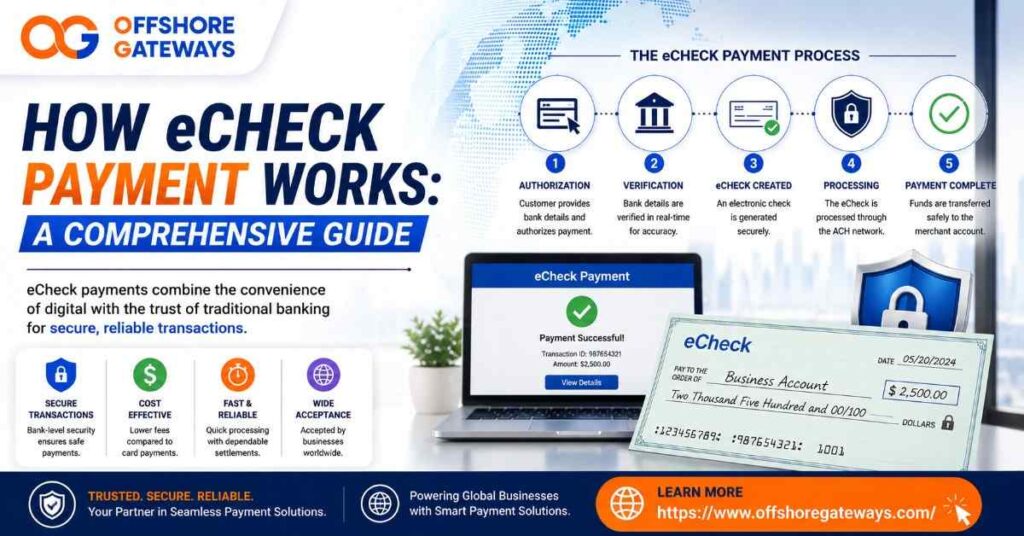
How eCheck Payment Works: A Comprehensive Guide In today’s rapidly evolving digital landscape, understanding how eCheck payment works has become essential. Electronic payment methods have become the cornerstone of modern financial transactions. Among these methods, eCheck payment processing stands out as a convenient and efficient way to facilitate online payments. If you’re a business owner looking to optimize your payment processes, Offshore Gateways can be your trusted partner in navigating the world of eCheck payment processing. In this comprehensive guide, we will delve deeper into the intricacies of eCheck payment processing, exploring its working mechanism, benefits, potential drawbacks, real-world applications, industries where it shines, and comparative processing times. How eCheck Payment Works: A Comprehensive Guide An electronic check, or eCheck, is a digital version of the traditional paper check. It empowers individuals and businesses to make payments directly from their bank accounts to recipients through a secure online platform. This method’s popularity stems from its simplicity, security, and cost-effectiveness, setting it apart from other electronic payment options. Step-by-Step Process Benefits of eCheck Payment Processing Drawbacks and Considerations While eCheck payment processing boasts numerous advantages, it’s vital to acknowledge potential drawbacks: Real-World Applications Industries Favoring eCheck Payments As eCheck payments offer a unique blend of convenience, security, and cost-effectiveness, they find particularly strong traction in several industries: How Offshore Gateways Can Assist Your Business Navigating the realm of eCheck payment processing and enhancing your business’s financial efficiency can be complex. That’s where Offshore Gateways comes in. As a provider of payment gateways, credit card processing, eCheck merchant services, cryptocurrency gateways, and other financial products, we offer expertise and support to help you harness the full potential of eCheck payments and other electronic transactions. Contact Offshore Gateways today to explore better pricing options and take your payment processes to the next level. Stay updated on social media as well – Linkedin Frequently Asked Questions What is an eCheck payment? An eCheck payment is a digital version of a traditional paper check, allowing individuals and businesses to make secure online payments directly from their bank accounts. How does eCheck payment processing work? eCheck payment processing involves initiation, authorization, confirmation, transmission, and clearing. It requires both the payer and recipient to have valid bank accounts. Is eCheck payment secure? Yes, eCheck payments are secure. They use encryption and authentication protocols to protect sensitive financial information, reducing the risk of fraud. What are the advantages of using eCheck payments? eCheck payments are cost-effective, convenient, and widely accepted. They also offer reduced fraud risk compared to paper checks. What is the processing time for eCheck payments? The processing time for eCheck payments can range from 2 to 7 business days, depending on factors like bank practices and ACH processing schedules.
The Ultimate Top 10 Virtual IBANs Revealed!
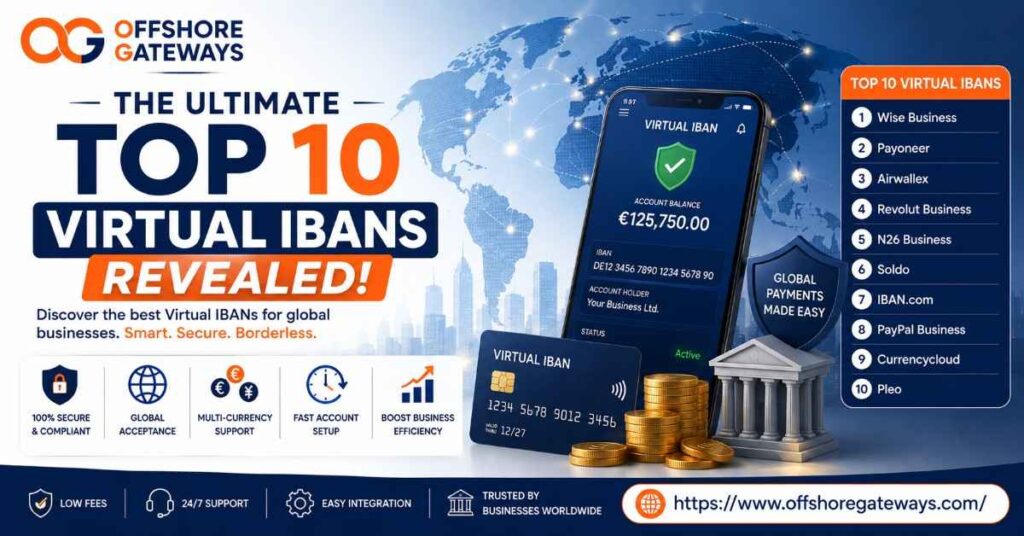
The Ultimate Top 10 Virtual IBANs Revealed! In the rapidly evolving landscape of international banking and digital finance, Virtual International Bank Account Numbers (VIBANs) have emerged as a powerful tool for simplifying cross-border transactions. A Virtual IBAN is a unique identifier assigned to an account that enables businesses and individuals to receive payments and conduct transactions without the need for traditional physical bank accounts. This article delves into the top 10 Virtual IBAN examples, showcasing their benefits, applications, and the broader implications they have on modern finance. Additionally, we will explore how platforms like Offshore Gateways, available at www.offshoregateways.com, can play a crucial role in obtaining Virtual IBANs for businesses seeking streamlined global financial operations. Top 10 Virtual IBAN Providers Here are the top 10 Virtual IBAN providers that offer efficient solutions for managing cross-border transactions: Frequently Asked Questions What is a Virtual IBAN? A Virtual IBAN is a unique identifier assigned to an account that enables businesses and individuals to receive payments and conduct transactions internationally without the need for a physical bank account. How do Virtual IBANs work? Virtual IBANs work by acting as an intermediary for cross-border transactions. They allow users to receive funds in various currencies, which can then be converted or transferred as needed. Are Virtual IBANs secure? Yes, Virtual IBANs are secure. They are provided by reputable financial institutions and adhere to strict regulatory standards, ensuring the safety of your funds and transactions. Who can benefit from Virtual IBANs? Virtual IBANs are beneficial for businesses engaged in international trade, freelancers receiving payments from clients worldwide, and individuals managing finances across multiple countries. Can I send funds with Virtual IBANs? Virtual IBANs are primarily used for receiving payments. However, some providers may offer functionalities to send funds within their platform.
How Does Forex Payment Gateway Work?
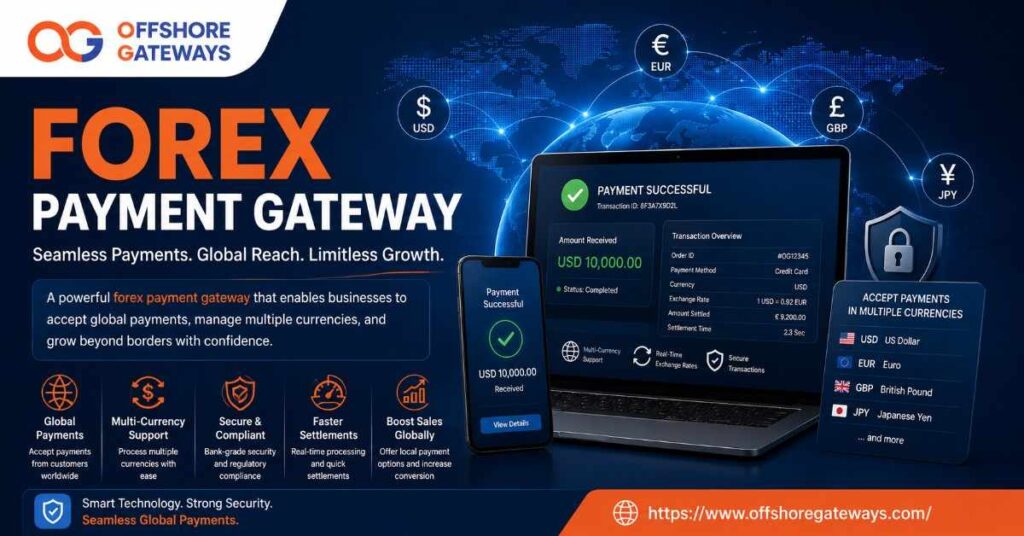
How Does Forex Payment Gateway Work? In today’s interconnected global economy, businesses and individuals are engaging in international transactions more frequently than ever before. As a consequence, the demand for efficient and secure payment solutions has surged. This comprehensive article aims to provide an in-depth exploration of Forex Payment Gateways, shedding light on their significance, operational intricacies, and an array of advantages they bring to the table. Introduction to Forex Payment Gateways Forex Payment Gateways have transformed the way we conduct international transactions, revolutionizing e-commerce and cross-border trade. To truly comprehend their impact, let’s delve into their fundamental definition and operational mechanics. What is a Forex Payment Gateway? The integration of these gateways in e-commerce platforms has opened up new avenues for businesses to tap into global markets without the hindrance of currency barriers. This pivotal role warrants a closer examination of how these gateways actually operate. How Does a Forex Payment Gateway Work? The operational framework of Forex Payment Gateways involves a series of intricately woven steps: The Benefits of Using a Forex Payment Gateway Leveraging a Forex Payment Gateway offers an array of tangible benefits that extend to both businesses and customers: Types of Forex Payment Gateways Forex Payment Gateways can be categorized into three distinct types, each offering unique features and advantages: Hosted Payment Gateways Server-to-Server Payment Gateways API-based Payment Gateways The choice of gateway type depends on the business’s technical capabilities, user experience goals, and security preferences. Security Features of Forex Payment Gateways In an era where cyber threats are prevalent, the security of transactions and customer data is of paramount importance. Forex Payment Gateways implement robust security measures to ensure safe and secure cross-border transactions: These security measures work collectively to create a secure environment that instills confidence in customers and fosters a safe online shopping experience. Choosing the Right Forex Payment Gateway Selecting the appropriate Forex Payment Gateway requires careful consideration of several factors that align with the business’s objectives and operational needs: Popular Forex Payment Gateways Among the myriad of available options, several reputable Forex Payment Gateways stand out for their features and widespread adoption: Comparative Features of Popular Forex Payment Gateways Comparing the features of these popular Forex Payment Gateways can help businesses make informed decisions based on their specific requirements: Features PayPal Stripe Skrill Supported Currencies 100+ 135+ 40+ Integration Options API, hosted payment, express checkout API, hosted checkout, in-app payments API, hosted payment, quick checkout Security Measures Advanced fraud detection, buyer protection Real-time fraud prevention, 3D Secure Fraud monitoring, chargeback protection User Base Widely used across e-commerce platforms Popular among startups and tech companies Focus on international transfers The Role of Forex Payment Gateways in E-Commerce The growth of e-commerce and the globalization of markets have propelled Forex Payment Gateways into a central role in facilitating cross-border transactions. They play a pivotal role in: Future Trends in Forex Payment Gateways As technology continues to advance, the landscape of Forex Payment Gateways is poised for further innovation and development. Some key trends to watch for include: The Regulatory Landscape of Cross-Border Payments The realm of cross-border payments is not without its challenges, particularly concerning regulatory compliance. Forex Payment Gateways must navigate complex international financial regulations, anti-money laundering (AML) laws, and sanctions lists to ensure the legality and integrity of transactions. Staying compliant with these regulations is essential for businesses engaged in international trade. Offshore Gateways: The Optimal Choice for Cross-Border Transactions For businesses aiming to optimize their cross-border transactions, Offshore Gateways presents a compelling solution. Offshore gateways operate in jurisdictions with favorable tax environments and reduced transaction costs, allowing businesses to streamline international fund transfers and achieve cost savings. This strategic choice can significantly benefit businesses engaged in frequent cross-border transactions. Engage with Us! In conclusion, this article has delved into the intricate world of Forex Payment Gateways, uncovering their critical role in enabling secure and seamless international transactions. Have questions, thoughts, or experiences related to payment gateways or cross-border transactions? We encourage you to share your perspective in the comments section below. Your engagement not only enriches our community but also sparks meaningful discussions that contribute to a deeper understanding of this dynamic landscape. Stay updated on social media as well – Linkedin Frequently Asked Questions What is a Forex Payment Gateway? A Forex Payment Gateway is a digital platform that facilitates secure online transactions involving different currencies. It acts as an intermediary between buyers, merchants, and financial institutions, ensuring smooth cross-border fund transfers. How do Forex Payment Gateways ensure security? Forex Payment Gateways employ advanced encryption protocols to safeguard sensitive data during transactions. They also use real-time fraud detection algorithms to identify and prevent fraudulent activities, ensuring secure and authentic transactions. What benefits do Forex Payment Gateways offer to businesses? Forex Payment Gateways offer global reach, enhanced security, automated currency conversion, convenience, and efficiency. Businesses can expand their customer base, offer seamless cross-border transactions, and increase revenue potential. What are the different types of Forex Payment Gateways? There are three main types: hosted payment gateways (e.g., PayPal), server-to-server gateways, and API-based gateways. Hosted gateways redirect users to a secure payment page, while server-to-server and API-based gateways facilitate direct transfer of payment information. How do customers benefit from Forex Payment Gateways? Customers can enjoy the convenience of making purchases in their preferred currencies without manual conversion. They also benefit from enhanced security measures that protect their payment data during transactions.
Open Banking Solutions: The New Banking in 2026
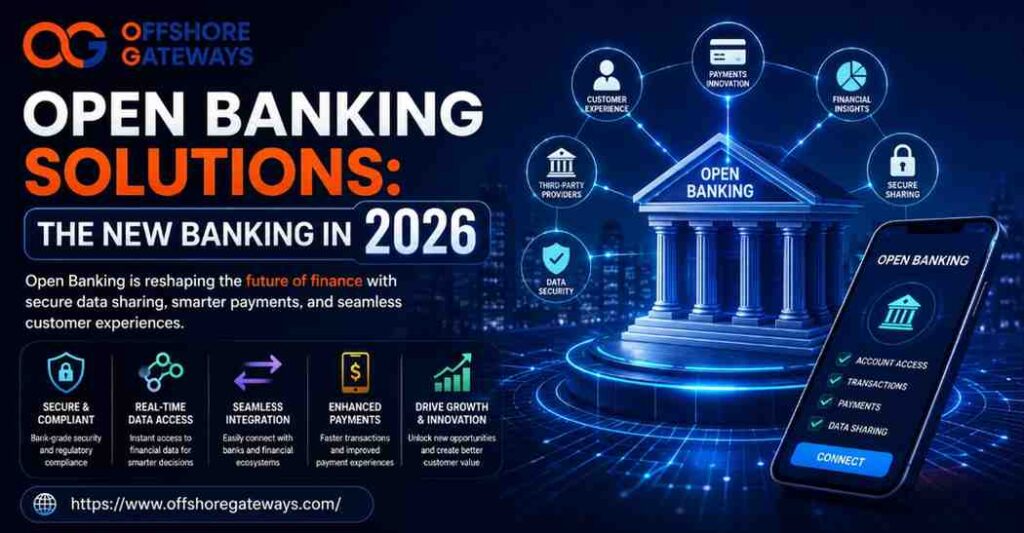
Open Banking Solutions: The New Banking in 2026 Welcome to a journey that will redefine how you perceive and experience banking. In this comprehensive post, we will delve into the world of Open Banking Solutions, exploring how they are reshaping the financial industry and empowering both consumers and institutions. By the end of this post, you will have a clear understanding of: The core concepts of Open Banking Solutions and how they facilitate data sharing. The array of benefits that these solutions offer to consumers, from financial control to personalized services. How do they foster innovation and healthy competition in the financial sector? Measures taken to address security and privacy concerns associated with these solutions. This is why Offshore Gateways stands out as a premier provider in this field. The challenges and opportunities that lie ahead on the path of these solutions. Global landscape, spanning Europe, Asia, and North America. Prepare to be immersed in the possibilities these solutions bring and gain insights into how they are poised to revolutionize the way we bank. Let’s embark on this journey together. Understanding Open Banking Solutions At its core, these solutions refer to the practice of sharing financial information and data securely and seamlessly among various financial institutions, third-party service providers, and customers. This sharing of data is facilitated through Application Programming Interfaces (APIs), which act as bridges between different systems, enabling them to communicate and exchange information. This approach has the power to eliminate the traditional silos that have historically separated banks, allowing for greater collaboration, competition, and innovation. The Benefits of Open Banking Solutions for Consumers Enhanced Financial Control: These solutions empower consumers with greater control over their financial lives. By securely sharing their financial data with authorized third-party applications, customers can access a wider range of services that enhance their financial management, such as budgeting tools, investment platforms, and loan comparison services. Personalized Financial Solutions: These solutions promote personalized financial solutions. Access to a broader range of data allows banks and third-party providers to offer tailored products and services that align with individual needs and goals. This could range from personalized credit card suggestions to investment strategies based on an individual’s financial behavior. Simplified Financial Monitoring: These solutions enable consumers to aggregate their accounts from various institutions in a single application, simplifying the process of monitoring their financial health and transactions. Improved User Experience: These solutions enhance the overall user experience by allowing customers to access a diverse range of services within a single platform. This reduces the need to navigate between different banking apps or websites, streamlining the financial management process. Fostering Innovation and Competition through Open Banking Solutions These solutions serve as a catalyst for innovation within the financial industry. Enabling Fintech Startups: These solutions break down barriers and encourage collaboration, allowing fintech startups to develop innovative solutions that were previously unattainable. Peer-to-peer payment platforms, robo-advisors, and automated investment services can all thrive within the framework of these solutions, enhancing consumer choices. Enhancing Established Institutions: Established financial institutions can also leverage these solutions to innovate and improve their services. By collaborating with third-party providers and fintech companies, they can offer new and improved products that cater to changing customer needs. API Marketplaces: These solutions pave the way for the creation of API marketplaces, where developers can create and share financial products and services. This ecosystem fosters healthy competition and encourages the development of innovative solutions. Data-Driven Insights: The availability of more comprehensive financial data allows banks and financial service providers to offer data-driven insights to customers. These insights can aid in making informed financial decisions, from managing expenses to optimizing investments. Addressing Security and Privacy Concerns with Open Banking Solutions While these solutions present opportunities, they also raise valid concerns about data security and privacy. Robust Security Protocols: These solutions prioritize data security. Stringent authentication processes, encryption methods, and data sharing permissions are implemented to safeguard consumer information. Regulatory Guidelines: Regulatory bodies like the Revised Payment Services Directive (PSD2) in the European Union establish guidelines for strong customer authentication and secure communication standards within these solutions. Consent Frameworks: These solutions incorporate consent frameworks, allowing consumers to have control over which financial data is shared and with whom, enhancing privacy and transparency. Why Offshore Gateways is Your Best Choice for Open Banking Solutions As a provider in this field, Offshore Gateways stands at the forefront of shaping the future of banking. Our commitment to innovation, security, and seamless integration sets us apart as a leader in the field. Services Offered by Offshore Gateways Secure API Development Expertise in developing APIs that ensure secure data exchange. Data Encryption and Protection Implementation of robust encryption mechanisms to protect sensitive information. Interoperability Solutions Bridging the gap between different banking systems to ensure smooth data flow. Compliance Assurance Ensuring regulatory compliance for both financial institutions and customers. Advantages of Choosing Offshore Gateways for Open Banking Solutions Advantages Why Offshore Gateways Expertise Leaders in this field with a deep understanding of industry dynamics. Security Implementation of advanced security measures to safeguard customer data. Innovation Continuous innovation in API development for improved customer experiences. Compliance Expertise in navigating regulatory requirements for a seamless transition. Customization Tailored solutions that align with the unique needs of each financial institution. Offshore Gateways serves as a strategic partner for institutions navigating the complexities of these solutions, offering tailored solutions that balance innovation with security. Our expertise ensures a smooth transition into the world of Open Banking, enabling your institution to reap the benefits while safeguarding your customers’ information. Connect with Us to Learn More about Open Banking Solutions Are you curious about the exciting possibilities that these solutions hold? Do you want to explore how Offshore Gateways can help your institution embrace this transformative approach to banking? or visit our Contact Us page at OffshoreGateways. Our team is ready to answer your questions and guide you on your Open Banking journey. Challenges and the Road Ahead Institutional Resistance: Some financial institutions may hesitate to embrace these
What Are The Benefits Of Open Banking?
In an era characterized by technological evolution, few concepts have reshaped industries as profoundly as Open Banking has transformed the financial sector. Open Banking stands as a groundbreaking paradigm that facilitates secure data sharing between financial institutions and third-party providers, creating a dynamic ecosystem of innovation and personalized services. By capitalizing on standardized Application Programming Interfaces (APIs), Open Banking delivers an array of advantages tailored to customers’ needs, ranging from heightened financial control to enhanced security measures. This comprehensive exploration delves into the profound benefits of Open Banking API and Open Banking Payments for customers, unpacking the potential they hold and the transformative experiences they offer. What You’ll Uncover: Benefits of Open Banking for Customers The era of Open Banking brings forth a multitude of tangible benefits for customers: 1. Empowered Financial Insight: Open Banking shatters the barriers to comprehensive financial management. Customers gain the ability to view their accounts across multiple institutions within a single platform. This consolidated view provides a holistic perspective on their financial health, enabling better decision-making and budgeting. 2. Personalized Financial Guidance: With access to real-time financial data, customers unlock the potential for personalized financial advice and assistance. Open Banking enables the development of advanced financial management tools that offer tailored insights and suggestions, ultimately enhancing financial well-being. 3. Seamless Transactional Experiences: Open Banking streamlines transactions, allowing customers to execute payments and transfers effortlessly. With access to a wider range of payment options, customers enjoy convenience and efficiency in their financial interactions. 4. Enhanced Security Measures: The foundation of Open Banking rests on robust security protocols. Customer data is safeguarded through encrypted APIs and stringent authentication mechanisms, ensuring that sensitive information remains protected. 5. Access to Innovative Financial Services: Open Banking opens doors to an array of innovative financial services. Customers gain access to cutting-edge products such as budgeting tools, personalized credit scoring, and even customized insurance solutions tailored to their individual needs. Real-World Scenarios: Open Banking in Action Real-world applications illustrate the tangible impact of Open Banking on customers: Scenario Description Personal Finance Apps Open Banking fuels the development of personal finance applications that offer real-time insights into spending patterns, helping customers make informed decisions. Customized Recommendations Banking institutions leverage Open Banking to provide customers with tailored product recommendations based on their financial behaviors. Secure Payment Solutions Open Banking facilitates secure payment solutions that simplify and expedite financial transactions for customers. Financial Health Assessments Through Open Banking, customers gain access to tools that assess their financial health and provide actionable steps for improvement. These scenarios showcase how Open Banking translates into tangible improvements in customer experiences and financial empowerment. Real-World Examples: Leading the Way in Open Banking Several real-world entities are at the forefront of pioneering the Open Banking movement, reaping the remarkable benefits of Open Banking: These pioneering entities underscore the real-world application and substantial benefits of Open Banking in driving innovation, personalized services, and enhanced financial experiences. Ensuring Security and Trust: Safeguarding Customer Data The benefits of Open Banking are intertwined with stringent security measures: Embracing the Future: The Evolution of Open Banking As we journey forward, the horizon of Open Banking brims with exciting possibilities, unfolding a tapestry of innovation and convenience. Let’s delve into the fascinating prospects that lie ahead, emphasizing the benefits of Open Banking and the remarkable evolution it promises: In summary, the evolution of Open Banking holds immense promise, offering a tapestry woven with innovation, customer-centricity, and stringent data protection. As you navigate this transformative journey, the benefits of Open Banking will continue to unfold, empowering you to shape your financial destiny with confidence. Offshore Gateways: Enabling the Full Spectrum of Open Banking Benefits In the dynamic landscape of Open Banking, Offshore Gateways stands as your partner in unlocking the true benefits of Open Banking for customers. Our specialized expertise spans strategic consultation, seamless API integration, and robust security measures, all geared towards helping you leverage the full spectrum of advantages that Open Banking offers. Whether you’re a customer seeking to harness the benefits of Open Banking for improved financial management or a business aiming to deliver exceptional financial services, we tailor solutions to meet your unique requirements. Connect with Offshore Gateways today to explore how we can transform your financial journey through the unparalleled benefits of Open Banking. Engage in the Dialogue: Share Your Insights We welcome you to contribute your thoughts and experiences in the comments section below. How has Open Banking influenced your financial decisions? Are there specific benefits of Open Banking API and Open Banking Payments thatresonate with you? By sharing your perspective, you contribute to a richer discourse and contribute to the collective understanding of this transformative phenomenon. Join us in shaping the future of Open Banking together! Frequently Asked Questions (FAQs)
10 Best Cryptocurrency Payment Processing Gateways
Explore top Cryptocurrency Payment Processing Gateways in 2023 with Offshore Gateways. Secure transactions and instant settlements.
Unlocking Opportunities: Casino Payment Gateway For Curacao

Secure, efficient, and tailored: Offshore Gateways leads the way with its Casino Payment Gateway for Curacao.
eWallets for Forex Merchants: The Perfect Solution for Success
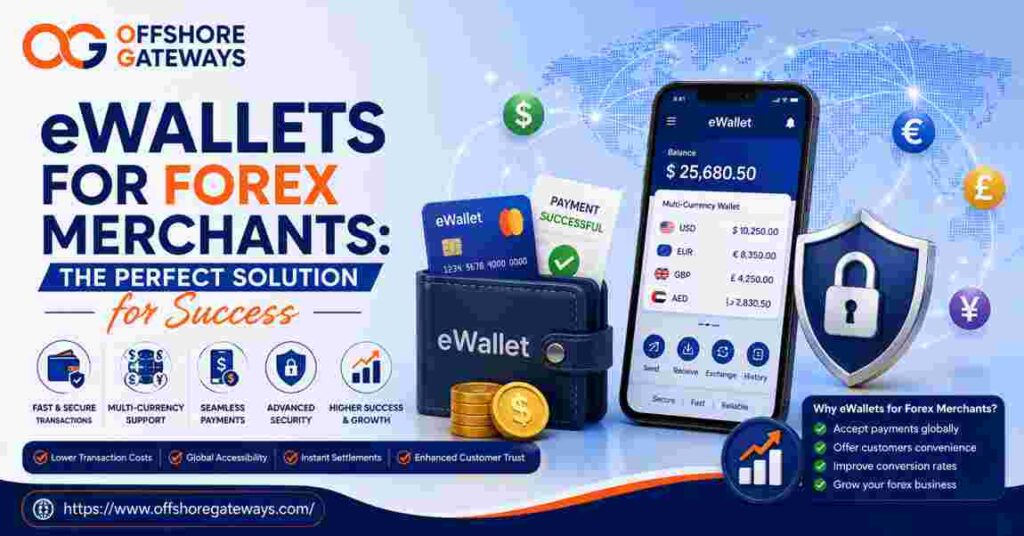
eWallets for Forex Merchants: The Perfect Solution for Success Introduction In today’s fast-paced digital world, the financial landscape is constantly evolving. For forex merchants, adapting to these changes can be the key to success. One such advancement that’s making waves in the industry is the use of eWallets for Forex Merchants. In this comprehensive guide, we’ll delve into what eWallets for Forex Merchants are and how they can benefit Forex merchants like you. Plus, we’ll introduce you to Offshore Gateways, your trusted partner for payment processing solutions tailored to high-risk businesses, including eWallet integration for Forex Merchants. Understanding eWallets for Forex Merchants eWallets for Forex Merchants, short for electronic wallets, are digital payment solutions that allow users to store, send, and receive money electronically. They serve as a bridge between traditional banking systems and online commerce, offering a secure, convenient, and efficient way to manage financial transactions. Forex merchants can leverage the power of eWallets for Forex Merchants to streamline their payment processes and enhance their customers’ experience. Advantages of eWallets for Forex Merchants Security: eWallets for Forex Merchants use robust encryption and authentication methods to protect users’ financial data, reducing the risk of fraud and chargebacks for Forex Merchants. Speed: Transactions with eWallets for Forex Merchants are lightning-fast, ensuring that you and your customers can execute trades and transfers without delay. Global Reach: eWallets for Forex Merchants facilitate international transactions, allowing you to tap into a global customer base and trade in multiple currencies seamlessly. Lower Costs: With eWallets for Forex Merchants, you can potentially save on transaction fees and currency conversion costs compared to traditional banking methods. User Convenience: Customers appreciate the convenience of eWallets for Forex Merchants, which can lead to increased loyalty and repeat business. Risks and Challenges While eWallets for Forex Merchants offer numerous benefits, it’s essential to be aware of potential risks and challenges in their use. These may include: Regulatory Compliance: Forex merchants must navigate a complex regulatory landscape. Ensuring compliance with eWallet-related regulations is crucial to avoid legal issues. Security Concerns: While eWallets are generally secure, they are not immune to cyber threats. Merchants must stay vigilant against fraud and data breaches. Exchange Rate Volatility: Forex trading involves dealing with multiple currencies. Exchange rate fluctuations can impact the value of funds held in eWallets. Integration Complexities: Integrating eWallets with forex trading platforms can be complex. Merchants may face technical challenges during the integration process. Emerging Trends The world of forex trading is dynamic and ever-evolving, and eWallets continue to adapt to these changes. Here are some emerging trends in eWallet technology and how they might impact the forex industry: Blockchain-Based eWallets: Blockchain technology is gaining traction in the financial sector. Some eWallet providers are exploring blockchain-based solutions for added security and transparency in forex transactions. Mobile Payment Apps: Mobile payment apps are becoming increasingly popular. eWallets are adapting by offering mobile apps with enhanced features, making it even more convenient for forex traders on the go. AI and Automation: Artificial intelligence and automation are being used to streamline eWallet transactions. These technologies can provide insights into forex market trends and automate routine tasks. Cryptocurrency Integration: Some eWallets are now supporting cryptocurrencies, allowing forex merchants to trade in digital assets alongside traditional currencies. Top 5 eWallets for Forex Merchants Here are the top 5 eWallets that Forex merchants can consider integrating into their payment systems: eWallets Key Features PayPal Widely recognized, global reach Skrill International money transfers, prepaid card Neteller Popular among forex traders, user-friendly Payoneer Cross-border payments specialist Adyen Scalable, supports various payment methods Why Choose Offshore Gateways for Your Payment Gateway Needs? When it comes to selecting a payment gateway provider for your Forex business, Offshore Gateways stands out as the ideal choice for eWallets for Forex Merchants. Here’s why: Specialized Solutions: Offshore Gateways specializes in payment processing solutions for high-risk businesses like yours, ensuring that your unique needs for eWallets for Forex are met. Security and Compliance: We prioritize the security of your transactions and maintain compliance with industry standards for eWallets, giving you peace of mind. Global Reach: Our services are designed to support your global expansion efforts for eWallets for Forex Merchants, making it easier to reach customers around the world. Experienced Team: With years of experience in the payment processing industry, our team has the expertise to help you navigate the complexities of high-risk businesses and eWallets. Customized Solutions: We tailor our solutions to fit your specific requirements for eWallets, ensuring that you have the tools you need to succeed. eWallets for Forex Merchants: A Game-Changer for Forex Merchants The world of forex trading is dynamic and competitive. To stay ahead, it’s essential to explore how eWallets for Forex Merchants can revolutionize your business. Here are some additional factors to consider for eWallets for Forex Merchants: 1. Regulatory Compliance: eWallet providers, especially those focused on Forex transactions, often have robust compliance measures in place for eWallets for Forex Merchants. This ensures that your forex business stays in line with regulatory requirements, which can be particularly complex in the financial industry. 2. Real-time Access to Funds: With eWallets, you can gain quicker access to your funds, reducing the delays associated with traditional banking methods. This agility is crucial in forex trading, where timing can make a significant difference for eWallets for Forex Merchants. 3. Enhanced Customer Experience: The user-friendly interfaces and mobile apps offered by eWallets for Forex Merchants can enhance the overall customer experience for Forex Merchants. Ease of use can lead to increased customer satisfaction and loyalty with eWallets for Forex Merchants. 4. Security Measures: eWallets for Forex Merchants employ state-of-the-art security measures, including two-factor authentication and biometric verification, to safeguard your financial transactions. This level of security is paramount for forex merchants dealing with sensitive data for eWallets. 5. Integration with Trading Platforms: Many eWallet providers offer seamless integration with popular Forex trading platforms for eWallets. This integration simplifies the process of funding your trading account and withdrawing profits for eWallets. Offshore Gateways: Your
The Awesome Guide To Offshore Company Registration In 2023
Explore the benefits of offshore company registration. Tax advantages, asset protection, and global access. Start your journey today!