
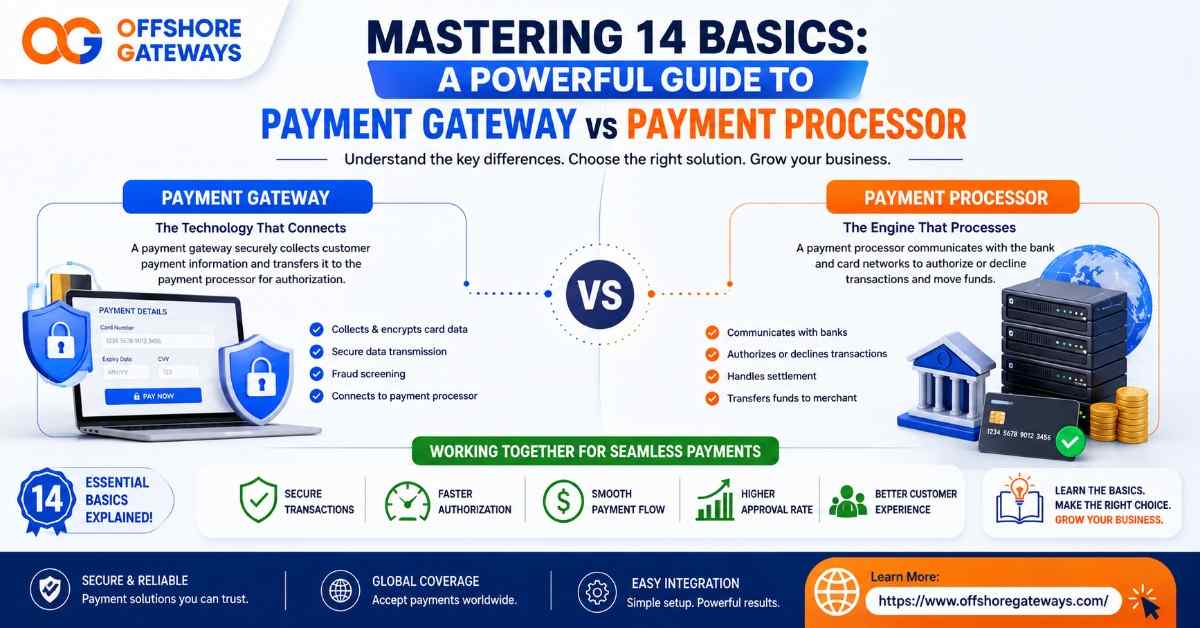
In today’s hyper-connected world, the payment gateway vs payment processor play a vital role in ensuring the swift and secure flow of funds through online channels, catering to businesses and consumers alike. These often-confused elements have distinct functions that harmonize to create a seamless experience for digital transactions. This thorough exploration aims to demystify the realm of payment gateways and payment processors, shedding light on their individual roles, disparities, and the harmonious collaboration driving the realm of online payments.
At the core of digital transactions, payment gateway vs payment processor form essential pillars of the modern financial ecosystem. Although distinct, they collaborate seamlessly to enable online transactions.
Payment gateway vs payment processor work in tandem to ensure the fluid exchange of funds in the digital realm. Payment gateways serve as virtual entrances, allowing customers to input payment information securely and initiate the transaction process. Payment processors take over after this point, verifying funds, validating details, and coordinating fund transfers between accounts. This collaborative dance between the two ensures the efficiency and security of online transactions, shaping the landscape of modern finance.
| Aspect | Payment Gateway | Payment Processor |
|---|---|---|
| Definition | The engine behind transactions, verifies, transfers funds | Engine behind transactions, verifies, transfers funds |
| Functionality | A bridge between customer, merchant, bank | Verifies transactions, validates funds, initiates transfers |
Payment Gateways: Imagine a bridge that spans across customers, merchants, and banks, facilitating the smooth passage of payment information. This bridge is the payment gateway. Acting as a virtual intermediary, a payment gateway encrypts the transaction data as it travels from the customer’s device to the merchant’s platform.
Payment Processors: While the payment gateway sets the stage, the payment processor steps into the spotlight backstage. It is the engine that drives the transaction process, ensuring its accuracy, validity, and completion.
| Aspect | Payment Gateway | Payment Processor |
|---|---|---|
| Interface Focus | Prioritizes user interface, checkout experience | Backend processing, transaction verification |
| Data Protection | Ensures secure data transmission | Implements fraud detection algorithms |
Payment Gateways: Going beyond the technical aspects, payment gateways prioritize user experience in the payment gateway vs payment processor arena. They are dedicated to streamlining the checkout process for customers, striving to make it as seamless and convenient as possible.
Payment Processors: In the realm of payment gateway vs payment processor, the latter thrives behind the scenes, meticulously handling the intricate details of transaction verification. Their paramount responsibility revolves around ensuring the legitimacy of transactions.
| Aspect | Payment Gateway | Payment Processor |
|---|---|---|
| Data Security | Encryption protocols, SSL technology | Fraud detection mechanisms, secure routing |
| Integration Methods | APIs, plugins, SDKs | Direct connections with financial networks |
| Customization | Customization options for integration | Collaboration with issuing banks, card networks |
| Role in Transaction | Front-end interface, data transmission | Back-end processing, verification, fund transfer |
Payment Gateways: The architecture of a payment gateway is designed to prioritize data security and seamless integration. Encryption protocols, such as SSL (Secure Sockets Layer), are employed to create a secure connection between the customer’s device and the merchant’s platform.
Payment Processors: Payment processors, in their pursuit of accuracy and security, establish direct connections with financial institutions. These connections enable rapid and precise transaction processing.
| Aspect | Payment Gateway | Payment Processor |
|---|---|---|
| Payment Options | Offers diverse options (credit cards, wallets) | Swift verification, seamless user checkout |
Payment Gateways: The success of an online payment system hinges on the user experience provided by payment gateways. Within the realm of payment gateway vs payment processor, payment gateways emerge as customer-centric champions. To reduce friction and enhance convenience, they offer a spectrum of payment options.
Payment Processors: Payment processors collaborate closely with payment gateways to ensure accurate processing across diverse payment methods. They meticulously verify transactions and validate fund availability, regardless of the payment method chosen by the customer in the payment gateway vs payment processor dynamic.
| Aspect | Payment Gateway | Payment Processor |
|---|---|---|
| Data Security | Secure data transmission | Fraud detection, secure transaction routing |
Payment Gateways: The security of customer data during transmission is a paramount concern for payment gateways. To mitigate risks, they employ encryption protocols such as SSL technology.
Payment Processors: Payment processors are guardians of financial integrity. They utilize a multi-layered approach to security, involving advanced fraud detection algorithms.
| Aspect | Payment Gateway | Payment Processor |
|---|---|---|
| Integration Methods | APIs, plugins, SDKs | Direct connections, seamless processing |
Payment Gateways: The integration of payment gateways into e-commerce platforms is vital for seamless online transactions. Payment gateways offer various integration methods, including APIs, plugins, and SDKs.
Payment Processors: Payment processors collaborate closely with payment gateways to ensure secure transaction processing within the dynamic landscape of payment gateway vs payment processor. Their pivotal role includes meticulous verification of transaction details acquired from the payment gateway, guaranteeing utmost accuracy in the exchange of payment information.
| Aspect | Payment Gateway | Payment Processor |
|---|---|---|
| Payment Methods | Supports various methods (cards, wallets) | Accurate processing & supports multiple methods |
Payment Gateways: Payment gateways, in the realm of payment gateway vs payment processor, stand as symbols of flexibility. They empower businesses to provide an array of payment methods to customers, ranging from traditional credit and debit cards to digital wallets and even bank transfers.
Payment Processors: Payment processors join forces with payment gateways to process various payment methods accurately. They verify transactions and validate the availability of funds, irrespective of the payment method chosen by the customer.
| Aspect | Payment Gateway | Payment Processor |
|---|---|---|
| User Experience | Smooth checkout experience, presentation | Swift verification, accurate fund transfer |
Payment Gateways: In the realm of online payments, speed is of the essence. Payment gateways contribute to a smooth transaction experience by promptly presenting payment options and simplifying the checkout process.
Payment Processors: Payment processors play a critical role in ensuring the reliability of transactions. Their real-time verification processes prevent delays and inaccuracies in fund transfers.
| Aspect | Payment Gateway | Payment Processor |
|---|---|---|
| Pricing Models | Transaction fees, subscription-based | Transaction percentage, risk-based fees |
Payment Gateways: The cost structure associated with payment gateways can vary. Businesses may encounter per-transaction fees or opt for subscription-based models, depending on the gateway provider.
Payment Processors: Payment processors charge businesses a percentage of the transaction value. This fee covers the costs of transaction verification, fund transfer, and other operational processes.
| Aspect | Payment Gateway | Payment Processor |
|---|---|---|
| Currency Support | Supports multi-currencies, conversion | Currency conversion, cross-border efficiency |
Payment Gateways: The digital realm knows no geographical boundaries, and payment gateways capitalize on this by supporting multiple currencies.
Payment Processors: Collaborating closely with payment gateways, payment processors play a crucial role in enabling efficient cross-border transactions. They handle currency conversion seamlessly.
| Aspect | Payment Gateway | Payment Processor |
|---|---|---|
| Data Compliance | Adheres to data protection regulations | Collaborates with regulatory bodies |
Payment Gateways: Payment gateways handle sensitive customer data during the payment process. To adhere to data protection regulations, they implement stringent security measures.
Payment Processors: Payment processors collaborate closely with regulatory bodies and financial institutions to ensure compliance with financial regulations.
| Aspect | Payment Gateway | Payment Processor |
|---|---|---|
| Customer Support | Supports payment queries, tools for merchants | Resolution assistance, chargebacks, evidence |
Payment Gateways: Payment gateways offer essential customer support services to address inquiries and issues related to the payment process.
Payment Processors: When it comes to the resolution of transaction-related disputes, payment processors emerge as key players. In scenarios where customers initiate chargebacks or raise disputes, payment processors step in within the realm of payment gateway vs payment processor. They offer transaction details and evidence to facilitate a smooth resolution process.
| Aspect | Payment Gateway | Payment Processor |
|---|---|---|
| Technological Trends | Mobile payments, biometric authentication | AI-based fraud detection, real-time settlement |
Payment Gateways: The pursuit of innovation drives payment gateways to explore cutting-edge solutions. Mobile payment methods, such as payments through smartphones and wearable devices, offer customers new ways to transact.
Payment Processors: Payment processors leverage artificial intelligence (AI) and machine learning to bolster fraud detection capabilities. These technologies analyze transaction data to identify patterns that could indicate fraudulent activities.
Certainly, let’s expand on the case studies to highlight how a payment gateway and a payment processor differ in their impact on different types of businesses:
Case Study 1: E-commerce Powerhouse
Imagine a well-established e-commerce giant that operates on a global scale. This powerhouse aims to provide a seamless and user-friendly shopping experience to customers around the world. In their pursuit of excellence, they seamlessly integrate a user-friendly payment gateway into their platform.
Payment Gateway: Here, the payment gateway takes center stage during the checkout process. As customers finalize their purchases, the payment gateway ensures that their payment information is transmitted securely to the merchant’s system. It also offers diverse payment options, enabling customers to choose their preferred methods, such as credit cards, digital wallets, or even localized payment methods for different regions. The user-friendly interface of the payment gateway enhances the overall shopping experience, leading to higher customer satisfaction.
Case Study 2: Small Business Expansion
Consider a small business owner with big dreams of expanding their online operations. This ambitious journey requires not only a solid online presence but also a seamless payment experience to attract and retain customers. To achieve this, the business owner decides to incorporate a payment gateway into their online store.
Payment Gateway: For small businesses, the payment gateway acts as a fundamental tool to enhance the customer experience. By integrating a payment gateway, the business can offer a wide range of payment options to its customers, which is essential for attracting a diverse customer base. Whether it’s credit cards, digital wallets, or other preferred methods, the payment gateway ensures a smooth and secure transaction process. This variety of payment options empowers customers to choose the method they are most comfortable with, ultimately boosting their confidence in making purchases from small businesses.
In both case studies, the payment gateway plays a pivotal role in establishing a smooth and secure payment process for customers. It guarantees the safeguarding of their payment information during transmission while providing a range of payment methods tailored to individual preferences. The crux of differentiation emerges from how these businesses harness the capabilities of the payment gateway vs payment processor. They align these capabilities to match their distinctive objectives, whether it’s amplifying global outreach or heightening the customer experience as their online store flourishes.
In the dynamic realm of digital transactions, Offshore Gateways emerges as an unwavering ally for enterprises seeking efficient payment solutions. With an in-depth grasp of the intricate domain of payment gateway vs payment processor, Offshore Gateways is devoted to aiding businesses in pinpointing optimal choices. Whether it involves seamlessly integrating payment gateways to elevate user experience or refining payment processor selections for streamlined fund transfers, Offshore Gateways is steadfast in delivering tailored resolutions. Armed with expertise in navigating the intricacies of online payments, Offshore Gateways empowers enterprises to furnish their customers with secure, streamlined, and user-centric transaction journeys.
These examples, categorized under payment gateways and payment processors, showcase the diverse capabilities and solutions these entities offer to facilitate secure and efficient online transactions. If you are looking for assistance in selecting the right payment gateways and payment processors for your business, Offshore Gateways is here to guide you every step of the way.
In conclusion, the synergy between payment gateways and payment processors orchestrates the symphony of online transactions. Their individual roles and harmonious collaboration ensure secure, swift, and user-centric payment experiences. To empower businesses in the digital age, a profound understanding of the distinctions and complementary functions between payment gateway vs payment processor is imperative. As technological innovations continue to shape the landscape of digital commerce, the partnership between these components will remain pivotal in shaping the future of financial interactions. This partnership truly defines the rhythm of the digital payment ecosystem.
Are you prepared to enhance your online transaction experience? Have you explored how Offshore Payment gateways can broaden your global reach while guaranteeing secure and efficient transactions in the realm of payment gateway vs payment processor? We invite you to share your insights in the comments below. Moreover, if you’re seeking guidance on how Offshore Gateways can benefit your business within the context of payment gateway vs payment processor, feel free to reach out. Your triumph in the digital landscape remains our utmost priority.
Stay updated on social media as well – Linkedin
Enabling fast, secure payments and tailored solutions—empowering your business to grow worldwide, no matter the challenge.
Copyright © 2026. All rights reserved.