
Credit Card Processing For IPTV
IPTV is taken into account to be an insecure business for several banks around the globe. IPTV Payment Gateway services can help those whose applications have been rejected by their local banks. Having a business person account and a payment entry for any business. Thus, we will lead it. you wish for a businessperson account and a payment entry for your business, we have a tendency to get you coated. 2ds Payment Gateway for IPTV Our premium solutions for credit card payment entry can assist you to expand your business within the international marketplace for international channels. Competition has been ruffled with the current condition. Thus, you wish to be at the highest of your game to ace it. Offshore gateways can assist you to contend within the business world. the worldwide market wants new technologies to grow its industrial output. If transactions square measure a hindrance to the corporate within the gift condition then you tipped to the right website for it. Online IPTV Merchant Account You want to convert your business to a complete one that includes a long list of shoppers. Legitimizing a business becomes easier with a payment entryway that permits your IPTV business to flourish. With our wonderful deals be victorious within the IPTV business. Increase your payment process system by adding security and alternative helpful options that facilitate your enterprise to talk for itself. don’t worry regarding your payments as we tend to be forever standing tall as your backbone! dependability becomes a section of your business as you settle for payment from each part of the world with Online IPTV Merchant Account. Offshore Gateways is one of the most effective payment processing service suppliers that area unit providing credit card processing solutions to merchants worldwide. we’ve got success in providing our Merchants with payment answer support to the most effective of our information per se that we’ve got become the first alternative for our shoppers. Our quality services have provided a robust presence within the market that can’t be simply defamed. we have a tendency to area unit dealing in providing loads of services to our businessperson like credit card processing, and offshore banking accounts linked with credit card processing. Our years of expertise in providing these services to shoppers everywhere around the globe can assist you to get higher business profits. we have a tendency to at offshoregateways give you the Payment processing services for IPTV from the pool of best PSP/banks that may permit you to possess safe and secure payment transactions. Gain access to a large network of international acquiring banks friendly to high-risk industries. Connect with us today for a no-obligation rate comparison
3 Tips For Choosing A Payment Gateway: Collecting Money Online
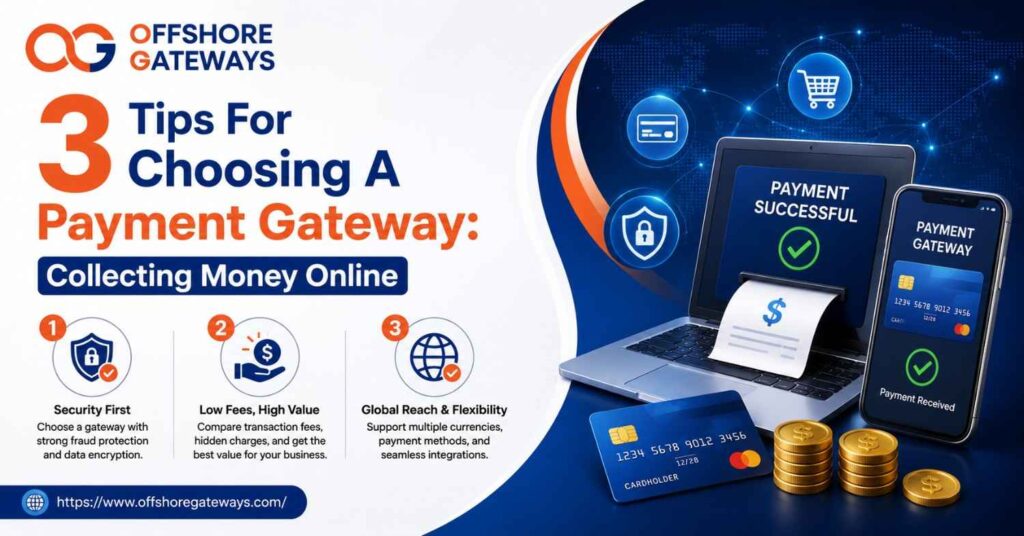
3 Tips For Choosing A Payment Gateway: Collecting Money Online What is a Payment Gateway? When Choosing A Payment Gateway, online merchants such as eStore owners or auction sellers can accept credit card payments over the internet. They authorize the cardholder’s credit that is, they check to ensure that the customer has enough money on their credit card to cover the charges. They then place a hold on that amount so the buyer cant turn around and spend that same money elsewhere before it gets transferred to the retailer’s merchant account. Banks describe this as the technology necessary to consummate a payment transaction. A Payment Gateway is NOT a Merchant Account. Many people confuse merchant accounts with payment gateways but they are not the same. Merchant account services act, for the most part, as a liaison between your business bank account and the payment gateway. When a customer orders a product from your online business their card is processed via the payment gateway. The money is then moved over to the merchant account service. The merchant account service then moves those newly captured funds to your business bank account. Payment gateways can be used for offshore credit card processing for any business. payment gateways can be on the 2ds payment gateway channel wherein the end clients don’t need to enter OTP/PIN/Password and in the 3ds payment gateway channel, the clients need to enter the OTP/PIN/Password to authenticate the transaction 3 Tips for choosing a Payment Gateway: 1. Is it PCI-compliant? That means that the company’s security has been audited by a third party and found to be up to industry standards. Since payment gateways store all your customer’s credit card information (sparing you the stress), it also means you can sleep better at night, knowing your customer’s valuable information is safe and sound.Think of PCI compliance like a health certificate for a restaurant. Before you eat there, you want to know the kitchen is clean, right?PCI compliance means the payment gateway’s “kitchen” (its security system) has been inspected and approved. If a gateway is NOT PCI-compliant, your customers’ card details could be stolen — and that would be a disaster for your reputation and your business. 2. Good customer support Consider that your business operates round the clock, seven days a week. The transactions can face problems at any time during the week – be it an uncompleted transaction or any other problem occurring at midnight on a Friday. That is why it is extremely important for a merchant to have customer support round the clock.A good payment gateway should have: Without a good support service, it would be like buying a car without a spare tire. Everything is going well and then something happens. 3. Integration with Your Existing Tools To conclude, it is important that the payment gateway you choose to be integrated into the third-party solutions you are planning to use. That means things like storefront platforms and shopping carts you want to be compatible with your gateway.For example, in case you select Shopify, WooCommerce, or Magento for the development of your online shop, the payment gateway should fit into these software solutions.Otherwise, implementing it would prove difficult. Ideally, a payment gateway should provide you with a range of plugins, APIs, and even technical documentation for easy and convenient integration.Additionally, you might wish to verify whether the payment gateway provides support for : Stay updated on social media as well – Linkedin Final Thought Selecting an appropriate payment gateway is one of the most critical decisions that you need to make while setting up your e-commerce venture.This decision will influence how customers view their checkout experience, the level of security provided to customer information, and ultimately how the payments reach your bank account without any hitch.Therefore, take your time, compare and contrast different choices before making a decision on which payment gateway to use. It is particularly important for industries that are considered risky or international in nature. Ready to Accept Payments Worldwide? Choosing the right payment gateway can make or break your online business. Let the experts at Offshore Gateways help you find the perfect solution – fast, secure, and tailored to your needs. Frequently Asked Questions What should I consider when choosing a payment gateway? Three factors will significantly simplify the process of choosing a payment gateway for your website: PCI compliance, reliable technical support, and compatibility with your online store. Why is choosing a payment gateway essential for my e-commerce project? It’s vital because it determines the method of transactions from buyers. Choosing an appropriate gateway provides you with safe and swift transactions which allow growing your business without problems. How does a payment gateway work while processing online payments? This service verifies a customer’s credit card, checks the amount of available funds, locks the payment, and finally, makes a transfer to your account. Thus, you have to choose a payment gateway with a quick response rate. What is the difference between a payment gateway and a merchant account? Payment gateway performs the process of making the transaction while the merchant account holds the money. While considering a payment gateway for online payments, remember that you will also need a merchant account. Can a payment gateway manage transactions internationally? Absolutely. A successful payment gateway will always take into consideration transactions of different currencies. While choosing the best payment gateway for your international transaction, consider one that supports transactions of different currencies and nations.
A Low Cost Merchant Account
If you are new to the business world, you may believe that a low cost merchant account is beyond reach. You might reason that every dollar of profit you make should be funneled right back into the business products or services rather than into an account that facilitates electronic payment processing. But a merchant account may be the very asset your business needs in order to achieve the growth you want to see. By providing your customers with alternative payment options to cash and check, you are inviting them to spend more and pay according to their preferred method, since research shows more consumers are choosing to pay by credit card than any other means. A low cost merchant account can help your business grow by enhancing your marketing plan. When the word gets out that your company offers electronic payment services like credit card swiping, telephone dial-up, and Internet Website payment options, customers will be impressed and may be more likely to check out your various options to see for themselves how easy you have made it for them to shop with your company. Naturally, you dont have to offer all these options at once. But you can start by getting approved for merchant account services and then setting up one type of credit payment option to see how customers respond. If all goes according to plan and growth follows the expected trend, you may decide to add another option to further expedite payment procedures. Your low cost merchant account can put a terminal-printer on your checkout counter to help your cashier process credit payments in addition to making change for cash payments and getting the managers check approval. When customers know that you accept credit cards, they may be more likely to spend more than they would have otherwise. They might even buy gift cards or novelty items in the checkout line. If you deliver goods or services with an appliance installation service, for example, you can buy or lease a wireless credit card processor that can go wherever you do for point-of-sale processing. You dont have to worry about statements that wont get paid or billing customers each month for the next year. A credit card sale can finalize the account to the satisfaction of both your client and you. When you are ready to grow your business to the next level, with a low cost merchant account, you can apply for digital credit card processing by installing a telephone credit payment service. This will allow customers to call in at any time and key in their credit card account number for payments without the aid of a customer service representative. Then you can add a company Website with a credit-processing feature where customers can order services or supplies and pay on the spot with a credit card. Dont wait too long before making the move to electronic credit card processing equipment. Your customers expect it, and your company needs it to stay solvent and experience serious growth. Start thinking about applying for a low cost merchant account.
High Volume Merchant – Do You Need One?
When your business grows to the point where it is ready to move into the electronic age, you should give some thought to opening a high volume merchant account to expand your companys potential. A merchant account will allow you to partner with a local bank or another financial institution to provide credit card processing payment options to online customers through the company Website. Creating a high volume merchant account will let you increase operating capacity to process exponential numbers of customers and credit transactions. You wont have to worry about keeping correct change on hand at all times, nor will you have as many bad checks to chase after. Your customers wont have to look for an ATM and pay extra usage fees to get cash when they wish to shop at your companys physical location or online Website. You can hire fewer people to accept payments since your electronic equipment will be able to do that for you. In a short time your profits may soar as operating costs dwindle. To apply for your high volume merchant account, first find a bank that offers this service. It need not be in your area, as you can now do most banking tasks online via the Internet. You will probably want to open your merchant account in a country that is economically stable. One with U.S. bank branches might be particularly useful in helping you open a high volume merchant account, since many U.S. banks enjoy a highly esteemed international reputation. Whether you apply online or in person, you will need to show proof of your citizenship and your companys country of operation. You must show that your business does not involve illegal, and in some cases, immoral activities like pornography, gambling, pharmacy, and telemarketing initiatives. Generally, there are no limits on volume, so even if your credit card processing unit brings in far more profit than anticipated, you need not worry about being charged extra fees, although you will have to clarify this up front. Your application for a merchant account could be approved in a day or two, which means you could start accepting credit card payments in a couple of days. Of course, you will need to select the type of credit card processor that you want to use either at a physical location or via your online Website. You may want to use a wireless processor for employees who travel from one site to another. Your high volume merchant account will be ready for business promptly to ensure that payments can be processed right away for your customers convenience and your companys profit. Many entrepreneurs, company owners, and managers find it exciting to expand their operations to include credit card processing options so that customers can shop night and day, 24/7. Start browsing online banking sites or community financial institutions that can provide this opportunity, and carefully read the conditions and terms for each institution before you choose one and apply for your high volume merchant account.
Tips For Small Business Credit Card Processing
When a small business owner implements the credit card processing service in its business, he or she tends to add to the growth of the company. Credit card processing is easy process of money transaction via swiping of credit card and has become a big part of business world with both the customers and traders utilizing it. Whether trading online or doing business on internet, small business owners can always us the new trend of business world to increase their sale and status. But before making the use of such benefiting tool you should have a complete picture of requirements of credit card processing and the precautions to keep in mind while choosing a merchant account that suits a small business. Before beginning with a credit card processing service you should know what a merchant account is and how it will affect a small business. Merchant account is more or less like a bond between a trader and a credit card processor that permits a trader to provide a credit card processing to its customer. With a merchant account you can be sure of sudden development in your small business. Merchant account is also a must for those dealing on internet. Imagine a customer visiting your site and finds a credit card payment processing he/she will not just be amazed but also impressed with the service being provided by a small company. Merchant account is the best way to increase your customers and revenue. But for a small business trade or company acquiring a merchant account can be difficult. Thus, it takes proper planning and a complete idea of approach towards finding the right merchant account provider. Since a small business may not be able to afford bigger financial services for credit card processing, a trader can always opt for a reasonable credit card processor relating to its business. Following are some of the credit card processing companies you can opt for as per the need of your business: While you can always find a rational merchant account provider but if you are a small trader and finding it hard to get a decent and low priced merchant account, you can always go for trade associations that have a reputation of providing a merchant account or credit card processing at a low or discounted rate. Even a third-party processor can be a good idea, as it has its own rules and terms. While each of such merchant account providers comes with its own set of requirements and rules, you can always compare them and chose the one that suits your business. But before selecting a merchant account and getting started with credit card processing there are few things to be taken care of. Such as, always search for 3 or more credit card account providers, compare their fees and services, get a complete idea of their terms and conditions and negotiate if possible. Remember, since you are an owner of a small business, merchant account providers will always want to see your background and credibility record as well as your capability of being a credit card processing service provider to customers. Thus, what makes a merchant account difficult for you is not your status of being a small company but your bad record or fraud history. Once you have found the right merchant account and a credit card processing service for your small business, you are ready for a whole new experience in the establishing your business. For small business owners, who often trade in fairs and by visiting customers personally, utilization of a mobile credit card processing benefits more than they can imagine.
Evaluating Credit Card Processing Companies
There are numerous credit card processing companies to choose from, each offering different features and fees. Choosing a company to process your customer’s credit card payments can be a daunting task, and sometimes you’ll experience difficulties both looking for a merchant account provider and then afterwards- if you make the wrong selection! Many banks will deny small business applications for merchant accounts because they don’t want to take the risk. Most small businesses end up going through third party providers who actually get the merchant account on your behalf; then apply their own rate structure to your transactions. If you operate an online business, you’ll need a shopping cart program of some kind- which must work with the system you use to process credit cards online. Unfortunately, if you go with a third party shopping cart rather than a custom written one it may not work with all credit card processing gateways. You really need to be sure that whatever shopping cart program you use on your web site works with the merchant account you ultimately end up using to process customer payments. Accepting credit cards is not free! You pay the third party merchant account provider (or the bank if you are able to secure your own account directly with a bank that provides it) will charge you fees in exchange for the ability to accept credit card payments. The fees and rates you pay will vary depending on many factors, including how long you’ve been in business, the type of business you operate, your credit score, how much of your sales are processed by phone versus online, and the amount of credit card sales you process each month. Some providers charge an annual fee in addition to a fee per transaction, while other providers only charge a percentage of each transaction processed. Typical rates for small businesses accepting phone and mail order payments are $0.10 to $0.30 plus 2 to 3% of the transaction amount. If the merchant account providers you are looking at want to charge over this percentage, be sure to check out a few others to see if you can get a lower rate before signing up. Sometimes, your credit rating will result in your having to pay higher fees- but it’s worth shopping around a little to see if you can get a lower percentage rate per transaction. When you’re shopping companies looking for the best merchant account provider, make sure to compare all of the fees to see how much you’re going to end up spending per each sale. You should also take into consideration what the application fee is (if any), how much you pay annually, how much you must spend on equipment needed to set up your account, and whether or not you must maintain a monthly minimum of sales volume. Also compare how each merchant account provider allows you to withdraw your money- can you do it whenever you want or do you have to do it at specific times of the month or year? How long will it take to receive your funds once you’ve requested a withdrawal or transfer of the money? How does the provider handle charge backs? Always read all of the forms and contracts associated with merchant accounts before you sign anything. Understand the terms for cancellation and what conditions the provider can cancel your account, as well. The process for applying for a merchant account varies depending on the company, but you may be asked to provide a photo of your office (even if it’s in your home) to verify you are in the location you say that you are. Some companies will want to send a representative to photograph your place of business. Occasionally, you’ll be asked to provide a DBA or business license, your tax returns and profit and loss statements.
Best Credit Card Processing Rates
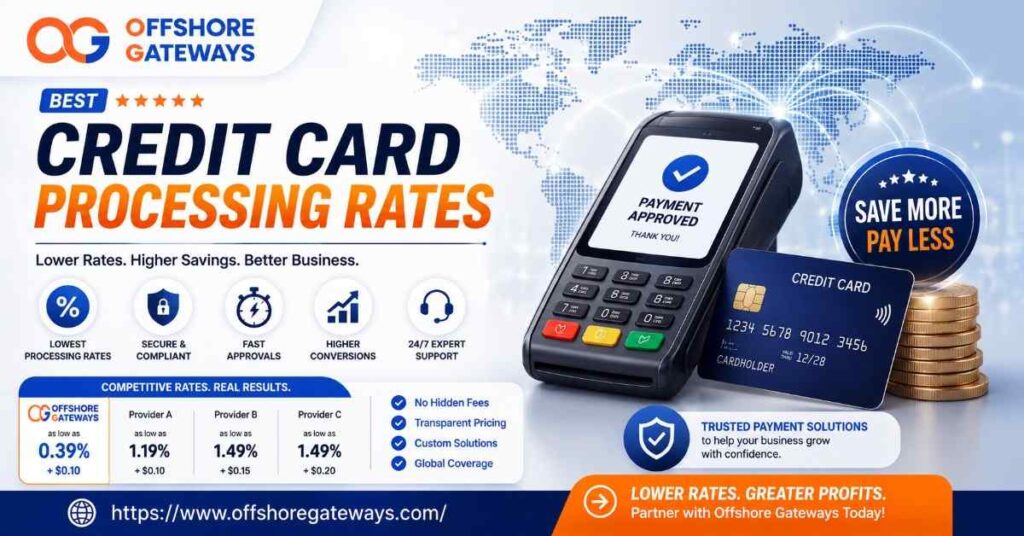
Get insights on securing the best credit card processing rates for high-risk businesses with our expert tips and comparisons.
Merchant Accounts For Beginners
Looking for something that will explain merchant accounts to you? Are you in need of a “merchant account for beginners“, mini tutoring session? Then you have come to the right place. Below you will find a list of the fundamentals pertaining to merchant accounts and how they work! Once you have completely established your web-based business, you will want to begin the application process for a merchant account. A merchant account will allow you to accept credit card orders through your website with your website acting as a virtual gateway for order processing. Your website must be fully established before you apply for your merchant account, as a merchant account supplier will want to see that your business actually exists. Further, a merchant account supplier may require that you have a registered domain name, so you may want to take such information into consideration when you are creating your website. Applying for a merchant account may take several days, so dont be surprised if you are not instantly approved. A merchant account supplier will verify much of the information you submitted and will also approve or deny your application based on a number of risk assessments. Such assessments are determined on how long you have been in business, what type of credit you have and what type of business you are running. Once you have been approved for a merchant account, you will be able to set up your merchant account processing software or appropriate links, depending on the merchant account supplier. Later, after you have successfully set up your merchant account access, your customers will be able to make purchases via your merchant account access and the merchant account supplier will handle all of your transactions. You will be charged a transaction fee and a discount fee for each transaction, and a monthly statement fee from the merchant account supplier. Additionally, you may be required to set up a reserve based on the risk assessment initially conducted on your business. Although the reserve money belongs to you, the merchant account supplier holds on to such funds in the event that you encounter credit card fraud. Unfortunately, you will be responsible for such charges and your reserve will meet the sudden and unfortunate expense. It all sound so easy right? Usually it is, however you can run into a snag or two. If you are denied a merchant account based on the risk assessment conducted, how will you collect credit card payments? Through a third party of course! Third parties are willing to collect credit card payments for you if you pay the transaction fees required. A particularly popular third party processor is PayPal. There are no setup fees involved in enrolling in PayPal, however, you might be required to wait until you have verified your bank account before you can use PayPals services. Merchant accounts and third-party processors can literally change the way you conduct business on the Internet. What’s more, both merchant accounts and third-party processors broaden your business horizons by increasing the forms of payments that you can accept. Therefore, in using such accounts you essentially increase your bottom line! What is a Merchant Account and do I need one? A merchant account is indeed a type of business bank account that enables businesses to accept and process electronic payment card transactions. It allows businesses to accept various forms of payment, including NFC (Near Field Communication), EMV (Europay, Mastercard, and Visa), magstripe (magnetic stripe), and online payments. NFC technology enables contactless payments by allowing customers to make transactions by simply waving or tapping their enabled cards or mobile devices near a payment terminal. EMV refers to the global standard for chip-enabled payment cards, which provide enhanced security and fraud protection compared to traditional magstripe cards. Magstripe payments involve swiping the magnetic stripe of a payment card through a card reader. Online payments allow customers to make purchases electronically through a website or app. Having a Merchant accounts online that supports these payment methods allows businesses to accept payments in the most convenient and preferred ways for their customers. By offering multiple payment options, businesses can maximize their sales and provide a smoother checkout experience for their customers. How much does it cost to open a merchant’s account Many variables, including your business’s industry, the amount of transactions you handle, and the “payment processing provider” you choose to partner with, might affect the cost of creating a merchant account. While applying, setting up, and maintaining their systems, certain payment processors may charge fees, while others may not. Other expenses including transaction fees, chargeback fees, and monthly minimum fees might also be incurred. To choose the payment processor that is the greatest fit for your company, it is crucial to comparison-shop and weigh the costs and benefits of several options. “Opening a merchant account” can cost between a few hundred and several thousand dollars, so it’s crucial to plan your budget carefully and be aware of any additional costs imposed by the payment processor you have selected. To find the best merchant account for your business, you can review and compare different providers based on factors such as transaction fees, processing speed, customer support, and additional features. It’s important to choose a reliable and secure provider that meets your specific business needs. By leveraging touchless payments, online ordering, and a powerful payment processing platform, businesses can adapt to the changing payment landscape and provide a seamless payment experience for their customers.
A Guide To Offshore Banking
If you are someone whose career and place of residence changes a lot, then you might want to keep your banking constant. One way to do this is by using offshore banking, which allows you to keep your money in one country, yet have access to it wherever you go. If you want to know more about offshore banking then this guide has some information that might be useful Why get offshore banking? Getting offshore banking can be useful if you are travelling around a lot and aren’t really located in one specific place. If you use an account from one country then you will find it harder to get your money out abroad, and might have to pay fees each time you want to carry a transfer or withdrawal. You might not even be able to access your account in some countries. Offshore banking can help you to have access to your accounts like you were in your home country wherever you are in the world. Tax exemption Another reason why offshore banking is popular is for tax exemption. If you have a large sum of money that you don’t want to pay tax on, then moving it to an offshore account might be useful. Of course, you need to make sure that you abide by the tax laws of your country, but there are legal ways to save yourself money through offshore banking Benefits of offshore banking Apart from the tax benefits, having your money offshore means that you have equal access to all of the world’s markets, and this makes it easier to invest in a diverse range of products and services. Offshore banking features You can use offshore banking simply as a savings account, or you can use it as your main means of banking. You can have a current account with a debit card, and even make investments and buy insurance and loans using your offshore bank. Most of the products and services that your standard bank can offer are available offshore, with the added bonus of being available around the world. Risks Offshore banking does use the law to its fullest, and so there are a number of risks associated with it. Firstly, if you don’t know what you are getting into then you could end up in legal trouble. Before signing up to offshore banking you need to consult a lawyer. Also, you need to deposit a large amount of money in order to get offshore banking, and that money could be at risk if anything happens in the country you opt for. You know that your money in your own country is insured, but if something happens offshore then you might be in trouble. Offshore banking does have some benefits, but make sure that you know the details of the system before proceeding. If you do this then offshore banking can help you save money and access your finances wherever you are in the world.
How To Choose The Best Credit Card Processing Company
Discover how to choose the best credit card processing company with tailored solutions, competitive pricing, and robust security.