
Comparing eChecks to Credit Card Payments: Which Is Better for Business in 2026?
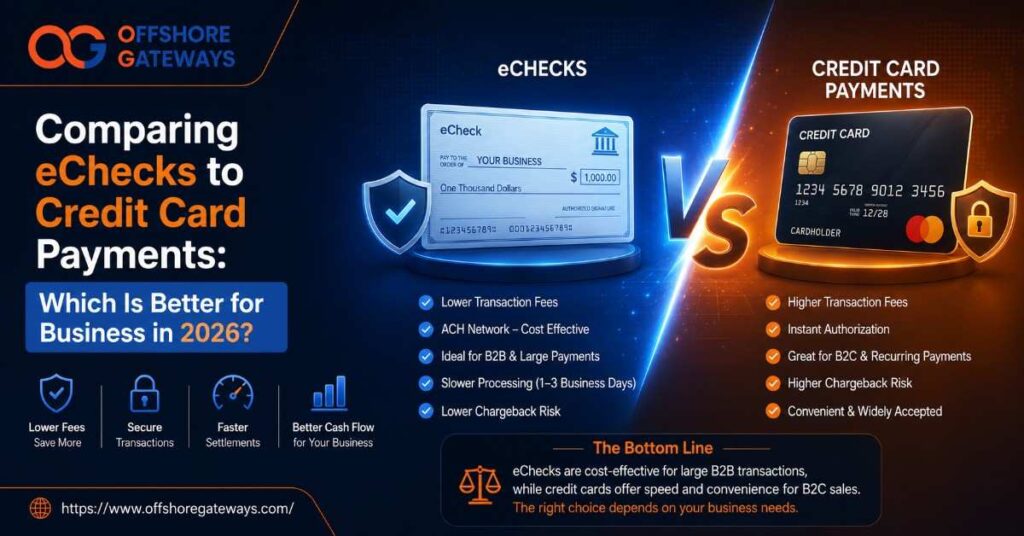
Comparing eChecks to Credit Card Payments: Which Is Better for Business in 2026? Adaptable payment options remain an important lifeline for customers in this modern business competitive environment. Businesses must identify the type of payment that best fits both their operational needs and those of their customers.Two options exist as preferred choices: eChecks and credit cards. Each comes with its own advantages and disadvantages, depending on the business’s specific requirements. Let’s now compare in detail to determine which service, pay with eCheck online or accepting credit card payments through credit card processing companies is better. What Are eChecks? An e-check is the electronic version of a check or a paper check. A system that does not depend on hard checks requires the money to be transferred electronically from a customer’s checking account to the bank account of that business. This would have helped businesses accept eCheck payments from clients who wanted to pay directly from their checking accounts. Pay with eCheck online is growing in popularity because it offers a hassle-free, safe, and inexpensive method of payment. Much like a paper check, an e-check uses the account number and routing number of the payer’s bank. Although faster and less expensive than a traditional paper check, an e-check is even cheaper and faster. Advantages of Accepting eCheck Payments Lower Processing Fees: Compared to credit card transactions, the processing fees of eChecks usually are much lower. Considering that businesses associated with high-ticket items or big volumes of transactions accept eCheck payments can notably save considerable operating costs. Security: eChecks are granted the same protection levels of paper checks wherein lies the regulation E and the safety measures instituted within ACH’s safety procedures. This will be able to safeguard personal data and eliminate opportunistic fraud platforms. Faster Settlements: Traditional checks can take anywhere from days to clear, whereas eChecks typically settle in 1 to 2 business days. Faster than most paper checks and comparable to some credit card processing companies. Drawbacks of EChecks Longer Clearing Times than Credit Cards: While eChecks are much faster than paper checks, they also take a couple of days to clear, whereas credit cards, and quite frequently, offer near-instant authorizations. Not So Frequently Used: Pay with eCheck online is becoming trendy, but not all businesses or consumers know of it. Sometimes there is a need to target education at the consumers so that they become comfortable in using this facility. What Are Credit Card Payments? The credit cards provide access to the customers’ own Visa, MasterCard, or other credit card as a means of payment. Business credit card transactions are typically supported by credit card processing companies which guarantee the transfer of funds promptly and safely from the customer to business. Credit card payments are accepted anywhere, so therefore, the customers will definitely enjoy the convenience and ease of it, which in some cases leads to winning higher chances of sales. The acceptance of credit card methods for payment is indeed a given to most high-volume transaction businesses. Advantages of Credit Card Payments Widespread Acceptance: Almost every consumer is accustomed to paying by credit card. A firm that accepts credit cards can therefore reach and serve a far greater population of consumers. Faster Transactions: Credit card sales can be authorized for seconds, and typically this amount is settled into the business’s account in a couple of business days. Increased Sales Potential: Since credit cards allow consumers to pay in installment, consumers are more likely to make bigger purchases. Moreover, most consumers prefer credit cards because of the reward points or the convenient option for deferring payment, like Care Credit application. Drawbacks of Credit Card Payments Higher Processing Fees: Credit card processing tends to collect higher fees than an eCheck, especially for those businesses involved in high volumes of transactions or larger payments. Those processing fees may eat into the bottom line, making the credit cards pretty costly to do business. Chargebacks: Credit card payment entails the loss of chargebacks, where customers dispute a transaction and receive a refund, leaving businesses time and money to waste. Complex Security Requirements: Credit card firms are sensitive with regard to dealing with customer data. In handling cardholder information, therefore, companies have to adhere to PCI DSS standards so that consumers’ information is held with safety. Cost Comparison: EChecks vs. Credit Cards It’s all about the cost when it comes to the choice between pay with eCheck online and credit card acceptance. For those businesses running on thin margins and processing large transactions, the difference these processing fees make is at least significant. ECheck Fees: The cost for eChecks ranges between $0.30 and $1.50, and only a tiny percentage-mostly 0.5%-of that. For the vast majority of transactions, this makes eChecks very attractive for larger transactions because it caps the fee level below credit card levels. Credit Card Fees: From 1.5% to 3.5% of the amount, depending on the type of card and on the credit card processing company. Along with such a percent-based charge, there may be flat fees, which again would add cost to the user’s account. These can make a credit card pretty expensive for larger-value transactions. Transaction Speed: EChecks vs. Credit Cards Regarding speed, the transactions will sometimes favor credit cards. Truly, authorization for credit card transactions occurs within mere seconds and the funds are immediately available to a business. Echecks take 1-3 business days to clear, thus retarding cash flow. This will be unbearable to most small businesses that need capital fast to finance operations. Yet, the cheaper cost seems a better tradeoff against the slower speed of transaction of an eCheck. This will thus be convenient for businesses that only require access to the funds later. Security: Which Is Safer for Your Business? First and foremost, safety would be a concern when it comes to choosing the payment mode. Both eChecks and credit card transactions are pretty secure in nature; however, the way they would be processed is different. eChecks: Here also the safety rules and regulations
What is the Merchant Bank Account for Gambling & Forex benefits?
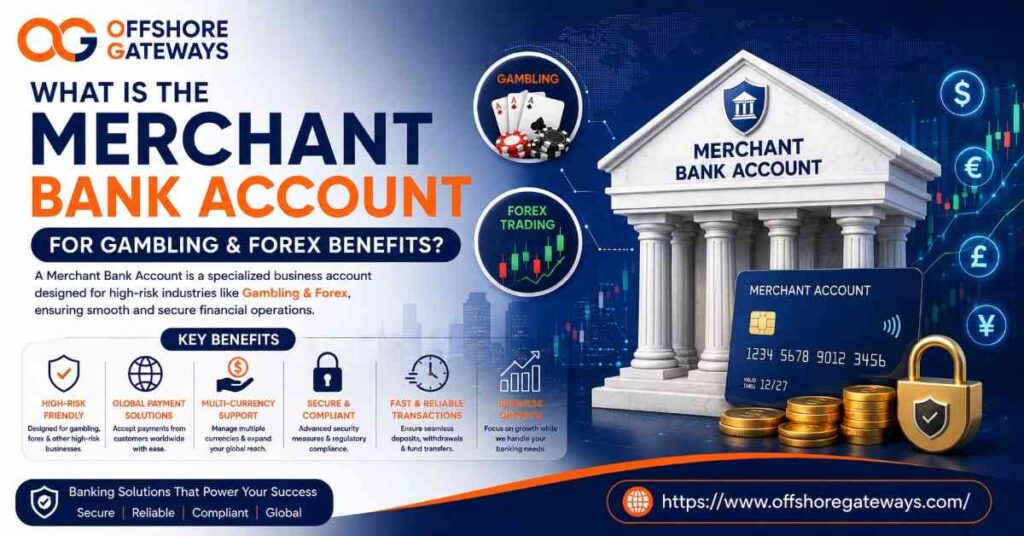
What is the Merchant Bank Account for Gambling & Forex benefits? In the fast and hyper-competitive environment of Forex trading and gambling, a player’s access to the right financial tools will either make or break their fortunes. One of such highly essential finance instruments is the Merchant Bank Account. This specialized kind of account provides rare benefits with its consideration of the risk element in gambling and Forex. So, what actually is a Merchant Bank Account, and how can it help your business? Let’s delve deeper into this and explain merchant bank operations along the way. Understanding Merchant Bank Account A Merchant Bank Account is specifically a type of bank account that an online business allows credit card users to have. Merchant bank accounts are primarily significant in businesses, especially where applications are made in either gaming or Forex. To understand this concept better, let’s explain merchant bank functions in more detail. Merchant banks essentially function as an intermediary between the business and the credit card companies. They facilitate the process of acceptance of payments from customers and transferring these payments directly to the business’s account. The role is therefore important to any company that seeks to take on credit card payments-whether in-person or online. The Unique Challenges of Gambling and Forex Industries Before entering into the merits of Merchant Bank Account for gaming and Forex business, it would be important to understand some of the significant difficulties each industry faces: High-risk classification Regulatory scrutiny Chargebacks and fraud International transactions Fluctuating cash flows These issues offer massive headaches for gambling and Forex businesses trying to access traditional banking services. It is at this point that special Merchant Bank Accounts are used. Benefits of Merchant Bank Accounts for Gambling and Forex Now that we have laid the groundwork, let’s explore the specific benefits. Merchant Bank Account provides gambling and Forex operations with: Risk Management:- Merchant Bank Account is designed to handle the higher risk associated with gambling and Forex transactions. These accounts often come with advanced fraud detection and prevention tools, helping businesses minimize losses due to fraudulent activities. International Transactions:- A Forex business must be able to execute the international transaction without any hassles. Merchant Bank Account usually possess multi-currency facilities and exchange rates, that facilitate easier business operations with international entities. High Volume Processing:- Businesses of gambling and Forex often engage in numerous transactions. Merchant Bank Account is made for such a heavy volume, ensuring that operation would run out smoothly and effectively during peak time. Chargeback Protection:- Chargebacks are among the best threats in the high-risk industry. Many providers of Merchant Bank Account offer chargeback protection services, which really help companies minimize loss and have a good relationship with credit card companies. Compliance Support:- A major issue in the gambling and Forex industries remains compliance with various regulations. Merchant Bank Account providers usually not only offer their service but also provide compliance support, helping businesses navigate the complex regulatory landscape. How to Choose the Right Merchant Bank Account This is an important decision regarding the selection of the appropriate Merchant Bank Account for your gambling or Forex business. Keep reading to learn more: Fees and Rates:- Compare the fee structures and rates of different providers. Strive for clearly communicated prices; avoid providers with a lot of hidden fees. Processing Volume:- Make Sure that the account can support your expected volume of transactions, particularly in peak times. Security Features:- Look for strong security measures, such as encryption, Fake detection, and chargeback protection. Integration Capabilities:- Make sure to choose a provider that simplifies integration with your current system and platforms. Customer Support:- Opt for a provider with responsive customer support, preferably available 24/7. Setting Up Your Merchant Bank Account Once you have chosen your provider, setting up of your Merchant Bank Account normally involves the following process: Application Submission Document verification Underwriting process Account authorization Integration and testing It should be noted that high-risk industries, such as those of gambling and Forex, may take a little longer to get approved than low-risk businesses. Best Practices for Managing Your Merchant Bank Account All your Merchant Bank Account is capable of being maximized with these best practices: Check transactions often Adoption of robust fraud prevention measures: Stay compliant with industry regulations Clear communication with the account provider. Manage periodic review and optimisation of payment processes. The Role of Payment Processors Although Merchant Bank Account are essential, most often than not work in tandem with payment processors. They process the transaction involving a credit card. Important considerations when choosing a payment processor include: Compatibility with your Merchant Bank Account Processing fees Supported payment methods Security features Ease of integration Bank Per Accounts The Future of Merchant Bank Accounts in Gambling and Forex Changes in regulations, technology, and other factors in society will continue to influence the shaping of Merchant Bank Account in gambling and Forex. Trends to watch for include: Increased use of artificial intelligence for fraud detection Integration of blockchain technology for enhanced security Greater emphasis on mobile payment processing Expansion of alternative payment methods Overcoming Common Challenges Nevertheless, companies dealing with gambling and Forex business activities that employ Merchant Bank Account may experience some issues. Here are a few common issues and their possible solutions: High fees: Look for competitive fees and negotiate with vendors by your volume of transactions. Account freezes: Freezing accounts Make sure to communicate and uphold the necessary policies with your provider so as to not freeze an account. Limited provider options: Fewer merchant account providers: Work with an approved payment gateway processor, such as Offshore Gateways, to gain access to a wider variety of Merchant Bank Account options tailored to your industry. Regulatory changes: Keep oneself updated with the changes occurring in regulations and discuss with an account provider to ensure that compliance is active. The Global Perspective: International Merchant Account Setup For most gambling and Forex businesses, the operation has to be global. Opening up international merchant accounts is tough work but absolutely necessary
Everything You Need to Know About How to Set Up a Merchant Account
The process of setting up a merchant account is just a beginning step for a business that may want to obtain payments online and at point of sale terminals. This blog will be talking you through the whole process of how to set up a merchant account for merchants. Understanding the Basics: What is a Merchant Account? A merchant account is a bank account through which an organization or business can accept payments via credit and debit cards. It is, therefore, an intermediary element that works between the business entity, the customer and the bank, hence facilitating the flow of transactions. Without a merchant account, it will be impossible for a company to accept a card payment. Why Do You Need a Merchant Account? Before getting into the details of setting up a merchant account, it is essential to understand why your business needs one. Here are the primary reasons: The Merchant Account Setup Process: A Step-by-Step Guide Step 1: Assess Your Business Needs The first thing is to estimate what your business needs before making a move on how to set up a merchant account. Different businesses have different needs based on their sector, transaction volume and customer base. Step 2: Research and Compare Merchant Account Providers There are thousands of merchant account providers out there and services, fees, and terms may vary. So, with all those, it is necessary to compare more than one to find which provider may fit well with your business. Some factors are included: Step 3: Prepare the Necessary Documentation For the purpose of setting up a merchant account, the provider will usually want a couple of documents, among them: Having these documents ready can speed up the application process. Step 4: Apply for the Merchant Account After the selection of the provider and documents ready, the steps to proceed include applying. The application process typically looks a lot like this: The provider will review your application and, if approved, will set up your merchant account. Step 5: Integrate the Payment Gateway A payment gateway is a service that processes credit card payments for online businesses. The moment your account is approved how to set up a merchant account for a worry free transaction experience for your loyal clients Common Challenges in Setting Up a Merchant Account Though all this process of How to set up a merchant account seems pretty simple, businesses go through many complicated issues like: Practical Tips for a Smooth Merchant Account Setup Follow these simple rules to ensure trouble-free processing of your merchant account setup process: The Role of Payment Gateway in Merchant Account Setup Your merchant account setup is incomplete without a payment gateway. A payment gateway plays as an intermediate channel between your merchant account setup process and your either website or point of sale system. Here is how it works: Selecting the Right Payment Gateway The features of the How to set up a merchant account should be in line with business requirements. Some of the factors that should be taken into account are: How to Apply for a Merchant Account: Tips and Best Practices The application process to have a merchant account may be very complex, especially for a small business or any other kind of start-up. These best practices, however, will get you through the application process: Merchant Account Requirements for Small Businesses Requirements and considerations in How to set up a merchant account vary widely, especially for small businesses. Listed here are some special needs and challenges: How to Set Up a Merchant Account for International Transactions For those whose business goes international, this will be a determinant of which merchant account you will require. Here’s what you need to know: Avoiding Common Pitfalls in Merchant Account Setup Setting up a merchant account is filled with potential landmines. Here are some things to avoid: How to Open a Merchant Account for Different Business Models Different business models require different merchant account types. Here is a quick wrap up: Setting Up a Merchant Account: Final Steps Now that your merchant account is in place, there are just a few final things to iron out to get everything rolling: Conclusion This is something that happens with a business when setting up a merchant account, where he can help any business with acceptance and help it to grow through payments. Follow all the steps above in this guide and ensure that your business is set up for success. Remember, the key to a very smooth setup process is choosing the right provider, understanding your business needs and keeping yourself up to date with the newest trends in payment processing. Offshore Gateways would reduce the burden on all types of businesses, including yours, to open a merchant account with simplicity and customized to your requirement. Be it a small business at its initiation or a company desiring flourishing and spreading its wings, our experts will guide you through the process with simplicity. Look at offshore Gateways for more details and get started.
Payment Gateways Providers in Liverpool ( 2026 )
A business has to be very particular with choosing Payment Gateways Providers in Liverpool so far as online financial transaction management is concerned. This becomes focused because the right provider can make a difference in whether your transactions get processed smoothly, their security, and then the satisfaction of your customers. In this post, we try to wade through some of the best payment gateway options available in Liverpool for your selection, focusing on the needs of your business. Understanding Payment Gateways: Before reviewing the different Payment Gateway Providers in Liverpool, let’s first know what a payment gateway does. In other words, a Payment Gateway is an instrument that approves payments for e-businesses, on the Internet, or via traditional live retailing. It takes up, in a secure manner, the customer’s payment information, validates a transaction, and then passes that information on to the acquiring bank. It is, therefore, cardinal for any business in Liverpool to opt for appropriate Payment Gateways Providers in Liverpool to make sure that the transactions go on smoothly, ensure customer confidence, and explore new markets. Whatever gateway you go for-from an e-commerce start-up to established retailers-the ramifications could be pretty significant. Key Features to Look for in Liverpool Payment Processing Solutions Some of the features you should expect from any service you choose in Payment Gateway Providers in Liverpool include; Top Payment Gateways Providers in Liverpool 1. Offshore Gateways Offshore Gateways is among the well thought of industry players in Payment Gateway Providers at Liverpool, and hence is a strong and sound platform, especially popular with technically-savvy businesses. It supports Credit Cards, Debit Cards, and Digital Wallets such as Apple Pay and Google Pay. Why Choose Offshore Gateways? Considerations: 2. PayPal PayPal is one of the most recognized brands for user-friendliness and wide acceptance in online payment processing. The application of PayPal can be recommended to any size of business in Liverpool. Why Choose PayPal? Considerations: 3. Square Square is an agile payment gateway that, until lately, has extended its operations to web and in-person payment solutions, so it’s a favorite for businesses operating both brick-and-mortar and e-commerce sites. Why Choose Square? Considerations: 4. Worldpay Worldpay, now a part of FIS, is one of the leading Payment Gateway Providers in Liverpool, known for its comprehensive solutions that cater to businesses of all sizes. Why Choose Worldpay? Considerations: 5. Braintree Braintree is a portable integration payment platform famous for its ease of integration; they really love working from a developer’s point of view. Why Choose Braintree? Considerations: Payment Gateway Service in Liverpool: Legal and Compliance Considerations Considerable regard should be taken to the legal and regulatory section while selecting Payment Gateways Providers in Liverpool. A payment gateway has to correspond to a lot of regulations touching finance, both locally and globally; these include PCI DSS and all other particular regulations touching AML and KYC requirements. Key Considerations: The Future of Payment Gateways in Liverpool: Trends to Watch The payment gateway’s industry is continuously developing with technology and a change in consumers’ behavior. In such a backdrop, there are the following trends to be watched out for in the future by businesses in Liverpool: 1. More acceptance of e-wallets 2. Improved security features 3. Interface with Emerging Technologies 4. Customized Payment Solutions Practical Tips for Choosing the Best Payment Gateway for Your Business The choice of the right Payment Gateway Providers is among the most important strategic decisions that can influence your business. Here are some practical tips to help guide your decision: 1. Analyze Your Business Needs 2. Comparative Costs 3. User Experience Evaluation 4. Consider Customer Support 5. Look for Added Value Conclusion: For Your Business Make the Right Choices It’s hugely important to get the choices right around the Payment Gateway Provider in Liverpool. Where there is clarity and comparison of different solution providers, a business will be best placed to select, finally, the combination that will wholesale best in adding significant value to the customer experience. Whether using an established company like Offshore Gateways or PayPal, or something more focused like Offshore Gateways; the key is to implement something that can provide both function and security along with the proper level of support needed by your business. Keep in mind the success stories of those businesses that have made the right choice, as you will actually surf through the process, using the experiences of others to guide your own decision-making. Frequently Asked Questions (FAQs)
Effortless Credit Card Payment Processing for Your Business
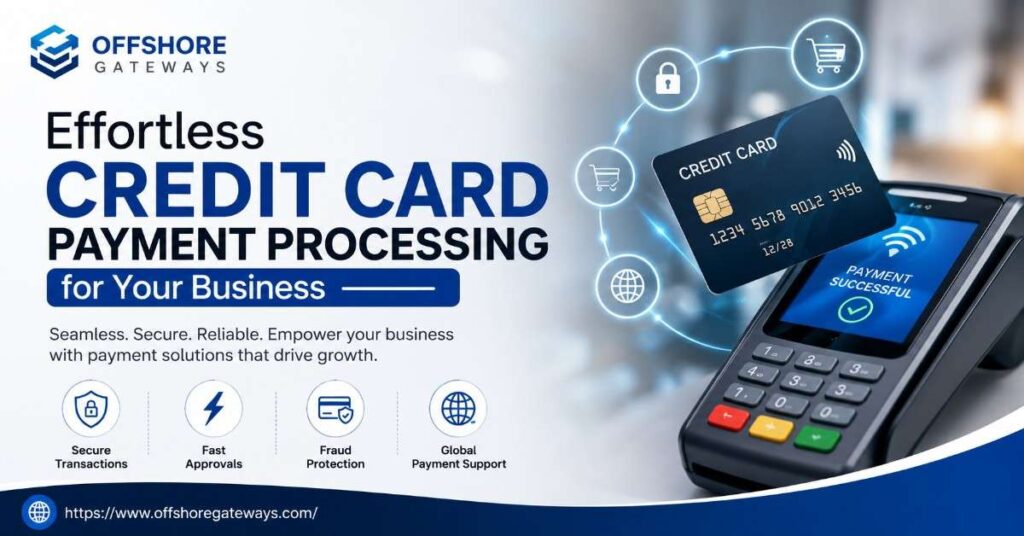
Effortless Credit Card Payment Processing for Your Business Indeed, of the basic things of modern commerce, Credit Card Payment Processing is really so since millions of transactions occur daily. To organizations that operate under the fast-moving environment of e-commerce, mastering Credit Card Processing means more than an indispensable act; it becomes one of the critical elements to ensure smooth operations for customer satisfaction. In this all-inclusive guide, we try to understand the basics of Credit Card Payment Processing followed by offering practical tips on how one can make the system easier in payments and discuss how a right service provider makes the process easy. Understanding Credit Card Payment Processing: A Simplified Overview Credit Card Payment Processing is just a series of virtually simultaneous activities that take place anytime a customer buys anything using their credit card. Here’s the breakdown: Authorization: Based on the payment to be made, the customer fills in their card details. After this, the information is considered by the processor and sent to the bank-issuer to check whether the transaction can be authorized. Then the validity of the card is checked, and the accessibility of funds or credit by the customer. Authentication: This is where a bank will request more information to verify a transaction, such as requesting a CVV number from an individual, or perform two-factor authentication to identify who the card holder is. Approval or Decline: In accordance with the response from the bank, further proceeding is either authorized or rejected. If it is rejected, the amount reflects on hold and gets deducted from the customer’s account. Settlement: Finally, at the end of the day, the merchant bank forwards all the transactions to the credit card network. After that, settlements occur between the cardholder’s bank and merchant account. This money will be wired into your account in a couple of days. Funding: Finally, the proceeds from the sale are credited to the merchant’s bank account, completing the entire transaction process. Common Challenges in Credit Card Processing While these may sound very simple, there are various different issues that businesses commonly have to address. High Transaction Fees: The costs involved in Credit Card Processing have become extremely high, especially for small businesses. This includes interchange fees, assessment fees, and payment processor fees. Fraud and Chargebacks: Each fraudulent transaction and chargeback is costly for a business. Insecurity might leave companies with such huge losses if proper security is not set in place. Complex Setup: Setting up a payment processing system with an e-commerce or point-of-sale system can be quite complex, particularly for the companies lacking IT resources. How to Optimize Your Credit Card Payment Processing System These following tips makeCredit Card Payment Processing smooth and reasonable: 1. Choose the Right Payment Processor A good payment processor is one that can meet business needs. Some of its features would be: Transparent Pricing: The processor should have clear, upfront pricing with no hidden fees. Comparisons between providers can be made to get the best rate for your transaction volume. Comprehensive Security Measures: The wave of credit card fraud demands the possessing processor to have the highest infrastructural functionalities regarding security features, which include encryption, tokenization, detection of fraud mechanisms, among others. Seamless Integration: be it either online, in-store, or probably both in an omnichannel experience meant that all of this should seamlessly fit into the existing infrastructure with less manual intervention. 2. Implement PCI Compliance PCI DSS stands for (Payment Card Industry Data Security Standard). All businesses that will have a need to handle credit card information are under obligation to observe the set requirements. The requirements protect your business against data breaches and possible fines. To comply with PCI: Secure Data Storage: Data storage should be avoided to the barest minimum and never with sensitive credit card details like a full card number or even the CVV code, unless it is necessary and is encrypted. Regular Security Audits: Periodic auditing of the payment systems to ensure that probable loopholes are detected and curtailed. Employee Training: he employees should be trained on why PCI compliance is important and how to handle sensitive payment information. 3. Optimize for Mobile Payments Besides, with the rapid growth of mobile e-commerce, the process of checkout on mobile also needs to be seamless. Ensure that the design of this payment gateway is mobile-friendly; one must be able to check out very smoothly and securely using either iPad or Android-based Smartphone. Responsive Design: The page should adapt itself automatically to the dimensions of the device on which the charge is to be made. Simplified Payment Process: Reducing the number of steps a user needs to go through in order to make any kind of payment through mobile. Introduce address autocompletion, stored modes of payment, etc. 4. Leverage Tokenization Tokenization is the process of replacing sensitive financial information with a unique identifier, known as a “token,” for a transaction to be completed quickly and securely without exposing actual card data. It helps minimize data breaches. Enhanced Security: Tokenization ensures that even if a hacker accesses your payment information, the real details he will get are beyond his reach. Streamlined Payments: Tokenization does make the return customer checkout process so much smoother that one-touch payments are feasible. Practical Tips to Further Improve Your Credit Card Processing Efficiency 1. Negotiate Better Rates with Processors This could be a very strong point in negotiating better fees with your processor if you process large volumes of transactions. It goes without saying that an unchanging rate of dealing and a low chargeback rate will empower you to negotiate the best rates possible. Bundle Services: If you take a number of services from one vendor say, payment processing with merchant services you may try to negotiate some discount. Review Statements Regularly: Carefully examine your periodic payment processing statements for any unusual fees or rate increases and ask your processor. 2. Utilize Payment Analytics Also, most payment processors will come with the capability of querying data on your transactions through analytics tools. Identify
Why eCheck Payment Processing Is the Future of Online Transactions
The global and digital economy is in dramatic evolution every day. Financial transactions are not an exception to this. Among the many innovations, one of the most noticeable in the arena of online transactions is eCheck payment processing . Touting security, efficiency and cost-effectiveness, it promises to revolutionize how businesses and consumers undertake digital payment operations in the years to come. The Rise of eCheck Payment Processing Paper checks have always characterized any financial transaction over the years, especially for a business handling frequent payments or huge transactions. However, with the apparently growing demand for speed and security in payment processes each day slowly, the industry turns to electronic check processing, otherwise referred to as eCheck payment. This is being driven by the necessity to cut down the time, manpower effort and risk involved in handling a paper check. An eCheck processing payment is effected by taking a paper check and making it electronic. So, it basically becomes easy and secure to transact directly from the bank account of the customer to the account of the merchant. This is done through the ACH Network, a bank-to-bank electronic funds transfer system that guarantees a quick and discord easy transaction. Understanding eCheck Payment Processing Time Looking at the processing time of an echeck payment processing time, it is at a relatively first pace as compared to the traditional checks. Now, eCheck processing time is further interesting because processing details usually include a number of steps in the cycle: The entire eCheck processing time in a whole would be from three to five business days. That could be noted as quite immediate, as compared with traditional check processing, which may take up to ten business days. The Advantages of eCheck Payment Processing Businesses and now, professionals throughout different sectors of the industry are taking to eCheck payment, thanks to the following advantages over other modes of receipt respectively: 1. Cost-Effectiveness Often, an eCheck processing method turns out to be many times less costly compared with transactions made through credit cards for high-value payments. These demand lower processing fees, which in turn can save businesses a great amount of money when it comes to high-ticket transactions or even payments made through recurring billing. 2. Security Security is one of the major anxieties whenever online transactions are carried out. This eCheck processing system ensures maximum security for each and every transaction done. It secures transactions by eCheck through encryption and safe payment gateways, which do not allow unauthorized parties to access the transactions. Moreover, the ACH network ensures additional security for processing transactions with high value and integrity. 3. Reduced Risk of Chargebacks Unlike the credit card transactions, eCheck transactions clear with finality through the ACH network. Once your payment is made, unlike the credit card transactions less chargeback risk goes to the merchant, hence more financial stability and predictability to the merchants. 4. Convenience for Recurring Payments Among businesses involved in recurring payments such as subscription services or utilities, eCheck processing provides unparalleled convenience. With eCheck, you can even set automatic payment authorization from the bank account so that the payments are done on time without anyone having to manually remember to go into the system and process it themselves. 5. Environmental Benefits Since eCheck processing saves paper this process is very nice for the environment. Switching to electronic transactions cuts down the carbon footprint associated with the printing, mailing and transporting of paper checks. Common Myths About eCheck Payment Processing Even with numerous benefits, eCheck payment processing sometimes, gets misunderstood. Let’s debunk some common myths: 1. Myth: eChecks Are Riskier Than Credit Card Payments Many people have a mistaken view that eCheck transactions are risky compared to credit card payments. To the contrary, security measures such as encryption, multi-factor authentication and rigid verification through the ACH network are enclosed in eCheck processing. 2. Myth: eCheck Processing Takes Too Long Although an eCheck is not as instant regarding processing time as it is with credit card transactions, it is still much faster than handling physical checks. Since the average time of processing goes anywhere from three to five business days, eCheck transactions balance between speed and security. 3. Myth: eChecks Are Only for Large Businesses Processing of eChecks is not limited to big companies. Every small and medium enterprise can also enjoy the cost savings, security and convenience that eCheck transactions have to offer making it a wide-range industrial solution. Practical Tips for Implementing eCheck Payment Processing For businesses looking forward to adopting eCheck processing here are some tips to ensure smooth implementation: 1. Choose the Right Payment Gateway Choosing the right eCheck payment gateway is very essential in relation to safety and the speed of the transactions. Look for a solution that features strong encryption, easy integration with your existing systems and customer support that is responsive. 2. Educate Your Customers Make the whole process of introducing a new method of payment transparent. Customers need to be aware of the benefits that eCheck transactions will offer, how their transactions are secured or protected and the time it will take to process them. All of this can be attained through clear communication and this will increase trust and increase its adoption. 3. Monitor Transactions Regularly Keep tabs on your eCheck transactions so that you may catch any issues before they increase. How often you are able to monitor will be able to detect fraud, mistakes or delays and therefore, rapidly fix the problems. 4. Leverage eCheck for Recurring Payments If your business relates to recurring payments, you should look into using eCheck processing when dealing with such transactions. Subscriptions, membership fees, and any other kind of recurring billing are perfect for eChecks because they are convenient and cheaper. The Future of eCheck Payment Processing The future of online payments is yet to be written, but no doubt, eCheck payment processing will form a huge part of it. Insecurity, cost-effectiveness, and convenience. What more could businesses and consumers ask for in one option?. This
Exploring the Benefits of a Forex Payment Gateways
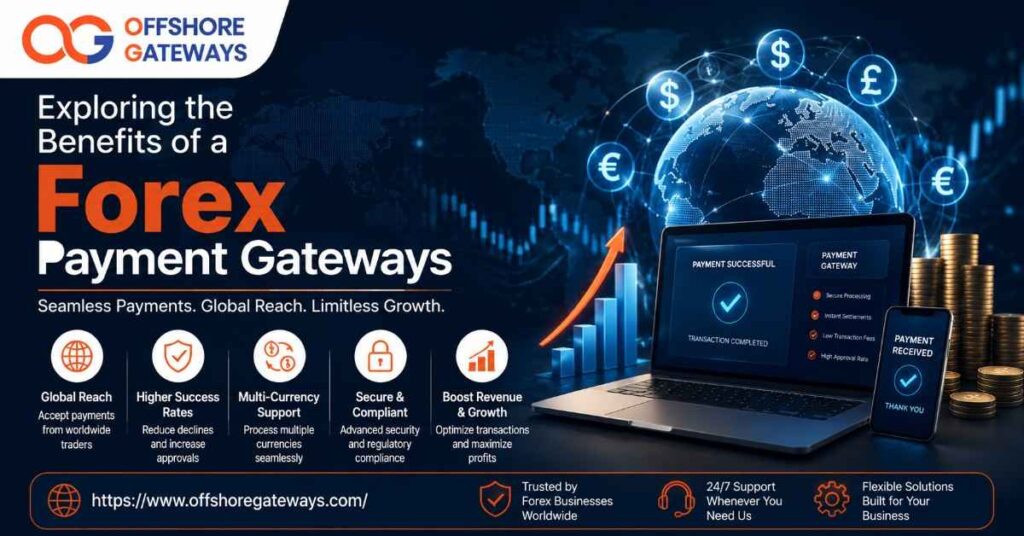
Exploring the Benefits of a Forex Payment Gateways In the fast and global world of international finance, business entities need easy and reliable ways to carry out cross-border transactions. The forex payment gateways is revolutionizing how businesses take care of global payments; it is a pillar tool in the arena of business. This article is going to showcase the benefits of this forex payment gateway and how it can impact businesses regardless of size and sector. What is a Forex Payment Gateway? Meanwhile, a forex payment gateway is an online enabled platform quite specialized in so far as it allows for international transactions through the conversion of money, while it also facilitates the safe passage of those undertakings across borders in the process of payment. It acts as an intermediary between the merchant, customer, and financial institution to make a stress-free and safe international transaction. The importance of international transactions With the continued growth of businesses running on a global scale, demand has surged for the means to conveniently and effectively pay and get paid. Traditional means of handling cross-border transactions are, more often than not, complex, costly, and take quite a long period to process. This is where the modern forex payment gateway comes in, making global financial management simple. Key Advantages of a Forex Payment Gateway 1) Affordable Foreign Exchange Rate Conversion One of the biggest benefits of using a forex payment gateway is currency conversion at a considerably competitive rate. Merchant services like such often offer improved exchange rates than those of conventional banks, and this saves a lot of money for businesses that often deal with international transactions. 2) Faster Transaction Processing Forex payment gateways come with the use of the newest advanced technologies for quick and efficient transaction processing. This is a very important application for a business venture, for it needs to make time-bound payments or receive funds from his/her client sitting somewhere in another country. 3) Enhanced Security Levels This is one of the most important aspects when one thinks in terms of international financial transactions. Here the forex payment gateways use the best security features like encryption, fraud detection, and much more to keep at bay any kind of sensitive financial information from the loot of hacking or online theft. 4) Easy Reconciliation and Accounting A forex payment gateway centralizes the international transactions to ease the accounting and reconciliation processes for the business. Such an approach to multiple global financial handling can save a business many resources. 5) Multi-currency Support Many currencies are supported through the forex payment gateway. Transacting across borders into different markets thus can be done without the need for different accounts or cumbersome currency management systems. 6) Improved Customer Experience More importantly, for any business that sells its products or services across borders, the need to be able to facilitate an easy payment process cannot be overstated. This allows the customer to pay in their local currency, fostering optimum satisfaction, and in turn, potentially improving sales. 7) Real-Time Exchange Rate Some fore×remitting gateways provide real-time updates on the prevailing exchange rates, helping a business to know at what time to convert the money or make transfers. 8) International Liability Regulations Navigating through the web of regulations across the world is complex. Most of the compliance that comes with these forex payment gateways is integrated into the software, which will help businesses in adhering to varied jurisdictional regulations. Challenges and Considerations Though the forex payment gateways have numerous benefits, their implementation comes with some of the current challenges, including: 1) Integration Complexity: Implementing a forex payment gateway can be an integrating process that uses up a lot of technical muscle, especially for businesses with an existing payment system. 2) Fee Structures: Though in general still more cost-effective than the traditional methods, the forex payment gateways operate on fees charged for their services. Fee structures require clear scrutiny by a business to establish if they meet the business volumes and required transactions. 3) Currency Fluctuations: While forex payment gateways make provisions for the current up-to-the-minute exchange rate, currency markets are inherently volatile. On the other hand, businesses must have strategies to manage or control the risk associated with currency fluctuations. 4) Technology Dependency:- Like any other digitized solution, a forex payment gateway depends on technology infrastructure. A business must have established a plan for outages or technical problems that occur in the systems. How to Choose the Right Forex Payment Gateway The decision to choose the right forex payment gateway is important to derive the maximum benefits of the same. Some of the factors are: Supported Currencies and Countries: Ensure the gateway you are going for supports the currencies and countries that are in the operations of your business. Fee Structure and Pricing: Compare among different service providers’ fee structures so that you get the volume and pattern of transactions that offer the most affordable solution for your business. Security Features: Check for the availability of security features within each gateway, e.g., security standards, encryption protocols, fraud protection systems, and security standards. Integration Capabilities: Check how easily the gateway is able to be integrated with your existing systems and if they have APIs to provide for a custom integration as well. Customer Support: Look for providers who extend their dependable customer support services and, if possible, are available 24/7 to help you handle the problems that might arise. Scalability: Go for a payment gateway that will be with you through any business growth and increases in transaction volume that occur. Payment Gateways Forex Brokers: An Important Partnership This goes to say that payment gateways and forex brokers are interrelated because the currency market is an integral part of services in a seamless manner. 1) Instant Deposits and Withdrawals: Payment gateways forex brokers enable traders to quickly fund their accounts and withdraw profits, enhancing the overall trading experience. 2) Different Payment Mechanisms: Payment gateways dedicated to Forex usually offer, through their platforms, different ways of payment that favor the choices
High Risk Processor Merchant Account in London
High Risk Processor Merchant Account in London When it comes to businesses categorized as high risk, obtaining a High Risk Processor Merchant Account in London can be a challenging yet essential task. High risk merchant accounts are specifically designed to serve industries that are deemed risky by traditional banks and payment processors. These accounts enable businesses to accept credit and debit card payments while mitigating potential financial risks. Understanding High Risk Merchant Accounts What is a High Risk Merchant Account? A high risk merchant account is a type of financial account that allows businesses in industries with higher levels of chargebacks, fraud, or regulatory scrutiny to process payments. Industries typically considered high risk include: E-commerce: Online transactions are susceptible to fraud and chargebacks. Travel services: High cancellation rates and booking disputes. Online gaming: Regulatory issues and age restrictions. Adult entertainment: Social stigma and high chargeback rates. Pharmaceuticals: Regulatory scrutiny and prescription requirements. Why Do Businesses Need a High Risk Merchant Account? Businesses in high risk sectors often face difficulties securing standard merchant accounts due to their perceived risk. A High Risk Processor Merchant Account in London provides these businesses with the ability to: Process credit and debit card transactions securely: Ensuring smooth and safe payment processing for customers. Access reliable payment gateway providers: Connecting with gateways that understand the specific needs of high risk industries. Protect against chargebacks and fraud: Implementing measures to minimize financial losses from fraudulent transactions and customer disputes. Finding the Right Payment Gateway Providers in London Key Features of a High Risk Payment Gateway Provider When selecting payment gateway providers for a high risk merchant account, it is crucial to consider the following features: Security: Ensure that the provider uses advanced security measures like SSL encryption and tokenization to protect sensitive data. Fraud Prevention: Look for providers that offer robust fraud prevention tools, such as real-time monitoring and fraud scoring. Chargeback Management: Effective chargeback management tools can help reduce the financial impact of disputes. Integration: The gateway should seamlessly integrate with your existing systems and shopping carts. Top Payment Gateway Providers in London for High Risk Merchants Offshore Gateways: Renowned for their expertise in high risk merchant accounts, Offshore Gateways offers tailored solutions with competitive rates and exceptional support. PayDiverse: Known for their comprehensive fraud prevention tools and easy integration. SecurePay UK: Provides high-level security features and efficient chargeback management. Benefits of a High Risk Processor Merchant Account in London Increased Revenue With a High Risk Processor Merchant Account in London, businesses can expand their payment options, thereby attracting more customers and increasing revenue. Accepting credit and debit cards, along with alternative payment methods, ensures that customers can choose their preferred payment option, leading to higher conversion rates. Enhanced Security High risk merchant accounts often come with advanced security features to protect against fraud and data breaches. This includes PCI DSS compliance, encryption, and secure socket layer (SSL) technology, providing peace of mind for both merchants and customers. Chargeback Protection Chargebacks can be a significant issue for high risk businesses. High risk merchant accounts often include chargeback protection and management tools to help reduce the incidence of chargebacks and handle disputes effectively. Global Reach Many payment gateway providers offer multi-currency processing, allowing businesses to expand their market reach internationally. This is particularly beneficial for e-commerce businesses looking to cater to a global audience. Challenges of High Risk Merchant Accounts Higher Fees One of the primary challenges associated with high risk merchant accounts is the higher fees. Due to the increased risk, providers typically charge higher processing fees, setup fees, and monthly maintenance fees. Stricter Underwriting The application process for a High Risk Processor Merchant Account in London is often more rigorous, with stricter underwriting criteria. Businesses must provide detailed information about their operations, financial history, and risk management practices. Limited Provider Options Not all payment processors offer high risk merchant accounts. Businesses must research and choose from a limited pool of payment gateway providers that specialize in high risk industries. How to Apply for a High Risk Merchant Account in London Step 1: Research and Select a Provider Start by researching and shortlisting potential payment gateway providers that specialize in high risk merchant accounts. Consider factors such as fees, security features, and customer reviews. Step 2: Prepare Your Documentation Providers will require various documents to assess your business. Commonly required documents include: Business license Financial statements Processing history Marketing materials Step 3: Submit Your Application Submit your application along with the required documentation. Be prepared for a detailed review process, as providers will assess the risk level of your business. Step 4: Underwriting and Approval Once your application is submitted, it will go through an underwriting process. This may involve additional questions or requests for further information. Upon approval, you will be set up with a high risk merchant account and can start processing payments. Additional Considerations for High Risk Merchant Accounts Regulatory Compliance Compliance with regulations is critical for high risk businesses. Ensure that your business adheres to local and international regulations, including GDPR, PCI DSS, and AML (Anti-Money Laundering) laws. High risk payment gateway providers can offer guidance on maintaining compliance to avoid legal issues and fines. Customer Support and Service Choose a provider that offers excellent customer support. High risk businesses may encounter more issues than standard merchants, so having access to a responsive support team is vital. Look for providers with 24/7 support and multiple contact methods (phone, email, live chat). Scalability As your business grows, your payment processing needs may change. Select a payment gateway provider that can scale with your business, offering flexible solutions and the ability to handle increased transaction volumes. Integration with E-commerce Platforms Ensure that the payment gateway provider you choose can integrate seamlessly with your e-commerce platform. Compatibility with popular platforms like Shopify, WooCommerce, and Magento is essential for smooth operation and customer experience. Case Studies and Success Stories E-commerce Business Overcomes Challenges An online electronics retailer in London struggled with high chargeback rates and
Understanding IPTV Payment Processing: An In-Depth Overview
In today’s virtual age, the way we eat media has significantly modified. Internet Protocol Television (IPTV) has revolutionized how content material is introduced, making it greater available and customizable. However, for IPTV service providers, making sure a seamless and secure charge method is vital. This complete manual will delve into the intricacies of IPTV payment processing, exploring IPTV payment gateways, and IPTV merchant account providers. Introduction The IPTV industry is booming, with thousands and thousands of users internationally taking part in a number of content material from special assets. As an IPTV service provider, one of the most crucial factors of your business is the payment processing gadget. A dependable payment processing device guarantees that your clients can pay for his or her subscriptions without problems and securely. This manual will help you recognize the critical additives and concerns for setting up an effective IPTV payment processing system. What is IPTV Payment Processing? IPTV payment processing includes managing transactions between IPTV service providers and their customers. This system includes accepting various types of payment, which includes credit playing cards, debit playing cards, and virtual wallets, and ensuring those transactions are steady. Efficient payment processing no longer most effectively helps easy transactions but also enhances client trust and satisfaction. Key Components of IPTV Payment Processing IPTV Payment Gateway A payment gateway acts as a middleman among the customer and the service provider’s bank. It authorizes the switch of funds, making sure that the payment details are accurate and that the client has sufficient finances. Choosing the proper payment gateway is crucial for imparting an unbroken payment experience to your customers. Features of a Reliable IPTV Payment Gateway IPTV Merchant Account Providers To accept payments, IPTV service providers need a merchant account. This account acts as a bridge between the consumer’s bank and the IPTV provider’s bank. Selecting the right merchant account provider is vital to making sure clean and secure transactions. Choosing the Right IPTV Merchant Account Provider Selecting the right merchant account issuer is essential for the success of your IPTV commercial enterprise. Consider the following factors: The Importance of Secure Payment Processing Security is paramount in IPTV payment processing. Customers need to believe that their payment data is safe. Here are some safety features to remember: Benefits of a Robust IPTV Payment Processing System A dependable payment processing gadget offers numerous blessings: Common Challenges in IPTV Payment Processing While IPTV payment processing offers many benefits, it also comes with demanding situations: Overcoming Challenges in IPTV Payment Processing IPTV Payment Processing Trends The payment processing enterprise is constantly evolving. Here are some developments to watch out for: Best Practices for IPTV Payment Processing Future of IPTV Payment Processing The future of IPTV payment processing seems promising, with improvements in generation paving the manner for extra steady and green structures. Innovations together with blockchain technology and biometric authentication are set to revolutionize the enterprise, providing even extra protection and comfort for each provider companies and customers. Conclusion In conclusion, IPTV payment processing is a crucial component of jogging a successful IPTV enterprise. By deciding on the proper IPTV payment gateway and IPTV merchant account provider, and ensuring your gadget is secure and green, you could offer a continuing payment experience for your clients.For tailor-made IPTV answers and to discover why Offshore Gateways is a relied on preference for IPTV solutions worldwide, contact Offshore Gateways these days IPTV Payment Gateway & Merchant Account Providers
Top 5 Payment Gateway Providers in London ( 2026 )
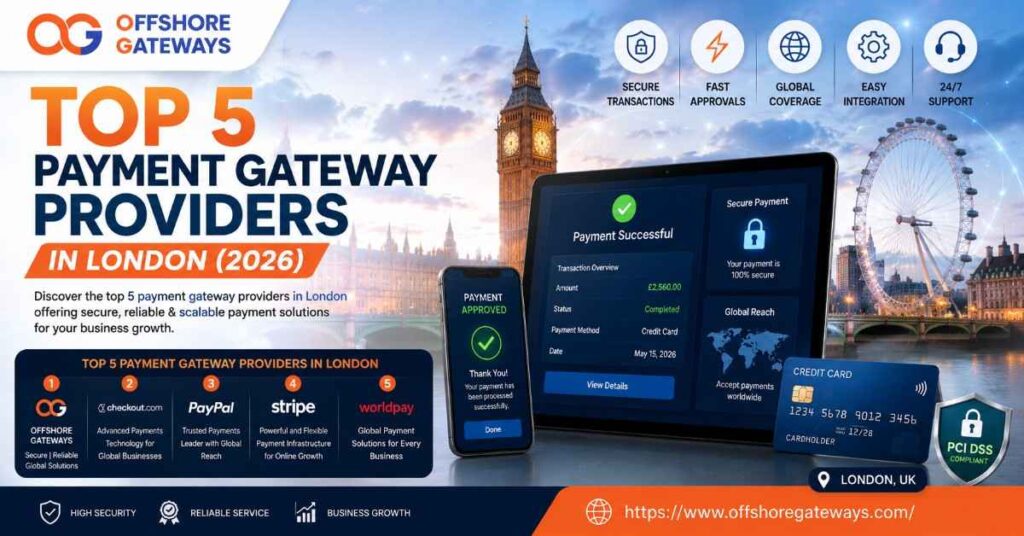
Top 5 Payment Gateway Providers in London ( 2026 ) In the bustling virtual economic system, choosing the right fee gateway issuer is essential for corporations of all sizes. Especially in a vibrant metropolis like London, in which competition is fierce, an efficient price gateway can imply the distinction between seamless transactions and regular charge complications. This comprehensive manual will walk you via the steps to find the Payment Gateway Providers in London and why selecting the right one is important for your commercial enterprise fulfillment. Why We Need Payment Gateway Providers in London Understanding the Role of Payment Gateway Providers in London A Payment Gateway Provider as a bridge among your customers and your business’s financial institution. It securely transmits the transaction facts, ensuring that transactions are completed easily and correctly. For businesses, particularly in high-risk sectors, this protection and reliability is essential. Key Challenges in Payment Gateway Processing What to Look for in a Payment Gateway Providers in London Security and Compliance Payment Gateway Provider in London need to offer comprehensive security functions and adhere to regulatory requirements. Look for providers that may be PCI DSS compliant to ensure consumer record protection. High-Risk Payment Processing Expertise Experience with the hazardous industries is critical. Providers ought to have a song document of managing excessive risk bills, minimizing chargebacks, and managing large transaction volumes effectively. Flexible Payment Solutions The first class companies offer flexible charge Payment Gateway Provider catering to numerous commercial enterprise fashions, including multiple payment strategies (credit playing cards, e-wallets) and support for recurring billing. Customer Support Reliable customer Payment Gateway Provider, especially for excessive hazard industries. Ensure the company offers 24/7 assistance to deal with any problems right away. Transparent Pricing Understanding the price shape is vital. Look for companies presenting obvious pricing without hidden charges, which include setup expenses, transaction fees, and Payment Gateway Provider. Integration and Technical Support Easy integration together with your present structures and structures is critical. Providers Payment Gateway Providers in London comprehensive technical assistance to ensure smooth integration and ongoing capability. Top Payment Gateway Provider in London 1. Offshore Gateway Offshore gateway focuses on excessive Payment Gateway Providers in London, presenting tailored answers for various groups. With a focal point on safety, compliance, and customer support, Offshore Gateway guarantees seamless transactions and strong protection against fraud. 2. Worldpay Worldpay is a global charge processing company with a Payment Gateway Provider in London. They offer excess-hazard merchant debt with a focal point on scalability and security. 3. PayPal Known for its ease of use and full-size recognition, PayPal additionally offers answers Payment Gateway Provider. They provide a consumer-friendly platform and sturdy purchaser protection features. 4. Stripe Stripe is a popular choice for businesses of all sizes, known for its developer friendly platform and sizable range of features. They offer answers for Payment Gateway Provider, making them a viable alternative for various agencies. 5. Sage Pay Sage Pay, part of the Sage Group, offers stable and dependable Payment gateway Provider They cater to high-risk industries and offer strong fraud prevention equipment. Additional Considerations When Choosing a Provider Transaction Speed Fast transaction processing is critical for consumer delight. Ensure the issuer can deal with transactions quickly and correctly. International Capabilities If you propose to make it bigger globally, select a provider that supports worldwide bills and currencies. Fraud Prevention Look for providers providing advanced fraud detection and prevention equipment to guard your enterprise and customers. Customizable Solutions Every business is unique. Choose a provider that offers customizable solutions to meet your specific needs and goals. Reputation and Reviews Research the provider’s reputation and examine purchaser reviews to gauge their reliability and service quality. Future Trends in Payment Processing Mobile Payment Solutions As mobile usage continues to grow, so does the significance of mobile price answers. Providers are increasingly imparting cellular optimized payment alternatives to cater to on the go clients. Blockchain Technology Blockchain generation is being explored for its capacity to decorate protection and Payment Gateway Providers in London. This can be especially beneficial for industries with high risk. Artificial Intelligence (AI) and Machine Learning AI and machine getting to know are being applied to improve fraud detection and customer service. These technologies can analyze large amounts of data to become aware of fraudulent transactions and provide customized customer support. How to Evaluate and Choose the Right Provider Assess Your Business Needs Start by evaluating your enterprise desires. Consider factors like transaction extent, average transaction length, and the precise risks related to your enterprise. Compare Providers Create a shortlist of capacity vendors and evaluate their capabilities, pricing, and guide. Look for vendors that offer very good stability of cost and functionality. Read Reviews and Testimonials Customer evaluations and testimonials can offer precious insights into an issuer’s reliability and carrier high-quality. Look for remarks on elements like transaction pace, customer service, and ease of integration. Request a Demo Many companies provide demos or unfastened trials. Use this possibility to test their services and spot how nicely they combine with your present structures. Evaluate Customer Support Customer assistance is vital, in particular for excessive threat industries. Ensure the issuer gives a responsive and knowledgeable guide that will help you address any issues that arise. Conclusion Finding the right price gateway company is critical for the achievement of your commercial enterprise. Consider factors like protection, compliance, flexibility, and customer service while making your decision. Offshore Gateway stands proud as a pinnacle preference, offering specialized answers Payment Gateway Providers in London. Contact Offshore Gateway today to research more about how we will assist your enterprise to thrive with our tailored offshore gateway answers! Stay updated on socia