
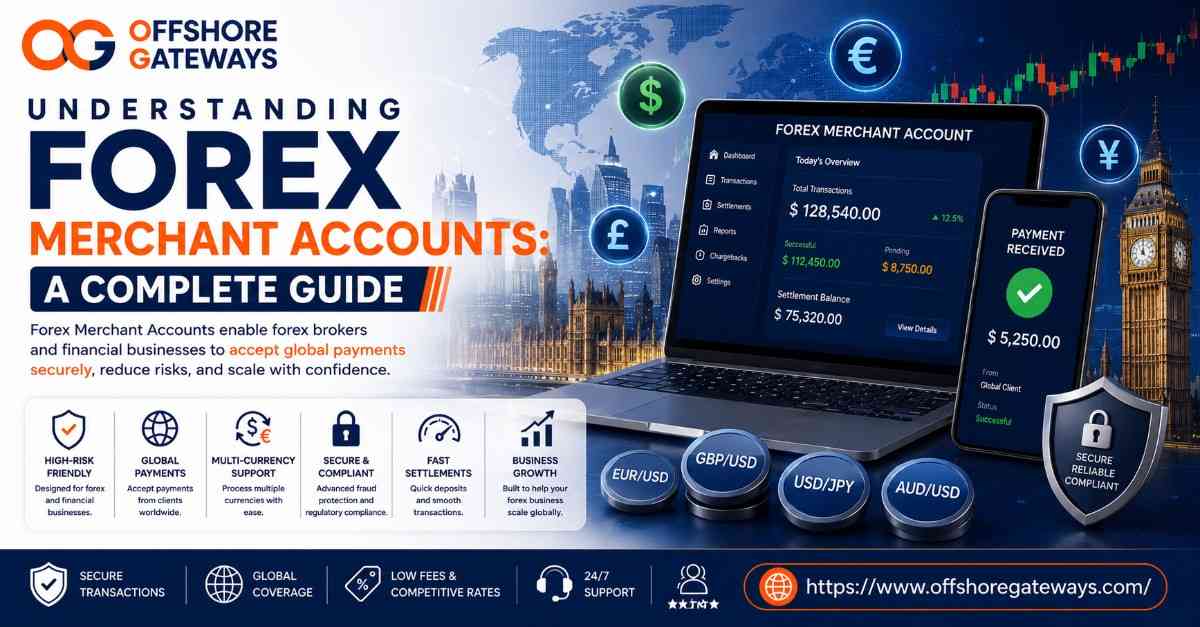
If you’re involved in the world of Forex trading, you’ve likely come across the term “Forex Merchant Account.” But what exactly is it, and how does it work? In this comprehensive guide, we’ll delve deeper into Forex merchant accounts, their role, benefits, and how to choose the right type of merchant account for your specific needs.
What is a Forex Merchant Account?
A Forex merchant account is a specialized business bank account tailored to Forex brokers. This account facilitates the acceptance and processing of electronic payments from clients. While credit card payments are commonly accepted, Forex brokers may also offer a range of payment options, including wire transfers and e-wallets.

How Does a Forex Merchant Account Work?
Forex merchant accounts operate similarly to standard merchant accounts. Here’s an expanded view of the process:
- Client Initiation: A client decides to fund their trading account using a merchant account.
- Payment Method Selection: The client visits the Forex broker’s website and selects their preferred payment method for the Forex Merchant Account.
- Payment Submission: The client enters payment information and submits the payment.
- Merchant Acquirer: The payment is processed by a specialized financial institution known as the merchant acquirer, known for its expertise in handling electronic payments within the Forex merchant account.
- Funds Allocation: The merchant acquirer credits the deposited funds to the Forex broker’s designated merchant account.
- Funds Transfer: The Forex broker can then transfer these funds to their own bank account or directly to the trading accounts of the clients who initiated the deposits.
Benefits of Using a Forex Merchant Account
| Advantages of Forex Merchant Accounts | Description |
|---|---|
| Global Accessibility | Forex brokers can accept payments from clients worldwide, making international trading seamless. |
| Payment Variety | Brokers can provide clients with diverse payment options, simplifying deposit and withdrawal processes. |
| Enhanced User Experience | A smooth payment process contributes to a positive trading experience, improving client satisfaction. |
| Revenue Boost | Streamlining payment processing enables Forex brokers to attract more clients and increase their earnings. |
Additional Elements in Forex Merchant Accounts

Now, let’s explore some additional elements related to Forex merchant accounts:
Multi-Currency Capabilities: Forex trading encompasses a multitude of currencies. A Forex Merchant Account can handle payments in various currencies, automatically converting funds to the desired currency. This feature ensures that clients can trade in their preferred currency without the hassle of currency conversion.
Risk Management Strategies: Due to the inherent volatility of the Forex market, risk management is paramount. Forex Merchant Accounts offer robust risk management tools to safeguard against fraudulent activities, reducing the risk of financial losses, particularly for high-risk businesses.
Secure Payment Gateway: To ensure the safety of sensitive financial information, secure payment gateways are integrated within Forex Merchant Accounts. These gateways encrypt customer data, guarding it against unauthorized access, and providing peace of mind for both brokers and clients.
Offshore Merchant Bank Account Services: Many Forex brokers operate on an international scale, necessitating offshore merchant bank accounts. Forex Merchant Accounts can assist in establishing and managing these accounts, simplifying financial management.
Compliance and Regulations: Forex trading is subject to specific financial regulations and compliance standards in various jurisdictions. Reputable Forex Merchant Account providers guide businesses through these regulations, ensuring that they operate within the legal framework.
How to Choose the Right Forex Merchant Account
When selecting a Forex Merchant Account, consider various factors:
- Accepted Payment Methods: Determine the payment methods you want to offer clients, such as credit cards, wire transfers, e-wallets, or even cryptocurrencies.
- Geographical Scope: Consider the countries where you operate to ensure compliance with local regulations and currency preferences.
- Transaction Volume: Estimate your transaction volume to select an account that can efficiently handle your load.
- Risk Profile: Assess the risk level associated with your Forex business and choose an account provider experienced in serving high-risk industries.
- Fee Structure: Compare the fees charged by different merchant acquirers to ensure cost-effectiveness and alignment with your budget.
Real-World Examples of Forex Merchant Account Providers
Now, let’s take a closer look at some real-world examples:
| Provider | Accepted Payment Methods | Global Reach | Risk Management | Fees |
|---|---|---|---|---|
| PayPal | Credit cards, e-wallets | Worldwide | Strong fraud prevention | Transaction-based fees |
| Skrill | Credit cards, e-wallets, wire transfers | Worldwide | Advanced security features | Transaction-based fees |
| Stripe | Credit cards, e-wallets, ACH payments | Worldwide | Customizable risk settings | Transaction-based fees |
| Adyen | Credit cards, e-wallets, alternative payments | Global | Comprehensive risk management | Custom pricing based on business volume |
| Authorize.Net | Credit cards, e-checks | Worldwide | Advanced fraud detection | Monthly and transaction fees for the Forex Merchant Account. |
Tips for Successful Use
To maximize the benefits of your Forex Merchant Account, consider these tips:
- Security: Ensure your website is secure and compliant with PCI standards to protect client data and maintain trust.
- Merchant Acquirer: Partner with a reputable merchant acquirer known for secure and reliable payment processing.
- Fraud Prevention: Implement robust fraud prevention measures to safeguard your business and clients from fraudulent activities.
- Regular Monitoring: Continuously monitor transaction data to identify anomalies and address potential issues promptly.
Common Mistakes to Avoid
To ensure a seamless experience with your Forex Merchant Account, avoid these common pitfalls:

- Non-Compliance: Failing to adhere to PCI compliance guidelines can result in security breaches and financial penalties. Stay updated on compliance standards to maintain the account’s security.
- High-Risk Acquirers: Using a high-risk merchant acquirer may lead to exorbitant fees and complications. Opt for an acquirer aligned with your business model to better manage your account.
- Neglecting Fraud Prevention: Neglecting fraud prevention measures can expose your business to financial risks and damage your reputation. Prioritize security measures to protect your account.
- Infrequent Monitoring: Failing to regularly monitor transaction data can allow potential issues to escalate unnoticed. Stay vigilant in monitoring and analysis to safeguard your account.
Conclusion
Forex Merchant Accounts are essential tools for Forex brokers, enabling them to accept payments from a global clientele and offer flexible payment options. Selecting the right account and using it responsibly are vital for success in the dynamic and high-risk Forex trading industry. By adhering to best practices and avoiding common mistakes, you can ensure a seamless experience for both your business and your clients in the world of Forex trading.
Now, we’d love to hear from you! Have you utilized a merchant account for your trading business, and if so, what were your experiences and challenges? Please feel free to share your insights in the comments below.
If you’re in search of a reliable payment gateway solution for your high-risk business, consider Offshore Gateways. Why should you choose us? Here are a few compelling reasons:
- Specialization: We excel in providing payment processing solutions for high-risk businesses, including Forex brokers, ensuring you receive tailored services that meet your unique needs.
- Global Reach: Our solutions enable you to accept payments from clients worldwide, giving your business a competitive edge in the global market.
- Compliance Expertise: We possess in-depth knowledge of financial regulations and compliance standards, ensuring your business operates within the legal framework.
- Security: Your financial transactions and sensitive data are our top priority. We implement advanced security measures to protect your business and your clients.
- Dedicated Support: Our team is committed to providing top-notch customer support, guiding you every step of the way.
Now, we’d love to hear from you. What challenges have you faced when it comes to payment processing in your high-risk business within the Forex Merchant Account? How can Offshore Gateways help you overcome these challenges? Share your thoughts and questions in the comments, and we’ll be happy to assist you on your journey to seamless payment processing within the Forex Merchant Account.

Frequently Asked Questions (FAQs)
-
u003cstrongu003eu003cstrongu003eu003cstrongu003eWhat is a Forex Merchant Account?u003c/strongu003eu003c/strongu003eu003c/strongu003e
A Forex Merchant Account is a specialized business bank account designed for Forex brokers to accept and process electronic payments from their clients. It enables brokers to offer various payment options, including credit card payments, wire transfers, and e-wallets.
-
u003cstrongu003eu003cstrongu003eu003cstrongu003eu003cstrongu003eWhy do Forex brokers need a Forex Merchant Account?u003c/strongu003eu003c/strongu003eu003c/strongu003eu003c/strongu003e
Forex brokers require Forex Merchant Accounts to facilitate seamless and secure payment processing for their clients, allowing them to deposit funds into their trading accounts conveniently.
-
u003cstrongu003eu003cstrongu003eCan Forex Merchant Accounts handle multiple currencies?u003c/strongu003eu003c/strongu003e
Yes, Forex Merchant Accounts often have multi-currency capabilities. They can handle payments in various currencies and can automatically convert funds to the preferred currency, making it convenient for clients to trade in their chosen currency.
-
u003cstrongu003eu003cstrongu003eHow do clients deposit funds into their trading accounts using a Forex Merchant Account?u003c/strongu003eu003c/strongu003e
Clients typically visit the broker’s website, select their preferred payment method, enter payment information, and submit the payment. The payment is then processed by a merchant acquirer, and the deposited funds are credited to the Forex broker’s merchant account.
-
u003cstrongu003eu003cstrongu003eWhat payment methods can be used with Forex Merchant Accounts?u003c/strongu003eu003c/strongu003e
Forex Merchant Accounts support a range of payment methods, including credit card payments, e-wallets, wire transfers, and even cryptocurrencies, depending on the service provider and client preferences.
-
u003cstrongu003eAre Forex Merchant Accounts secure?u003c/strongu003e
Yes, Forex Merchant Accounts prioritize security. They often include secure payment gateways that encrypt client data, protecting it from unauthorized access. Brokers should also ensure their websites comply with PCI standards for enhanced security.
-
u003cstrongu003eWhat is the role of a merchant acquirer in a Forex Merchant Account?u003c/strongu003e
A merchant acquirer is a financial institution specializing in processing electronic payments. They play a crucial role in handling and processing client payments, ensuring that the deposited funds are credited to the broker’s merchant account.
-
u003cstrongu003eHow can a Forex broker choose the right Forex Merchant Account?u003c/strongu003e
To select the right Forex Merchant Account, brokers should consider factors like the types of payments they want to accept, their geographical scope, transaction volume, risk profile, and fees charged by merchant acquirers. It’s essential to choose an account that aligns with their business needs and goals.
-
u003cstrongu003eAre there common mistakes to avoid when using a Forex Merchant Account?u003c/strongu003e
Yes, some common mistakes to avoid include neglecting PCI compliance guidelines, using high-risk merchant acquirers, failing to implement fraud prevention measures, and not monitoring transaction data regularly. Compliance, security, and vigilant monitoring are key.
-
u003cstrongu003eHow can Offshore Gateways assist Forex brokers with their payment processing needs?u003c/strongu003e
Offshore Gateways specializes in providing payment processing solutions for high-risk businesses, including Forex brokers. They offer global reach, compliance expertise, top-notch security measures, and dedicated support to ensure a smooth and secure payment processing experience for Forex brokers and their clients.