
7 Reasons Why Global Businesses Are Moving to Offshore Payment Solutions
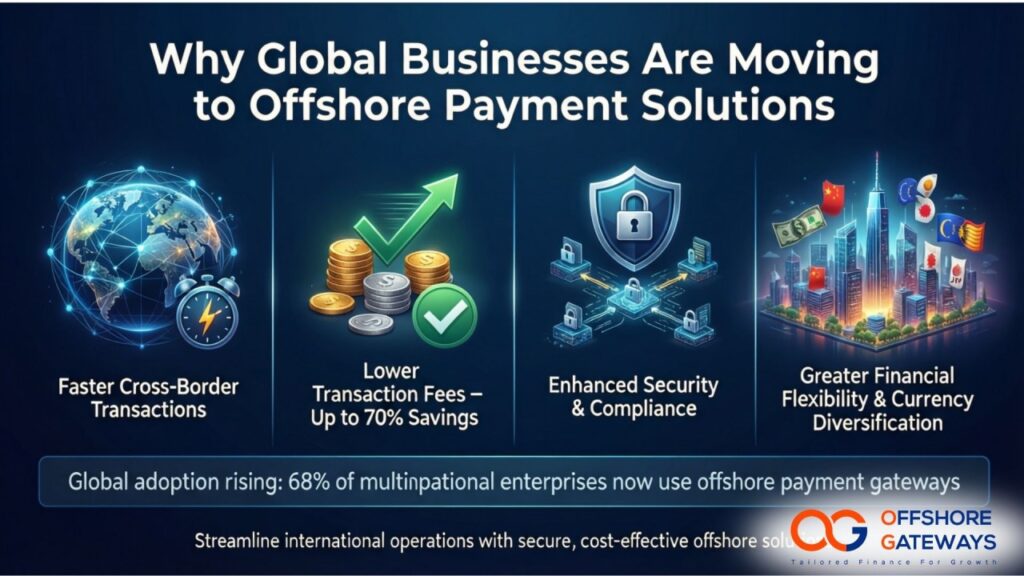
Have you ever had a legitimate international transaction declined for no clear reason? Or watched a customer abandon their cart because your payment gateway doesn’t support their currency? These are real problems that cost businesses millions every year and they’re pushing smart entrepreneurs toward offshore payment solutions faster than ever before. Offshore payment solutions are no longer just for high-risk industries or large multinationals. Small and mid-sized businesses across India and the world are making the switch because the benefits are simply too good to ignore. Whether you’re selling software subscriptions, running an e-commerce store, or offering financial services, the right offshore payment gateway can completely transform how money flows through your business. This guide breaks down exactly why global businesses are making this move and what it means for you. What Are Offshore Payment Solutions, Really? Let’s clear up a common misconception. Offshore payment solutions are not about hiding money or dodging taxes. They are legitimate financial tools that allow businesses to accept payments through banks or processors registered in a different country than where the business operates. A simple example: an Indian digital marketing agency might use an offshore merchant account registered in the UK or Cyprus to accept payments from US and European clients. This gives them access to multi-currency billing, lower interchange fees, and fewer restrictions compared to domestic processors. International payment processing through offshore channels often comes with greater flexibility in which industries are served, which payment methods are accepted, and what currencies can be processed. Think of it as upgrading from a local taxi to a full international ride network. Why Businesses Are Making the Switch: 7 Reasons 1. Access to High-Risk Industry Support Many domestic banks and payment processors automatically reject businesses in industries they classify as “high-risk”-including online gaming, Forex, nutraceuticals, travel, adult entertainment, and even some subscription-based SaaS companies. If your business falls into one of these categories, a high-risk payment gateway offered through offshore channels may be your only viable option for smooth, uninterrupted processing. A Forex trading platform based in Mumbai, for example, will find it nearly impossible to get reliable domestic processing. By partnering with an offshore payment gateway provider, they can secure stable processing, handle chargebacks more efficiently, and keep their cash flow intact. 2. Multi-Currency Payment Capabilities Does your business accept payments in USD, EUR, GBP, AED, or AUD? If you’re relying on a standard domestic gateway, you’re likely paying steep conversion fees and losing customers who prefer to pay in their local currency. Multi-currency payment gateway solutions-a core feature of most offshore payment solutions allow you to display prices and accept payments in dozens of currencies simultaneously. This reduces cart abandonment, builds trust with international customers, and eliminates the confusion of forced currency conversions. 3. Lower Transaction Fees and Better Rates This one surprises many business owners. Offshore payment processors often offer significantly lower transaction fees than domestic alternatives-especially for cross-border transactions. Because they operate in jurisdictions with favorable financial regulations, they can pass those savings on to merchants. For a business processing $100,000 per month in international transactions, even a 0.5% reduction in fees saves $6,000 per year. Scale that up and you’re looking at a very real competitive advantage. 4. Fewer Restrictions, More Approvals Domestic banks often impose strict merchant category codes (MCCs) that determine what kind of business you can run and how much volume you can process. Cross-border payment solutions offered by offshore providers typically come with far greater flexibility. Many businesses report that their international approval rates jump dramatically after switching to offshore payment solutions-in some cases from 60% to over 90%. For e-commerce businesses especially, that difference in approval rate directly translates to revenue. 5. Better Chargeback Management Chargebacks are the silent killer of online businesses. A high chargeback ratio can get your account terminated by a domestic processor with very little warning. Offshore payment solutions are often better equipped to handle chargeback-heavy industries, offering dedicated risk management tools, chargeback alerts, and dispute resolution support. This is particularly relevant for Indian businesses selling internationally, where disputes can arise from time zone differences, language barriers, or varying consumer protection laws. 6. Geographic Redundancy and Uptime What happens when your payment processor goes down? For most businesses using a single domestic gateway, the answer is: you stop making money. Global payment processing solutions through offshore providers typically offer redundant systems across multiple geographies, dramatically reducing downtime and ensuring that payments keep flowing even if one system experiences issues. 7. Financial Privacy and Asset Protection Legitimate businesses operating in politically or economically volatile regions often seek offshore banking solutions as a form of financial protection. This is about legal risk management ensuring that business funds aren’t frozen or disrupted by local regulatory changes or banking crises. Countries like Cyprus, Malta, Seychelles, and the Cayman Islands offer stable financial environments that many businesses find attractive for this reason. Who Benefits Most from Offshore Payment Solutions? Not every business needs to go offshore but for many, it’s the single most impactful decision they can make for their payment infrastructure. Here’s a quick breakdown of who benefits most: E-commerce Businesses selling across multiple countries need multi-currency support and high approval rates. Offshore solutions deliver both. An Indian Shopify merchant selling to customers in the US, UK, and Australia can consolidate their international payment processing into a single, efficient offshore gateway. SaaS Companies and Subscription Businesses dealing with recurring billing, free trials, and subscription cancellations face a higher-than-average chargeback risk. A well-configured offshore payment gateway with recurring billing tools is designed exactly for this use case. Travel and Hospitality Businesses are considered high-risk by most domestic processors due to advance bookings and high cancellation rates. Cross-border transaction solutions tailored for the travel industry make processing seamless. Forex and Crypto Platforms face the most restrictions domestically and have the most to gain from offshore processing. For these businesses, offshore payment solutions are essentially non-negotiable. Common Questions About Offshore Payment Solutions Are offshore payment solutions legal in